
Porsche Cayenne Coupé (2020) Review
To really get to know the Porsche Cayenne Coupé in a short space of time, we drove it in the city, on the highway and on some of the country’s worst roads – both tar and dirt.


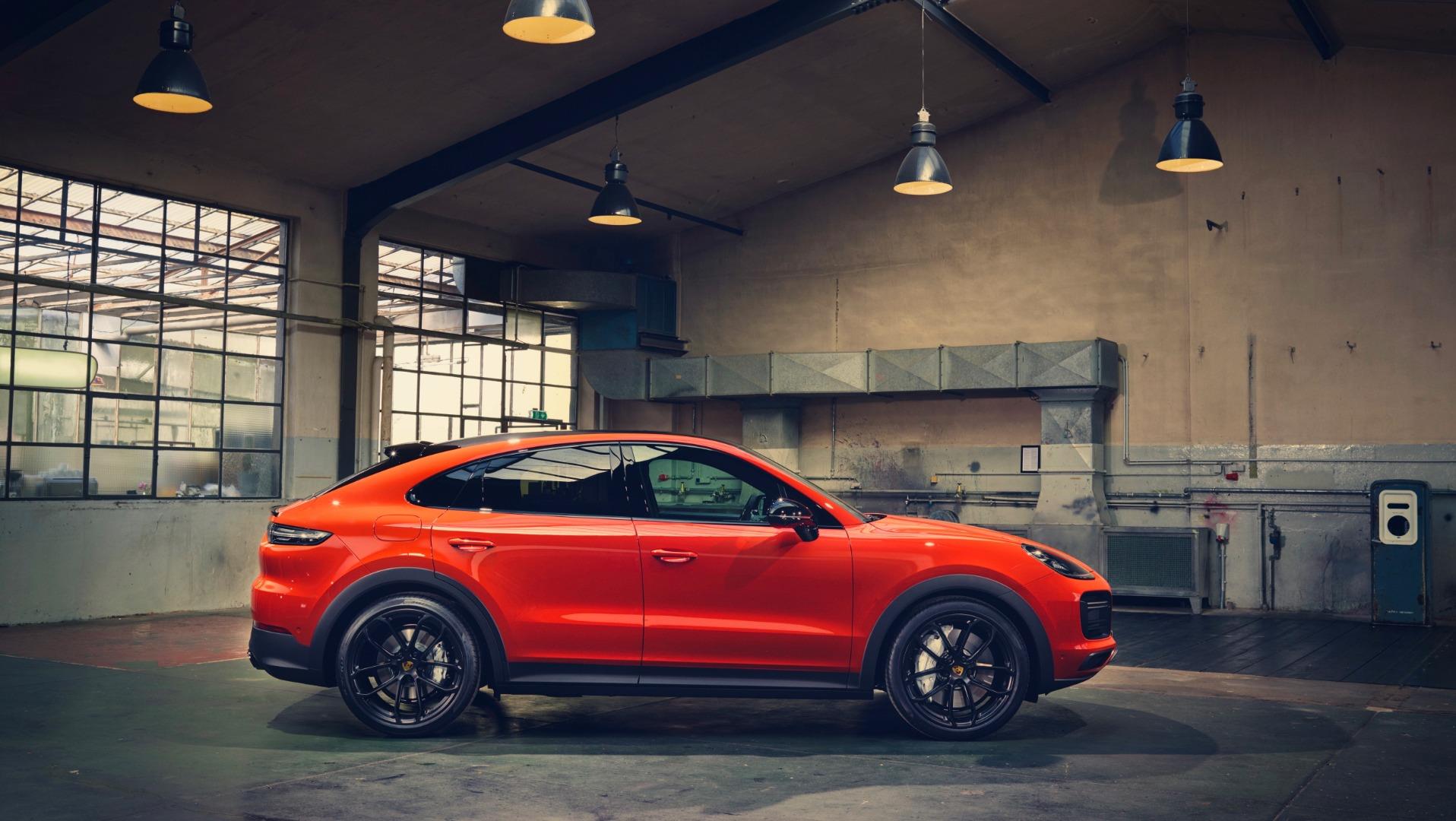
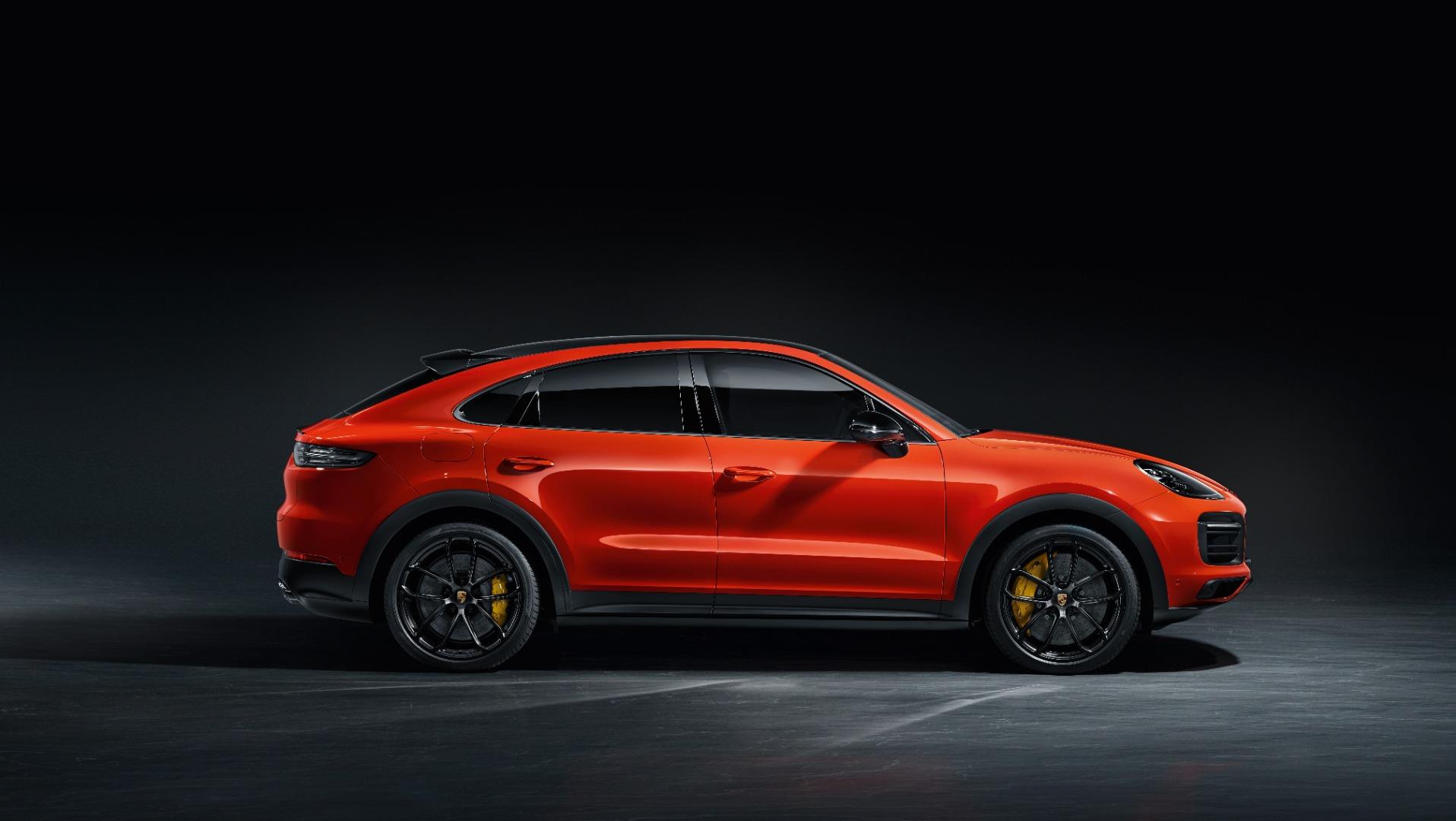
Now that SUVs dominate the car market, it’s up to manufacturers to milk this architecture for profitable spin-offs, while satisfying consumers’ desire for something new. “You want a BMW X5? Why not get a matching X4 for the missus?” well-heeled buyers are told. After three generations of success with the Cayenne, Porsche recently introduced a fast-back or “coupé” version. We drove to Middelburg, Mpumalanga to give the entry-level Cayenne Coupé a quick torture test.
Styling
At first glance, the Cayenne Coupé (CC) looks much like a standard Cayenne, albeit with a steeply sloping roof. But there are more deviations from the design than just that. The front windscreen and A-pillar are shallower than in the Cayenne, thanks to a slightly lowered roof edge. That effect is enhanced by a roof spoiler, which emphasises the distinctive Coupé silhouette. Redesigned rear doors and fenders broaden the car’s shoulders, contributing to the Coupé’s overall muscular appearance. A new adaptive rear spoiler – harmoniously integrated into the car’s profile – extends by 135 mm at 90 km/h and up, increasing downforce on the rear axle.
These elements work in favour of the overall design, making the Coupe appear less like a station wagon or traditional 4×4. It also echoes the indelible shape of the 911.
To appreciate the Coupé’s design in motion, take a look at this short Cayenne S Coupé highlight video that was filmed in Cape Town.
Related: New Audi RS Q8 2020: Top 5 things you need to know
The drive
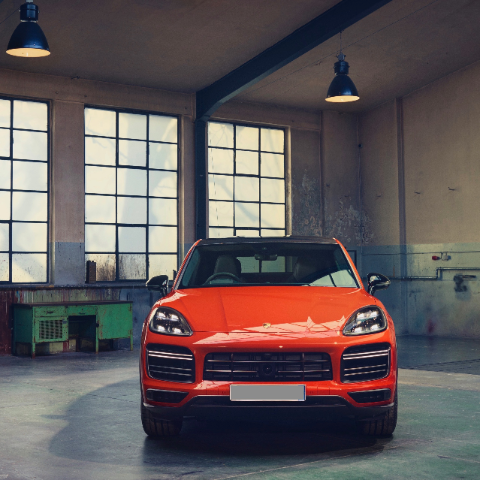
As expected, the Coupé is a long-distance cruiser par excellence. It has the same cosseting limousine ride as the Porsche Panamera, yet it settled easily on corrugated gravel roads near Middelburg in the eastern province. Even on pothole-riddled tar roads, driven to smithereens by overloaded mining trucks, the CC was unfazed. Riding comfort was especially impressive, considering our test car wore 21” alloys with low-profile tyres, more suited to the Autobahn than the rural roads we tested the CC on. The standard wheels and tyres are 275/45 ZR20 up front and 305/40 ZR20 at the rear.
Ground clearance of 210 mm is more than sufficient for the occasional off-road obstacle, but it can be cranked up to 245 mm through optional air suspension. Porsche says the CC can safely wade through water half a metre deep!
Our guest tester, who drives a 2019 Toyota Land Cruiser 200 VX, appreciated the Porsche’s small, meaty steering wheel, which also requires far fewer turns than a Cruiser’s!
Related: The Porsche Cayenne S is clinically competent
The engine
The turbo-charged, 3.0-litre, V6 petrol engine generates a maximum of 250 kW between 5 300 and 6 400 rpm, and 450 Nm from 1 340 to 5 300 rpm. The top speed is 243 km and it takes only 6 seconds to sprint from 0 to 100 km/h, if provoked. That’s not bad for the entry-level variant, considering it weighs over 2 tons. The engine powers all four wheels through an 8-speed Tiptronic S (not DCT) transmission.
Space and comfort
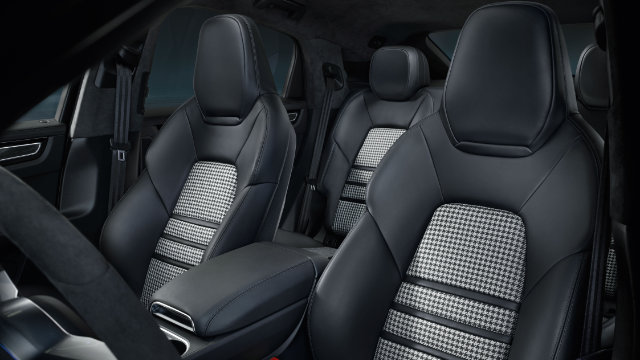
The Cayenne Coupé provides plenty of space for four adults. At the front, the new eight-way sports seats with integrated headrests offer outstanding comfort and good lateral support. In the rear, the Coupé comes with a rear bench that has the characteristics of two individual seats. Alternatively, the more traditional “comfort” rear seats – a feature of the Cayenne – can be ordered at no additional cost. In the CC, rear passengers sit 30 millimetres lower than in the Cayenne, meaning there is plenty of headroom, despite the vehicle’s sporty roof line and gigantic panoramic sunroof. The boot capacity is a positively huge 625 litres. This balloons to 1 540 litres, with the rear seats folded down.
German manufacturers are still a little stingy with equipment, so seat-integrated heaters and cooling fans are optional, to the surprise of the 200 VX driver.
The shape of the CC’s sports seats, which hold the driver and front passenger tightly in turns, was praised by our tester.
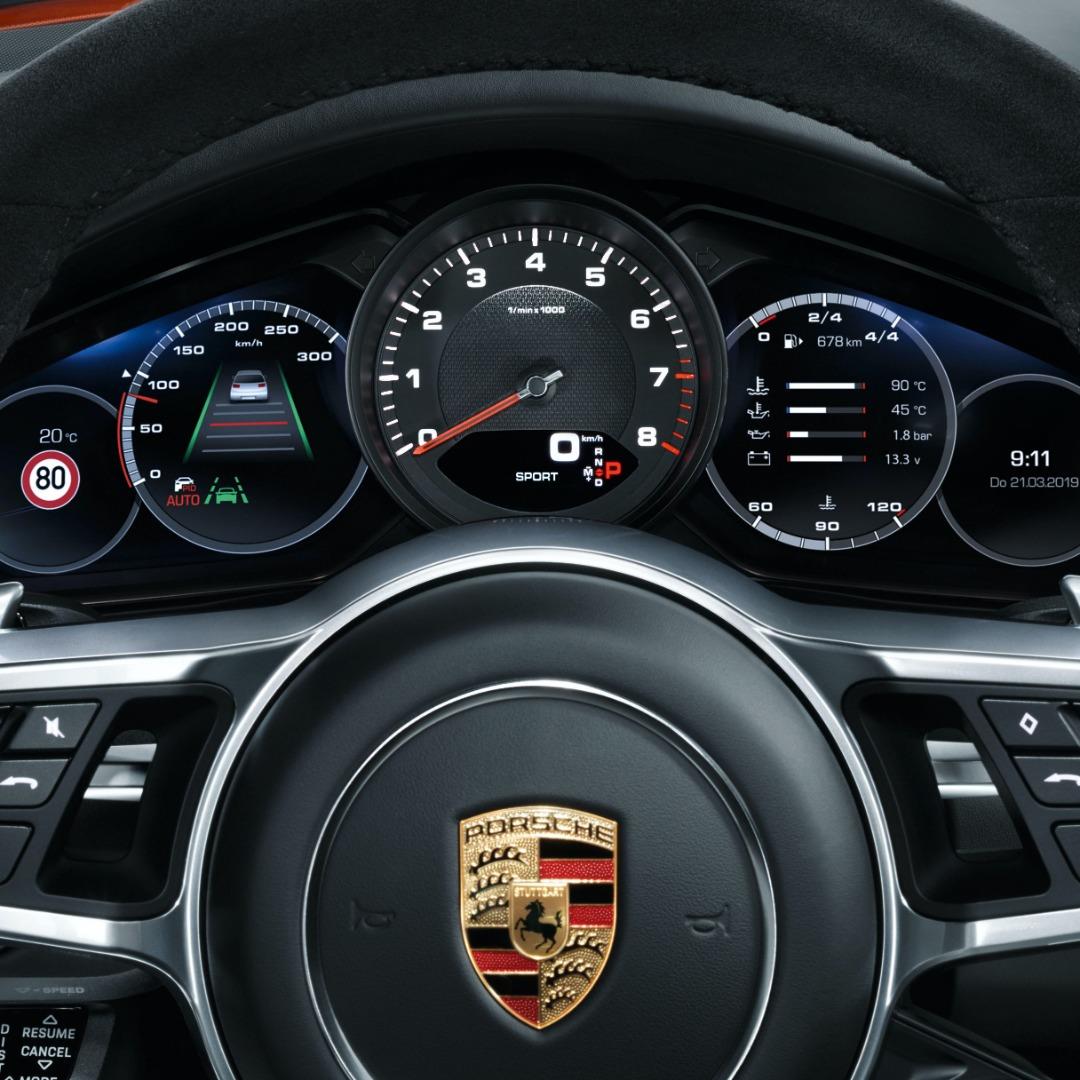
The CC is fitted with a 12.3” touch-screen and navigation is standard. This system does not have the most intuitive UX, but you can use an iPhone’s navigation and other apps through Apple Car Play. There are two USB ports in front and another two in the back.
Related: Driving Lamborghini’s biggest bull
Safety
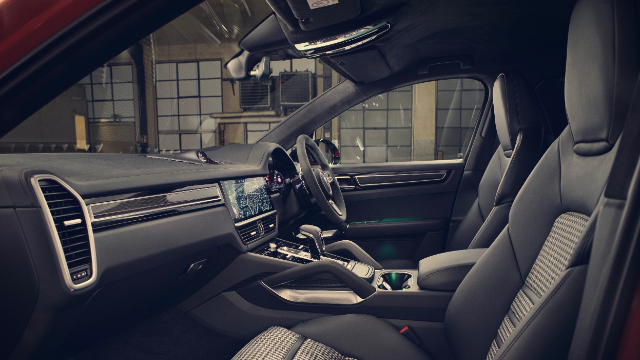
The Cayenne Coupé is one of just a handful of cars equipped, as standard, with knee airbags for the driver and front passenger. This brings the airbag count to eight, with rear curtain-airbags on either side available as numbers 9 and 10.
LED headlights are standard, but high-beam assist is optional. Adaptive cruise control is also a cost option.
The brakes are potent and easy to modulate. There are four-piston aluminium mono-bloc fixed-calliper brakes at the front, and two-piston aluminium mono-bloc fixed-calliper brakes at the rear. The internally ventilated discs measure 350 mm at the front and 330 mm at the rear.
The CC has Porsche Stability Management (PSM) as standard, which includes ABS, ASR, ABD, MSR and Trailer Stability Management.
Fuel consumption
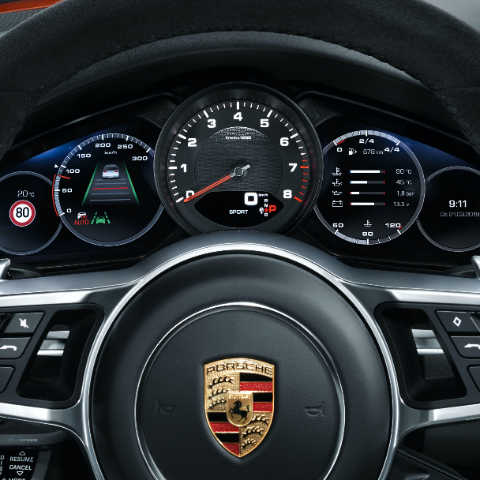
Porsche says the Cayenne Coupé will consume 11.7 l/100km in the urban cycle, 8.0 l/100km on the open road and 9.4 l/100km in the combined cycle. These figures proved to be accurate over the five days we spent driving the CC. It’s intriguing that Porsche claims the same figures for the more powerful Cayenne S Coupé. Carbon dioxide emissions are rated at 215 g/km.
Price
If purchased with a 3-year Driveplan, the price of the CC is R1 421 000. With a 5-year Driveplan, it is R1 471 000. These comprehensive maintenance plans are valid up to 100 000 km. The warranty is valid for two years (unlimited km) and service intervals are 15 000 km.
Verdict
“The Porsche feels like a sports car wrapped in an SUV,” said our Cruiser-driving guest pilot, without any prompting. The Porsche’s performance, agility, comfort, appearance and spacious interior were especially popular with her and her family. There was, however, a hesitation to use it in Mpumalanga’s mining and agriculture region, where it would have been subjected to daily driving on murderous roads. The Coupé is possibly more suited to city streets and national roads than in a dusty environment where roads are not maintained. It might live up to a challenge such as this, but you’d probably feel too sympathetic towards it.
Expert rating
4.5/5