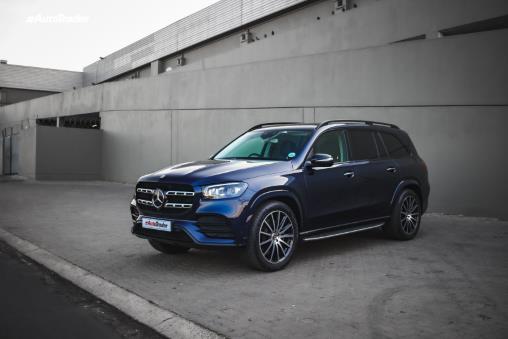
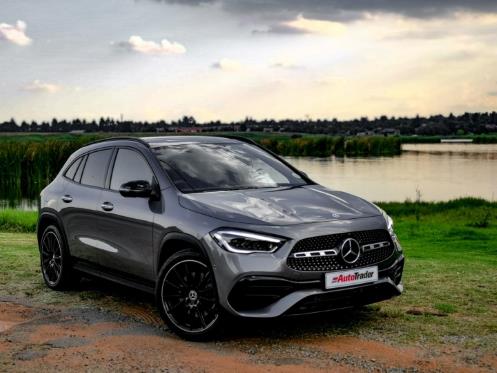
Mercedes-Benz GLS580 4Matic AMG Line (2021) Review – One of the quickest lounges around
Mercedes-Benz has an incredibly wide range of SUVs in their current line-up, with various sizes, body styles, and even a few 7-seaters in the mix. The GLS-Class sits near the top of this selection, and is pitched as the SUV equivalent of an S-Class sedan. But just how accurate is this market positioning? We spent a week with one to get the answers.



The Mercedes-Benz S-Class has earned its spot at the pinnacle of the motoring hierarchy, thanks to this model’s long tradition of technical innovation and uncompromising comfort. With this is mind, referring to their GLS-Class as the SUV equivalent of an S-Class is a bold decision on the part of Mercedes-Benz. Does this giant 7-seater really deserve such an accolade?
Related: Shop for new and used Mercedes-Benz GLS-Class cars for sale here.

Styling
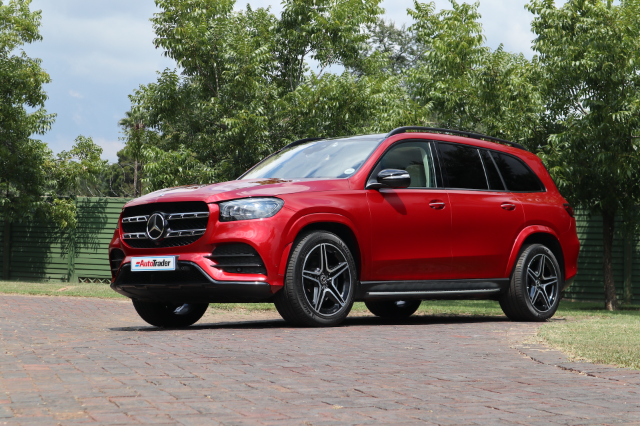
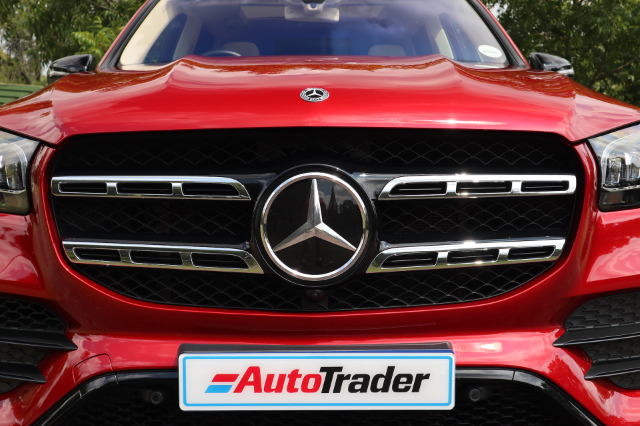
Apart from its sheer size, the Mercedes-Benz GLS looks very much like the latest GLE SUV – at least, from the front and the rear. In front, there’s a gaping grille with the “twin-blade” design motif first introduced on earlier-generation AMG models, flanked by frowning headlights and underscored by a bumper with massive air intakes.

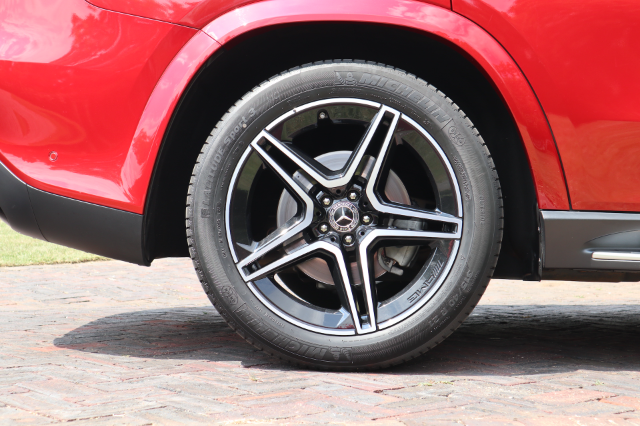
Our test car was finished in vivid “Designo Hyacinth Red Metallic” paintwork, which added some more visual drama, and rolled on the 21-inch twin-spoke alloy wheels that form part of the AMG Line styling package. Smaller (20-inch) and larger (up to 23-inch) wheels are optionally available, but anything smaller than the 21s will likely look a bit lost in those big, gently-flared wheel arches.
From the rear, the horisontal tail light clusters mirror the teardrop shape applied to the new GLE, and forms perhaps the closest visual link to its smaller sibling’s styling. As per large-SUV norm, side steps and some lower body cladding all around add some off-road style, but its elongated glasshouse and stretched dimensions still suggest “Tall Station Wagon” rather than “Hard-Core Overlander”.

Performance
With a twin-turbo, 4.0-litre V8 delivering 360 kW and 700 Nm under the bonnet, performance is rather rapid for a huge car of this nature. The petrol engine is augmented by a mild-hybrid system that takes the total output to 376 kW, and helps to fill any valleys in the boosted engine’s torque curve.
Power is sent to all four wheels via a smooth-shifting 9-speed torque converter automatic. The drivetrain’s outputs are potent enough to shunt the heavy (2 545 kg kerb weight) GLS580 around with some real authority, and results in a 0 – 100 km/h sprint in a claimed 5.3 seconds, with the top speed governed at 250 km/h.

For even greater sprinting ability in a GLS, the Mercedes-AMG GLS63 ups the ante to 466 kW and 850 Nm (total system outputs), to slash more than a second off the 0 – 100 km/h sprint – albeit at a price premium of more than R 1-million in base trim. We don’t really understand why this could be necessary, mind you: The GLS580 is rapid enough as it is, and its peak torque plateau (from 2 000 r/min to 4 000 r/min) and well-programmed gearbox ensures confident overtaking performance and effortless cruising.

The Drive
On-road behaviour supports the assertion that the GLS580 already stretches the laws of physics to an appreciable degree, even without the AMG version’s extra turn of speed. This is a fast, big and heavy vehicle with a high centre of gravity, and there’s only so much that a trick AWD system, fat tyres and active suspension can do to contain the inertial forces at play.
With that said, the degree to which the engineers managed to reconcile these physical conflicts is quite remarkable. While the driver is always aware of the GLS’s considerable mass, it doesn’t feel anywhere near as ponderous or wallowy as you might expect. Direction changes are executed without fuss or delay, and the handling balance is set up for moderate understeer in extreme situations.
The downside comes in ride refinement, where the active air suspension and low-profile tyres allow some road imperfections to disturb the cabin’s restful ambience. This is particularly noticeable over speed bumps or pockmarked roads, where high-frequency vibrations and the occasional “thunk” take some of the shine off the GLS580’s overall high levels of road insulation.

Space and Comfort
The cabin’s occupants will have nothing else worth complaining about, however: There’s ample space in all three seating rows, although the third row’s leg- and headroom aren’t up the same level as the other seats. And, while the trick suspension cannot quite filter out all road imperfections, the seats themselves are superb all round, and includes electric folding/sliding actions (as applicable) for both rear rows.
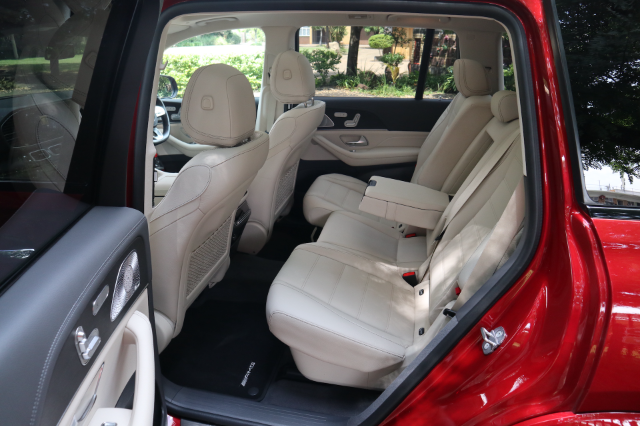
It’s all very plush, with electric adjustment for the two front rows, a multitude of air vents, reading lights, and temperature-controlled cupholders scattered all over. Standard luxury features include heated- and cooled seats for the first two seating rows (part of the Technology Pack that’s paired with the AMG Line trim), and multi-zone climate controls for the rear passenger compartment.

Other equipment highlights include the top-end MBUX user interface, a massive panoramic sliding roof, soft-close doors, a Burmester premium audio system with smartphone mirroring and wireless charging, an optional head-up display, heated third-row seats, and our test car’s beige/black leather upholstery scheme. Other available extras (although not fitted to this test car) include a rear-seat entertainment system, a secondary MBUX tablet interface in the rear, and rear side window blinds.

Safety
This is a high-end Mercedes-Benz passenger vehicle, so it goes without saying that the GLS580’s safety credentials are impeccable. While the GLS has yet to be hurled at a barrier, the GLE (with which the GLS shares a platform) scored 5 stars in 2019 Euro NCAP testing, with excellent ratings for occupant protection all round.
Standard safety kit include lane-keeping assistance, lane-departure warning, 9 airbags, adaptive cruise control, blind-spot monitoring, cross-traffic alert, self-parking functions (for both parallel and reverse-docking), exceptionally potent Multibeam LED headlights, automatic emergency braking, and a surround-view camera system. In short, the Mercedes-Benz GLS580 has all the safety gadgets you could desire as standard, and a few more just for good measure.

Fuel Consumption
Two-and-a-half tons, blocky styling, and a mountain of power seldom bodes well for fuel consumption, an assertion proved by this test car. While Mercedes-Benz claims an average consumption of 10.0 ℓ/100 km, this figure will only be approached during extended freeway trips at moderate speeds.
In the case of our test car, the average consumption ended up at 15.6 ℓ/100 km in mixed-cycle driving. Sure, that swell of turbo-V8 torque was enjoyed on a fairly regular basis, but even without such indulgences, most drivers will struggle to better 14 ℓ/100 km in normal use. A super-wide gear ratio spread and hybrid assistance can only go so far to tame the thirst of something this big and heavy...

Price and Warranty
To be honest, a pricetag over the R 2.1-million mark will never signify a high-value buy. But, given the context of a big, luxurious and well-equipped 7-seater, the GLS580 AMG Line’s base price of R 2 118 460 seems like fair value.
This is roughly in line with the equivalent BMW X7 M50i, although a Range Rover Sport with similar power (but two fewer seats) can be had for fractionally less. Included in the price is a warranty for 2 years with no distance limit, as well as a maintenance plan for 5 years or 100 000 km.
* Pricing includes all taxes and was accurate at the time of publication, but is subject to change.
Verdict
It’s difficult to pigeonhole a big, premium-branded 7-seater SUV, simply because the GLS really only has one opponent in this market segment (the X7). However, while the GLS580 has (or can be ordered with) most of the premium features and luxury elements you would expect in luxury sedan, the GLS’s basic architecture keeps it from really being the S-Class of SUVs. The trimmings are there and so is the cabin space, but a slightly unsettled ride quality militates against ticking the box for the AMG Line trim package.
We’d suspect that a non-AMG Line GLS580 (which also has a R 70 000 lighter pricetag) may get closer to its target of mimicking the S-Class, simply because its slightly more-compliant suspension and taller tyre profiles will smooth out the ride quality, to closer approximate luxury saloon comfort levels.

Better yet, opt for the excellent new 2.9-litre inline-6 turbodiesel in the GLS400d to get just as much torque but save about 20% on fuel consumption. But, as it stands, the GLS580 AMG Line tries to satisfy too many conflicting requirements, and ends up missing some of its targets in the process. It’s a very good all-rounder, but a different spec level will elevate it to excellence.