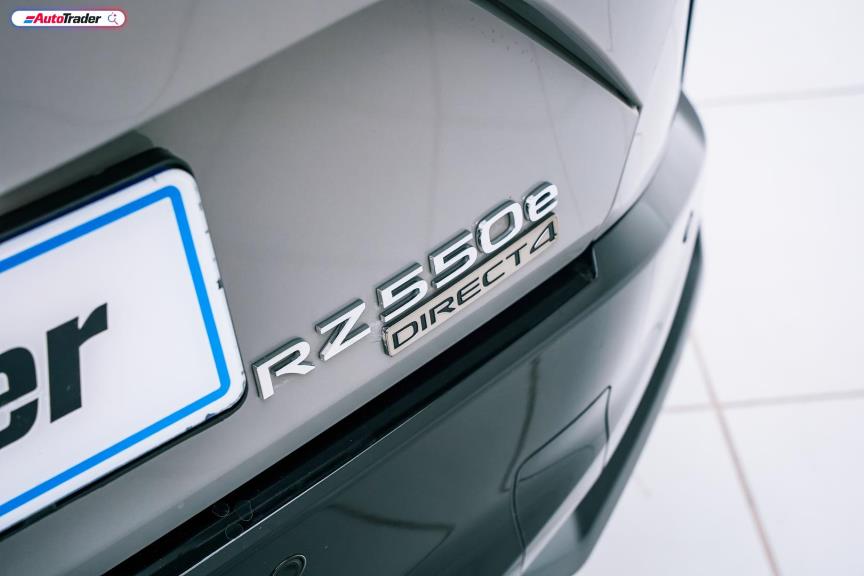
Lexus RZ 550e Direct4 F-Sport (2026) Review
Lexus's first dedicated BEV pairs 300 kW of effortless performance with trademark luxury and impeccable build quality. The RZ 550e F-Sport straddles sport and comfort beautifully, though limited range and premium pricing narrow its appeal to the bold EV adopter.

Pros
- Lovely combination of sporty and comfortable driving
- Low running costs and surprisingly low energy consumption
- Exceptionally well built and finished off
Cons
- Still somewhat limited in terms of range
- Optional yoke steering is more gimmicky than revolutionary
- Expensive
The BEV story in South Africa has been an interesting one, and it continues to surprise us. While many felt that BEVs were an European solution to an African problem, recent developments, politically, economically, and in tech have seen a shift in the acceptance of BEVs in our market. The availability of cost-effective BEVs and the escalating fuel price have seen consumer sentiment shift towards acceptance. There are more consumers considering electric vehicles now than ever before.
While some manufacturers jumped the gun locally, offering expensive BEVs before the appetite was there, Lexus has held out. Toyota's multi-pathway approach to development has seen them spread their efforts across hybrid, hydrogen, ICE, and EV, and this has proven to be a wise move. Push back from some European markets has forced other manufacturers to rethink their approach to mobility; all the while, Toyota has been quietly sticking to the plan.
The Lexus RZ 550e is the first electric-first offering from the Japanese luxury brand, designed from the ground up as a BEV, allowing for a bespoke offering that isn't restricted by traditional ICE design limitations.
Category | Specification |
Price (R) | R1 977 600 |
Engine | 2x PMSM |
Power | 300 kW |
Torque | 537 Nm |
Top Speed | 180 km/h |
Transmission | Single speed Direct4 |
Drive | 4x2 |
Economy | 18.4 kWh/100km |
Maintenance Plan | 7 years/105,000km |
Rivals | BMW iX, Volvo ES90, |
Styling
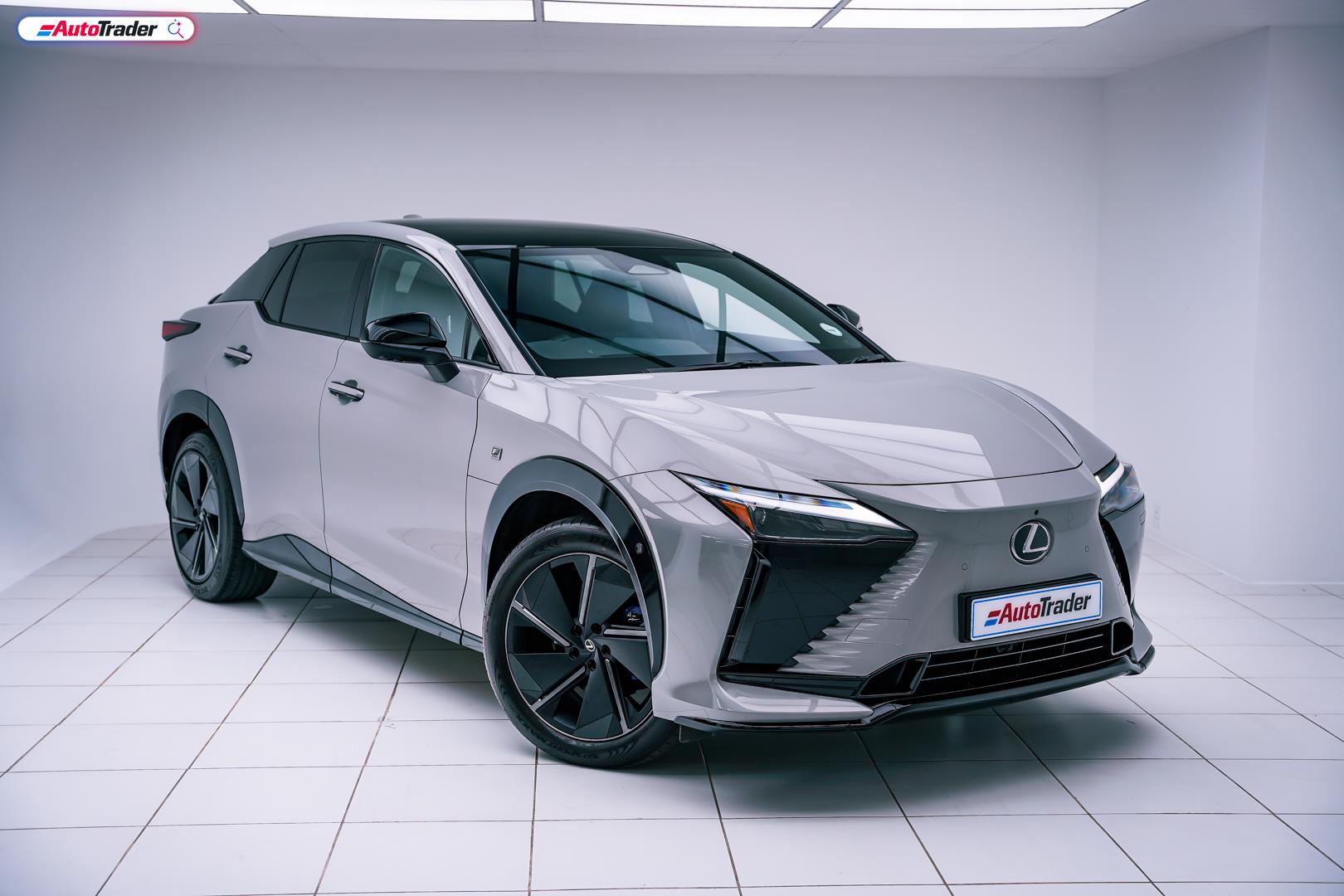
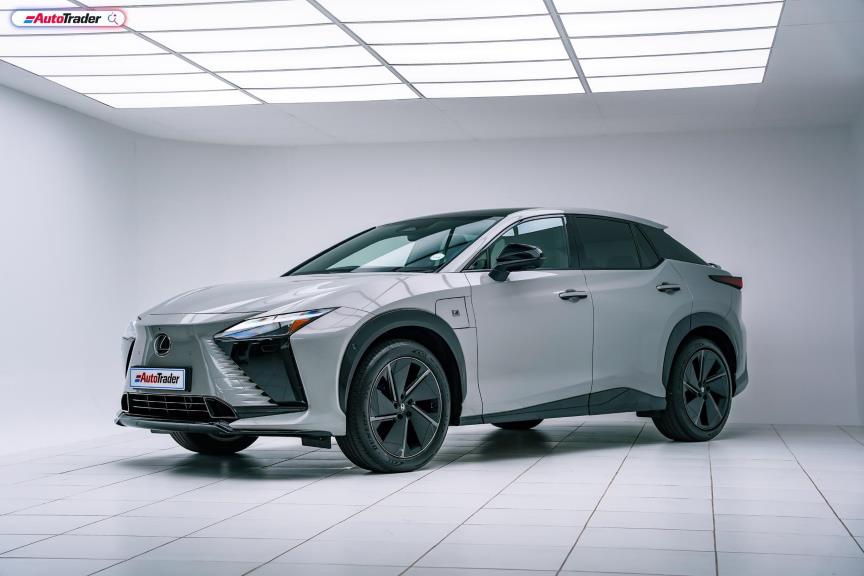
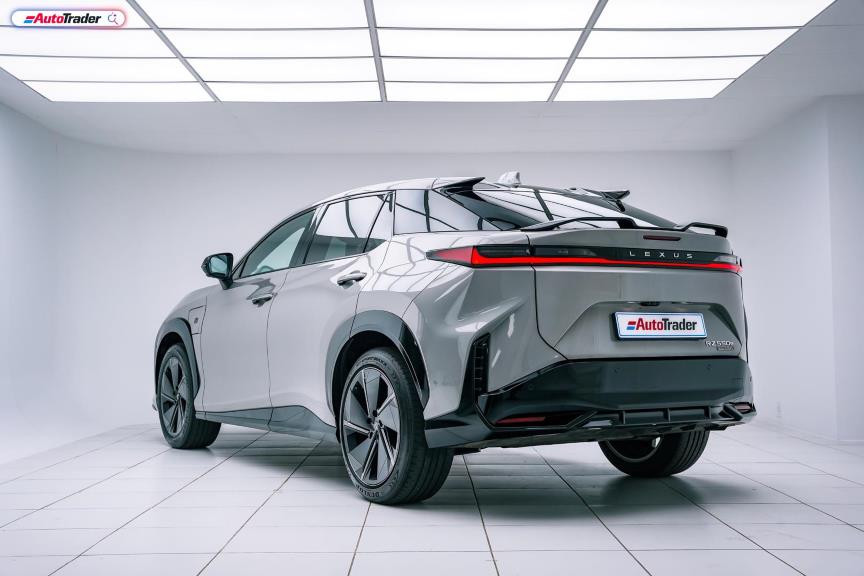
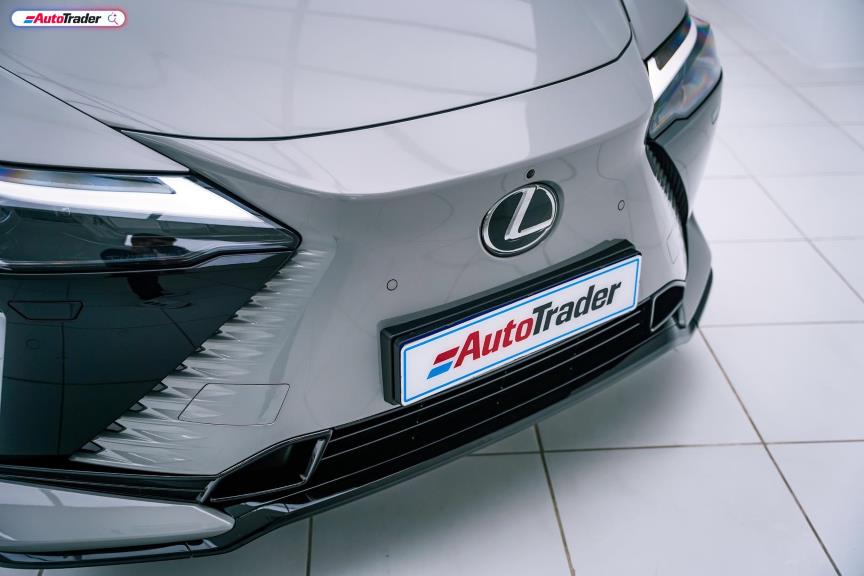
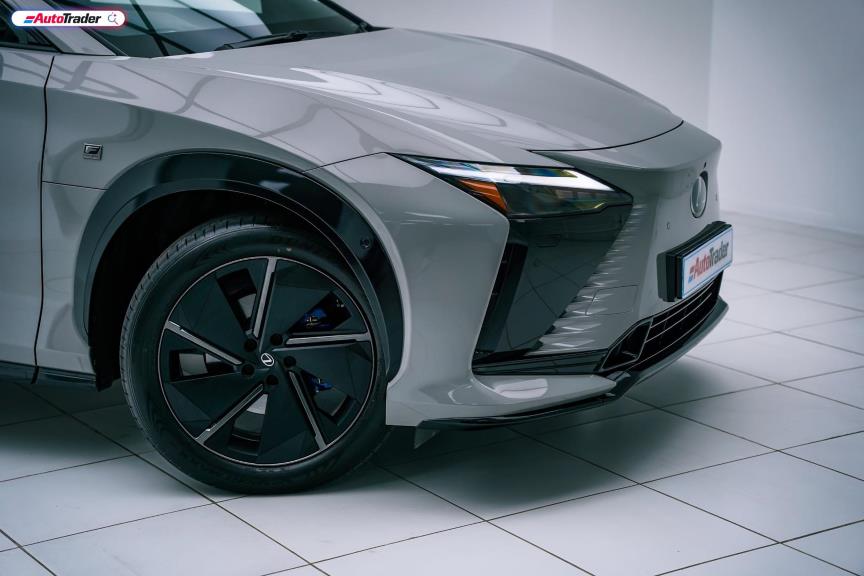
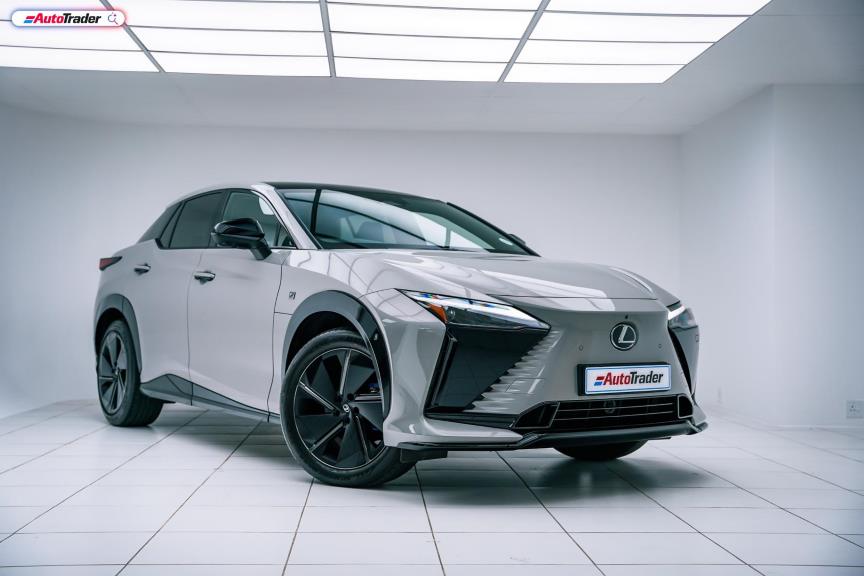
Being an EV-first concept, Lexus would have been able to simply create a pod on wheels (and if their concepts at the 2025 Japan Mobility Show are anything to go by, future Lexus products may just be that), but straying too far from what is familiar is too bold a decision to make when you're still hoping to sell vehicles. The RZ is instead a sporty, fastback-styled crossover, infused with unmistakable Lexus DNA: sharp creases, sculpted, functional air ducts, and a reverse spindle grille with LED lighting, and that customary shoulder-line kink.
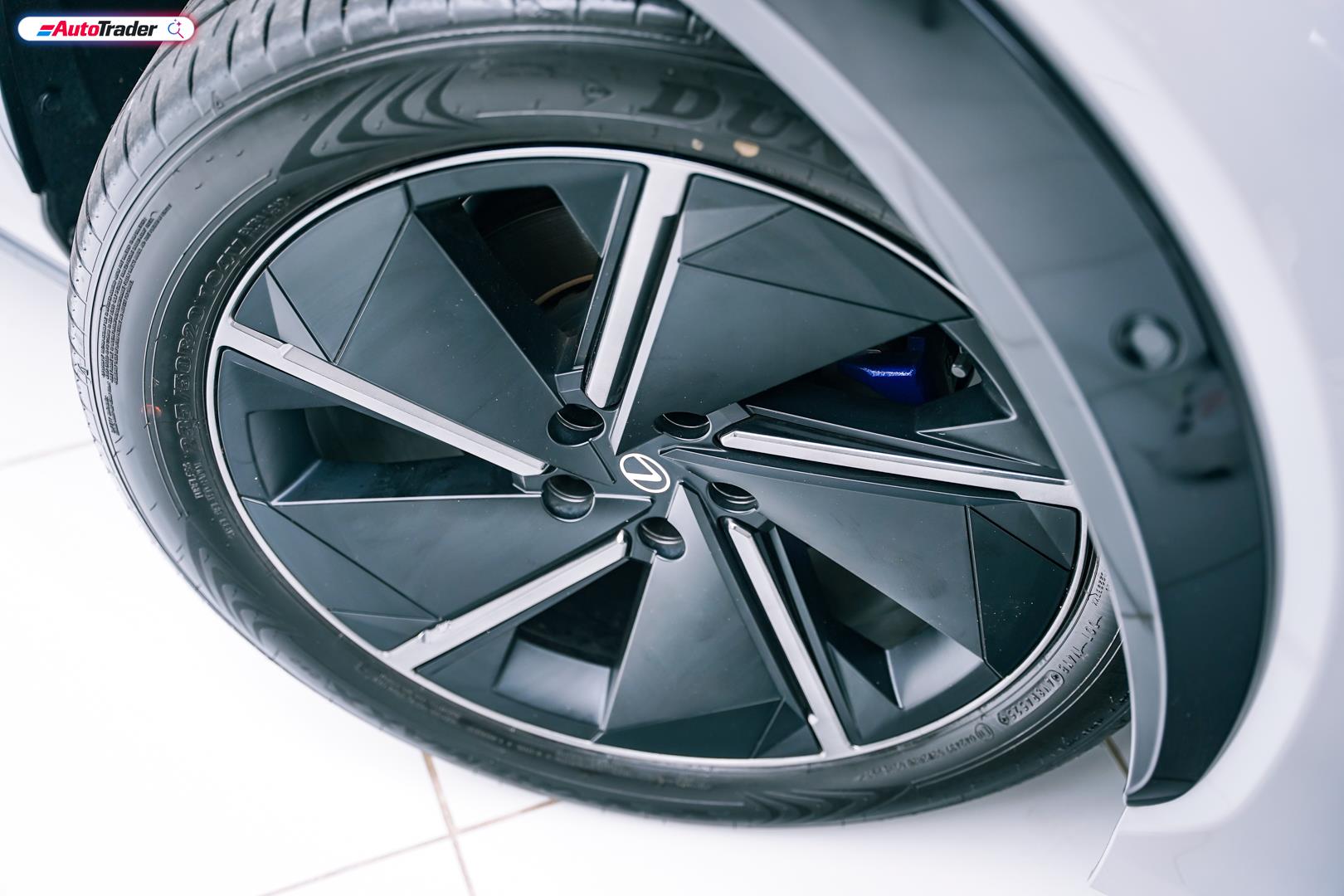
The F-Sport trim features functional aerodynamic elements, both at the front and at the rear of the RZ, highlighting its sporty intentions. Shod with 20-inch, aerodynamic wheels, with gloss black wheel arches, the RZ blends the utilitarian nature of a crossover with the high-performance presence of a sports car. Where the bZ4X, which shares the platform with the RZ, uses Lexus LFA-style taillights, the RZ has a streamlined, full-width LED taillight element.
Interior and Technology
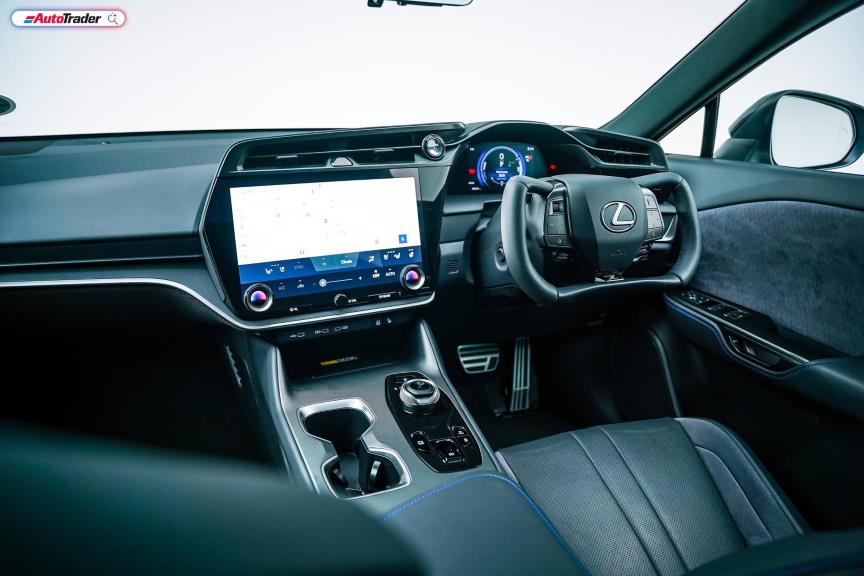
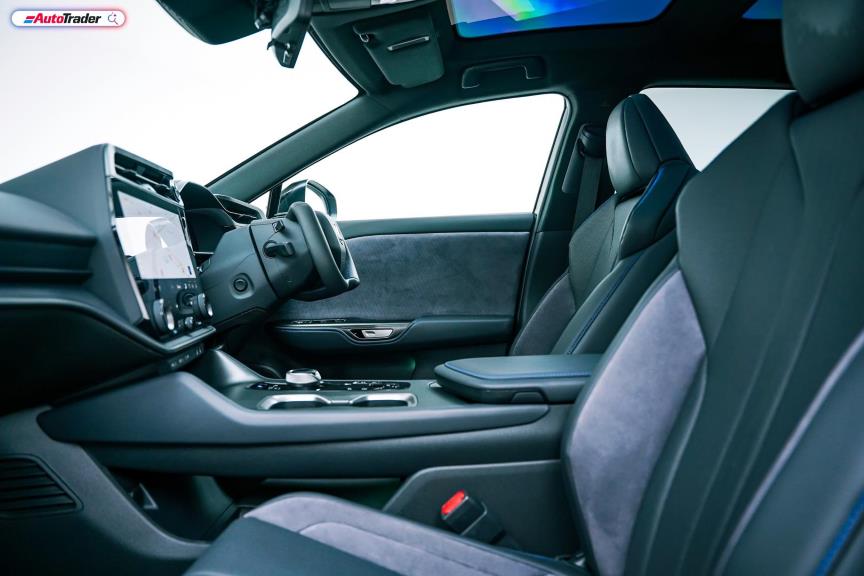
The interior of the Lexus RZ embodies their Tazuna concept, which places the driver as the ergonomic centre of the design. As such, the switchgear is laid out in a logical manner, within easy reach, along a predictable eyeline. The dashboard design echoes that of the shoulderline, with a purposeful kink and corresponding brushed brightwork surrounding the large, 14-inch full HD infotainment screen, which is canted towards the driver. But, unlike so many other Asian products, not everything is controlled by the screen. Two rotary knobs control temperature and fan speeds, a central volume knob is conveniently located below the screen, with physical push buttons on either side for defrosting functions.
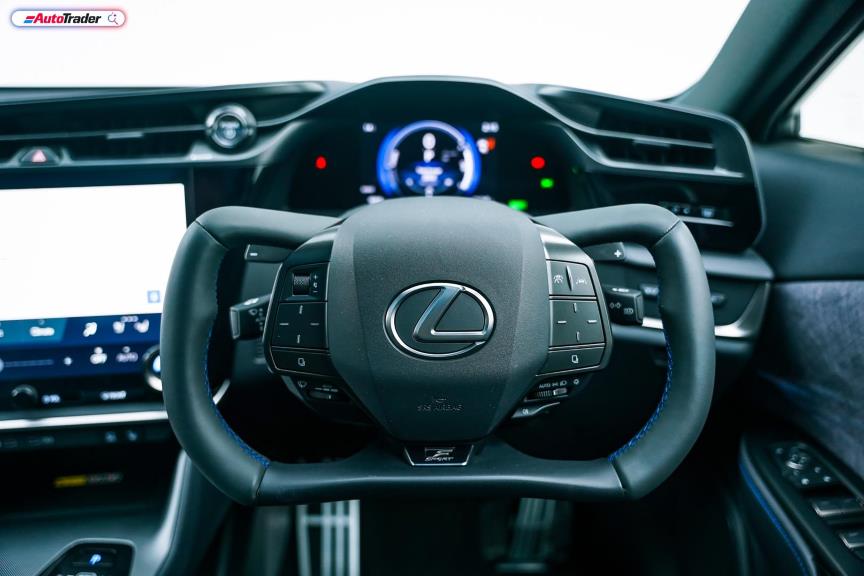
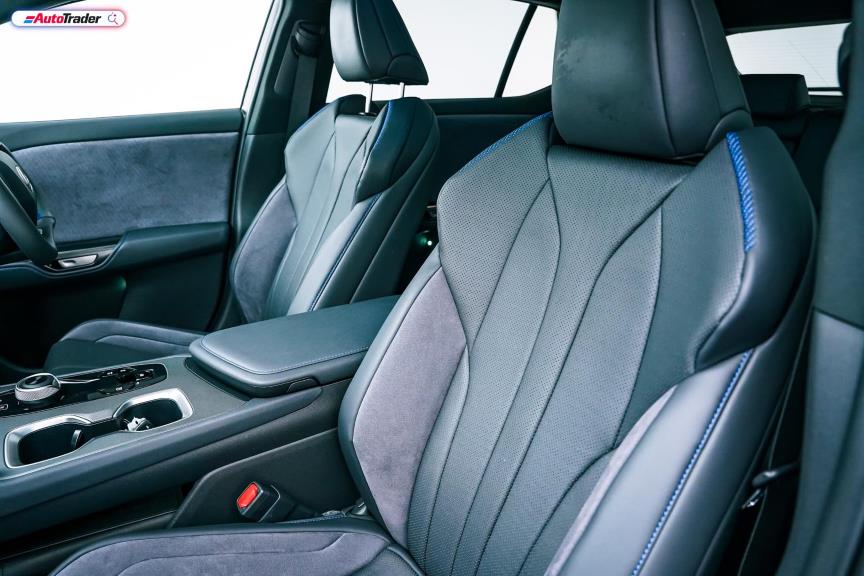
The 550e F-Sport is fitted with sports seats, trimmed in black and dark grey Ultrasuede, perforated with raised contrast stitching, in F-Sport blue. Aluminium sport pedals round off the F-Sport treatment, but the biggest talking point is the optional steering yoke that looks almost out of place in the cabin. Small and squared off, it initially looks as if it would be uncomfortable to use, but this couldn't be further from the truth. The yoke is connected to a steer-by-wire system with variable rate, which means you never really need to turn it more than 200 degrees, no matter what speed you're going. At low speeds, in parking lots and such, a small turn of the yoke has the front wheels turning aggressively, but at higher speeds, that same input only results in a small change in the front wheels. After a day of driving, this becomes rather intuitive, and one comes to appreciate the amount of space it frees up in the cabin.
Performance
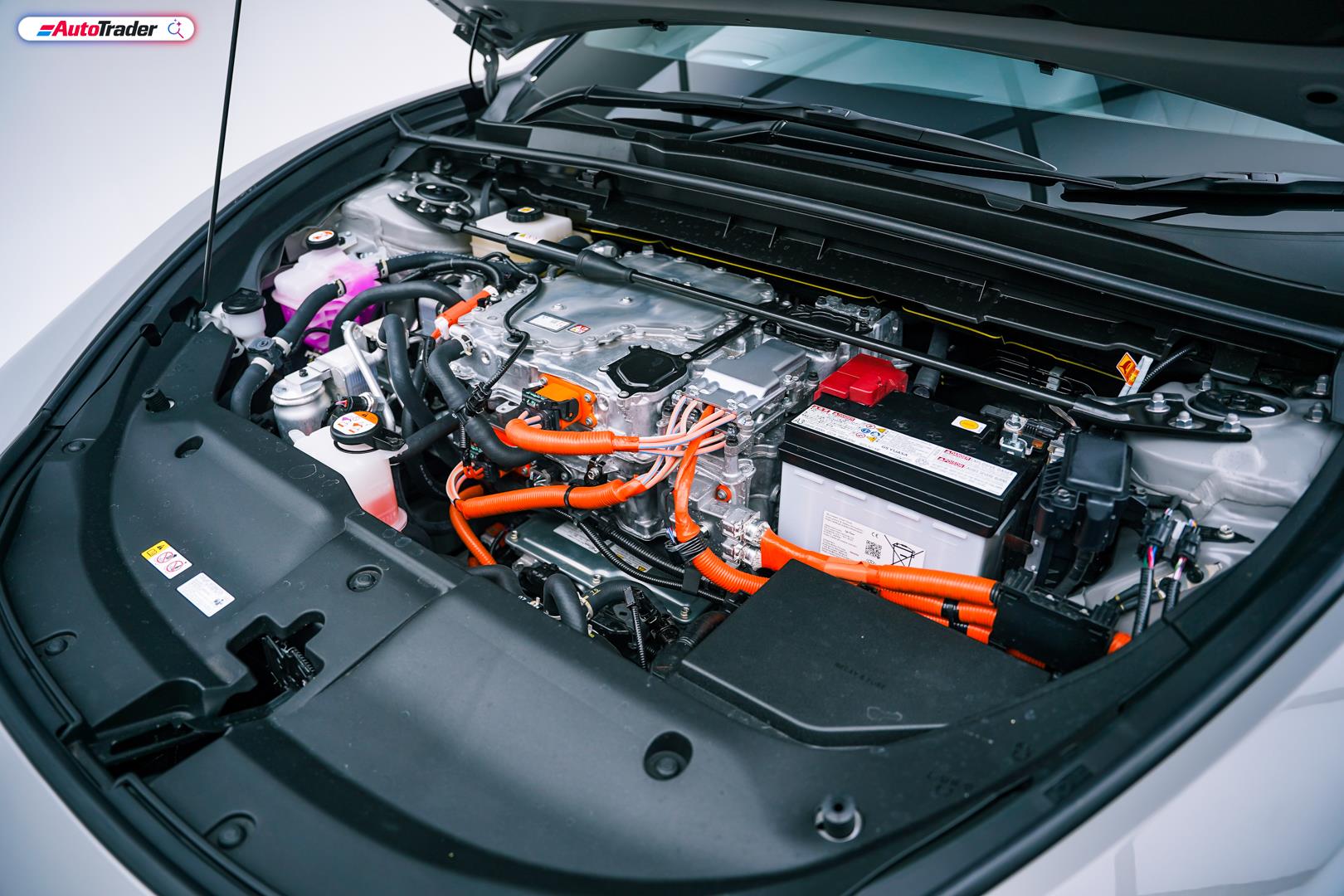
The RZ 550e F-Sport is a twin motor, AWD BEV that produces a combined 300 kW and 537 Nm, good enough to get the 2,145 kg RZ to 100 km/h from a standstill in 4.4 seconds. The eAxles allow for a continuously variable distribution of the power between the front and the rear, helping to ensure that usable power is sent to where it is needed. These respond exceptionally well to rapid input, making the RZ 550e F-Sport genuinely sporty in its feel.
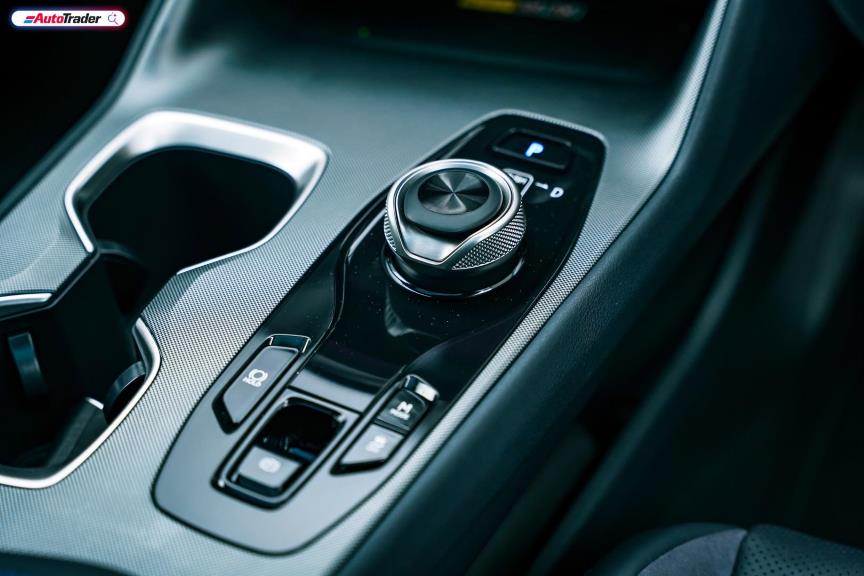
Lexus programmed a virtual 8-speed "gearbox" into the drivetrain and even fitted the yoke with paddle shifters. While we know it's all make-believe, it allows driving enthusiasts to "manually change gears", replete with a simulated shift. And before you ask, yes, it is possible to "bounce it off the limiter". The truth is, you'll use it once, get over the novelty, and probably never touch it again.
Driving Impression
That yoke, as mentioned, takes a few kilometres to get accustomed to, but once you trust the variable steering ratio, it becomes almost second nature. There are a few habitual behaviours that are tough to shake, and left foot reaching for the clutch, etc, but the steering isn't one of them. I was amazed at how little steering input was required when parking, and it didn't feel twitchy or over-assisted at highway speeds.
This may be an F-Sport, but there's no engineering your way around the inherent weight of an EV. The centre of gravity sits low in the chassis, providing a sporty feel with minimal body roll and drive under braking. The RZ 550e has several levels of regenerative braking, including completely off, which engages the hydraulic brakes from the outset, providing the most natural feel in the 550e.
The RZ manages to do what most Lexus products do so well: straddle the line between comfort and sportiness, switching back and forth seamlessly. Feel like going for a spirited drive? The RZ is up for that task. Want to sit back and revel in the IR heating panels as you commute to work? It does that too. It's never going to ride as compliant as a Rolls Royce, now will it set lap times that compete with a GT3 RS, but as a jack of all trades that doesn't use a drop of fuel, it's a pretty good facsimile of both.
Fuel Consumption
The RZ 550e is fitted with a 76.9 kWh battery, with the non-F-Sport variants getting a slightly smaller 74.6 kWh battery. The 76.9 kWh unit allows the RZ 550e F-Sport to offer a fully charged range of around 450 km. It's also capable of accepting a 22 kW AC charge, allowing you to extract the most from your public and home charging infrastructure.
Expect charge time of approximately 5h 27m from 10-80% on an 11 kW charger, and 2h 44m for the same charge on a 22 kW charger. Expect a 1h charge time on an average DC charge of 60 kW, to get the battery from 10-80%. The battery preconditioning system will also self-activate when the nearest charging station is selected in the navigation.
I found it to be rather economical on the open road, returning far better consumption figures than I expected for a BEV. Usually, the highway is the enemy of a full-electric vehicle, but this was not the case here.
Safety
The Lexus RZ scores a full 5 stars on the Euro NCAP, with scores of 87% for both adult and child occupants, 84% for vulnerable road users, and 81% for its safety assist systems. The RZ is fitted with the standard array of braking, traction, and stability assists and is equipped with 8 airbags.
Adaptive cruise control, blind spot monitoring, and lane keep assist, along with autonomous braking and cross traffic alerts, all form part of the ADAS system in the RZ 550e.
Pricing
If you've stuck around this long, you will surely understand that the RZ is not one of those budget BEV offerings that I spoke about at the start. The RZ is a premium offering, and that is reflected in its price. You can expect to pay no less than R1,977,600 for the RZ 550e F-Sport, but pricing for the RZ range does start a little lower for the RZ 500e Direct4 EX.
It is sold with a 7-year/105,000 km warranty, a 7-year/105,000 km maintenance plan, and carries an EV battery warranty of 8-years/160,000 km for additional peace of mind.
Model | Price |
| Lexus RZ 500e Direct4 EX | R1 682 600 |
| Lexus RZ 500e Direct4 SE | R1 860 400 |
| Lexus RZ 550e Direct4 F Sport | R1 977 600 |
| Lexus RZ 600e Direct4 F Sport | R2 628 500 |
Verdict
The Lexus RZ 550e is not going to be to everyone's taste. It's expensive, it remains a full-BEV solution, and still has a few idiosyncrasies that may push consumers into other showrooms. Don't expect to see many on the road.
What the RZ does offer you is an impeccable build quality, thoughtful design, and a full-house package at the price that you see on the tag - no exorbitant options list. If you want more, go up a grade. If you don't want to spend so much or feel that there are too many features that you simply don't need, then downgrade a trim level.
The RZ 550e was an effortless drive that managed to do the highway adventures surprisingly well, but was at home on the daily commute. If you're looking to switch to a BEV and want something that makes a statement, stands out, and goes against the established flow, the RZ 550e F-Sport may just be the vehicle for you.