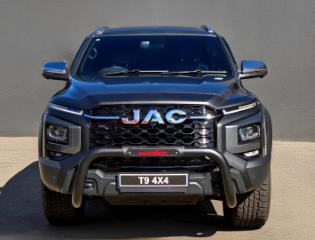
The Jaecoo J7 landed locally in 2024 and has since seen sales increase. The Jaecoo brand, a sister brand to Omoda, focuses on the lifestyle-oriented client base; however, in our opinion, the J7 is a pretty fashionable car too.
Related: Jaecoo J7 1.6T Glacier (2024) Review
Before we get into what separates the Jaecoo J7 SHS from the rest of the J7 line-up, remember to search for new or used Jaecoo J7 models on AutoTrader here. You can also sell your car quickly and easily on our website here.

Styling
While the Jaecoo J7 SHS looks the same as the rest of the lineup, there are a few distinguishing features. First up are the 19-inch model-specific alloy wheels in each corner. The design is not only much more dramatic but also more aerodynamic. That is because if you look closely at the tailgate, you will notice the "PHEV" moniker. Yes, the SHS is a plug-in hybrid model.

Keen viewers will also notice that the J7 SHS gets LED head and taillights, and as most South Africans like it, the SHS comes standard with a panoramic sunroof. The J7 SHS will be available in four colours: Moonlight Silver, Carbon Black, Olive Grey, and Khaki White. Overall, the J7 SHS retains European-like styling and still very much competes with the Land Rover Range Rover Evoque in its design.

The Drive
Step inside the plush interior and grab onto the steering wheel, and you will quickly notice how comfortable the J7 range is. As there is no start button, you just start driving without having to start the ignition or turn on the auxiliaries. The compliant suspension absorbs big and small undulations with ease. In fact, without surrendering too much to body roll, pitches, or dives, the suspension remains very supple. The main area of improvement on the J7 SHS is the drivetrain.
After having driven both the ICE and plug-in hybrid variants, I will state confidently that it feels as though the vehicle was designed to be a hybrid from the beginning. The combination of electric drive while setting off and the quiet engine stepping in to assist at higher speeds is balanced well, and no longer wheel spin while setting off. The drivetrain feels smoother and more refined, and it is an excellent piece of kit if you are looking for something frugal for your daily commute.

Performance
There is a significant increase in performance with the plug-in hybrid J7 SHS. In fact, producing 255 kW and 525 Nm of torque, the J7 SHS offers 110kW and 235Nm more than the 1.6-litre, turbo-petrol units in the rest of the J7 range. And can I add, it is very noticeable.
While the exact 0-100 km/h sprint times and top speeds are available from the manufacturer, we do know that in the EV mode, you can only reach up to 120 km/h. The Dedicated Hybrid Transmission (DHT) offers quick and seamless shifts and power surges as you apply the accelerator.

Space and Comfort
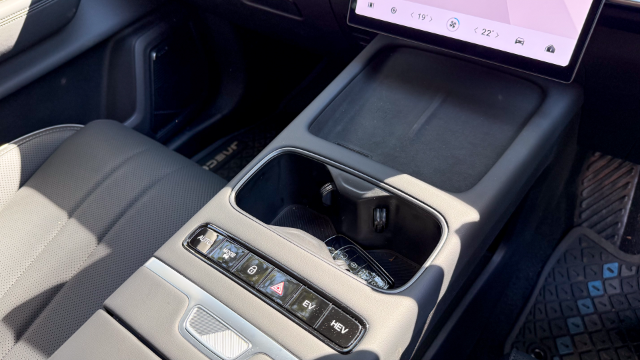
The interior is very similar to that of the other units in the range; however, the door cards and, most notably, the centre console have been updated. While previously the gear Prindle was found on the centre console, it now resides behind the steering wheel. Instead, the centre console now offers the driver quick access to the emergency lights, central locking, EV shortcut, HEV shortcut, automatic HVAC shortcut, and the drive modes button.
The drive modes button will offer three modes, ECO, Normal and Sport. With the new, cleaner layout, it is easier to access the ventilated 50-watt wireless charging pad, a big step up in ergonomics. Above the wireless charger is one of the Jaecoo J7's party pieces, the vast 14.8-inch touchscreen infotainment system.
The system is compatible with Wireless Apple CarPlay and Android Auto, and offers a built-in satellite navigation system should you not want to use a mobile app. Leg, head, and shoulder room is ample both at the front and rear of the car. With the rear bench up, you can expect a boot offering 500 litres of luggage space; however, that can expand up to 1 265 litres, with the rear bench folded flat. The interior has premium materials, and the seats are black leather.

Safety
The Jaecoo J7 PHEV achieved 5/5 stars in the Euro NCAP crash test, making the model a relatively safe option. The standard safety features you can expect in the model assist in the overall safety rating. Here are some:
- Adaptive Cruise Control (ACC)
- Automatic Emergency Braking - Vehicle, Pedestrian & Bicycle Recognition (AEB)
- Forward Collision Warning (FCW)
- Lane Departure Warning (LDW)
- Lane-Keep Assist (LKA)
- Lane Change Assist (LCA)
- Blind Spot Detection (BSD)
- Rear Cross-Traffic Assist with Braking (RCTA)
- Rear Traffic Alert (RTA)
- Traffic Jam Assist (TJA)
- Intelligent High Beam Control (IHC)

Fuel Consumption
Jaecoo claims an average fuel consumption figure of 4.7 L / 100 km with a combined battery and combustion engine use. We managed to creep in just under that figure with an average fuel consumption of 4.6 L / 100 km with air conditioning turned on. Not only are we happy that we achieved a figure better than the claimed figure, but the figure is also impressive for a vehicle of this size and weight.

Price
Included in the price of the Jaecoo J7 SHS are a 5-year / 75 000 km service plan, a 7-year / 200 000 km warranty, a 10-year / 200 000 km warranty for selective electric drive unit components, a 10-year / 1 million km engine warranty, and a 10-year / unlimited-kilometer power battery pack warranty for the first owner, reverting to 10 years / 200 000 km for subsequent owners.
| Jaecoo J7 1.6T Vortex | from R 499 900 |
| Jaecoo J7 1.6T Glacier | from R 579 900 |
| Jaecoo J7 1.6T Inferno AWD | from R 679 900 |
| Jaecoo J7 1.5T SHS PHEV | from R 689 900 |
*Pricing indicated in this article was correct at the time of publishing; however, it can change at any time and without notice.

The Verdict
Last year, I found myself inside the Jaecoo J7 in Glacier specification and was truly impressed by the Chinese model; however, I was somewhat underwhelmed by the engine and drivetrain. Then there was the driver monitoring system that couldn't be deactivated and could have become pestilent.
In one swoop, Jaecoo has addressed these issues with a spritely and powerful engine, better fuel consumption, smoother throttle response, and even the removal of the driver monitoring system altogether. The Chinese automaker has made it nearly impossible to critique the model. Personally, I like to turn a vehicle on or switch it off, and I find the omission of a start button strange.
Would we recommend the model? We most certainly would, especially at this price point.