Isuzu D-MAX 250 X-Rider (2021) Review: An old favourite gets an auto-transmission
The X-Rider has been immensely well-received by South Africans who need their bakkies to be as stylish as they are hardworking. We drove the new automatic X-Rider double cab, for those who prefer to conserve their energy in rush-hour traffic.


Styling & interior

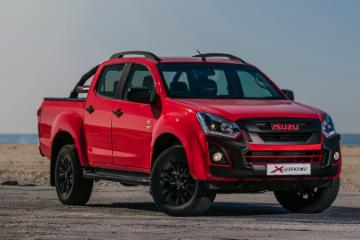
The automatic X-Rider looks just like the manual X-Rider models we reviewed recently; in fact, the only thing that's newsworthy is its new auto-gearbox. The X-Rider-badging and lettering, sports bar, tubular side steps and two-tone alloys with Isuzu decals are still all part of the deal. The interior also gets the X-Rider treatment that includes leather trim, and X-Rider embroidered seats, along with a few glossy black interior inserts.

Our test model had an optional 7-inch touchscreen fitted that features Apple CarPlay and Android Auto, and this truly enhances the X-Rider's lifestyle-bakkie dynamics. Road-tripping is much more pleasant (and also safer) when you can ask Siri or your Google Assistant to carry out your orders so your hands can remain on the steering wheel, and your attention on the road ahead. In older KB models, you had to struggle to plug in your phone or a USB memory stick because it was so difficult to lift the flap, but this has now been rectified.

If you don't spec the optional touchscreen, your X-Rider will be equipped with a Bluetooth-enabled audio system/CD player with 6 speakers. All models have multifunction steering wheel controls, and the steering wheel is covered in leather.
Space and comfort

The rear bench offers plenty of legroom and families will be delighted at the practical amount of space. The side steps simplify getting in and out of the D-Max for shorter family members. All windows are electric, and leather seats are standard to facilitate easy cleaning. It's a comfortable place to be, whether you're waiting for the kids in the school parking lot or driving on your favourite dirt road. There are enough cup holders in the front and rear for everyone's drinks, and the spacious central armrest cubby can hold additional items that need to travel with you at all times. Another practical touch are the dual cubby holes in front.
Remote central locking is standard, along with remote keyless entry. Not having to dig in my handbag to gain entry into the X-Rider was immensely convenient.

Power, performance, and fuel economy

We've come to know and love the trusty 2.5-litre turbodiesel (with 100kW and 320Nm) in the D-MAX, and the new automatic transmission works a treat. Driving home from the city in a big, burly bakkie with a manual 'box is often a schlepp, but this new automatic 5-speed transmission is oh-so welcome, however, it impacted our fuel economy negatively — the manual models are lighter sippers but you soon learn how to adapt your driving style so that the auto X-Rider is less thirsty. Our average consumption came to about 11-12 litres per 100 km, while we attained about 9-10 in the 5-speed manual model. The difference isn't big enough to put me off though — I'd much rather not overwork my quadriceps in stop-start traffic situations. I have an issue with the fact that there's still no rear-view camera, though, or even parking sensors.

As always, the X-Rider is a champ on dirt and rougher stuff, and unless you're doing serious off-roading, there's no need for the 4x4 model; the 4x2 is very sure of itself, and the traction control keeps its tail neatly in check. The X-Rider is stable on any surface, and suspension is on the soft and cushy side — perfect if you drive pothole-ridden roads regularly. We took the X-Rider on a road-trip to picturesque McGregor for the weekend and traversed all sorts of mountain passes in it, and not once did it flinch.
Safety

The X-Rider is equipped with only 2 airbags but the rest of the safety equipment list looks impressive. Plus, it's not the amount of airbags that guarantees what the outcome of an accident will be, but rather a vehicle's structural integrity.
The X-Rider has the usual ABS brakes with electronic brake-force distribution and brake assist, but I am more thankful for the aforementioned stability and traction control, as well as hill-start assist and hill-descent control. Occupants are also protected by side-impact protection bars, and the driver will benefit from a collapsible steering column in a worst case scenario. (The X-Rider also has an anti-theft alarm system and immobilizer.)
Price

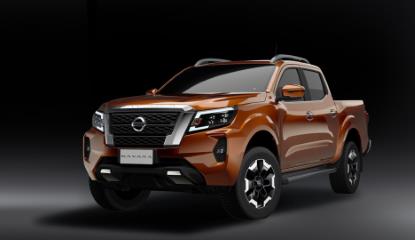
Priced at R538 000, this 4x2 X-Rider offers good value, given the amount of exterior enhancements (including a standard towbar) and its luxurious leather seats, but the segment is also rather cut-throat, with some new rivals such as the GWM P Series, Nissan Navara, and new Mazda BT-50 making waves. The Hilux 2.4 GD-6 Double Cab Raider auto retails for R536 900, while the Nissan Navara 2.5DDTi Double Cab SE Plus auto is priced at R528 000. The GWM P series 2.0TD Double Cab LT (auto) retails for a mere R509 900. These bakkies also have 6-7 airbags, and a higher quantity of gear ratios for their automatic transmissions, which aids fuel economy. (The Navara 2.5DDTi also has a hearty 140kW and 450Nm of torque.) The underdog, namely the automatic GWM P Series, offers excellent standard features (it even has gearshift paddles!) as it fights for a place in the sun on our local bakkie scene. And who can forget the far-reaching Ranger?
The Isuzu's power lies in its ruggedly-handsome looks, good reputation, and resale value, and in this instance is beaten only by the Hilux in the popularity /reliability stakes. On the plus side, the Isuzu is not as popular with hijackers as the Hilux!
Verdict

I've always been an X-Rider fan (and remain so) because I love its styling, its signature diesel-engine clatter, and its fuss-free interior. Most Isuzu KB / D-MAX owners will say that the love for an Isuzu bakkie is simply in your blood, or it isn't, and Toyota Hilux owners probably feel the same way about their vehicles. Those who opt for the X-Rider won't be disappointed — it looks the part and gets the job done!