


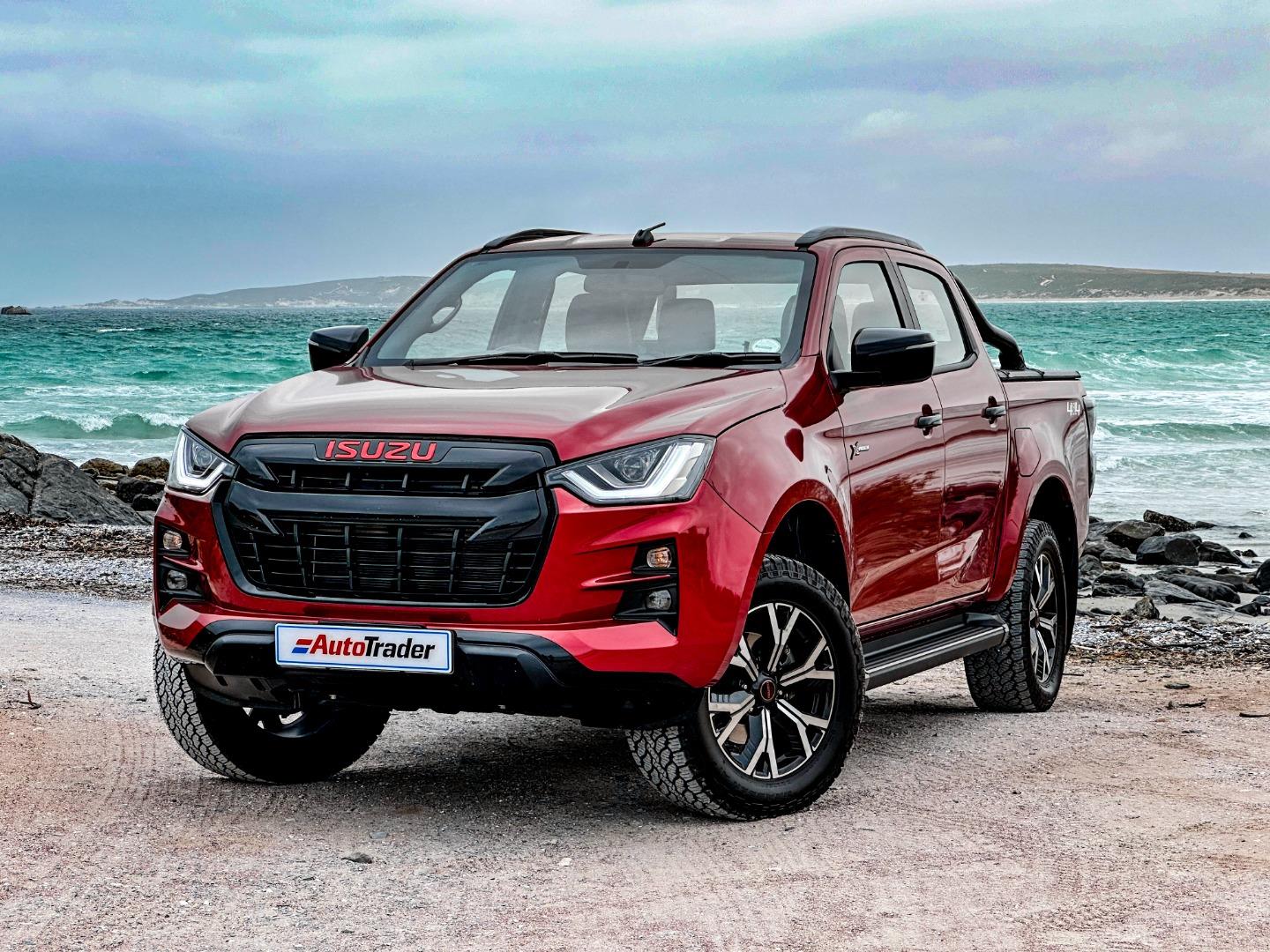
The lifestyle bakkie segment is growing in popularity each year, with the models on offer becoming more impressive with time. The X-Rider has been a successful sub-brand for Isuzu, with its relatively agricultural 2.5-litre turbodiesel D-Max model from the previous generation being brought back to life by the addition of the X-Rider cosmetic enhancements. Now, the new D-Max is here, and is a big improvement over its predecessor, meaning that the new X-Rider is sure to be a another hit with local bakkie buyers! I had a chance to drive on in Cape Town recently!
Related: Isuzu D-Max 3.0TD double cab AT35 4x4 (2024) Review

Pros:
-X-Rider cosmetic enhancements are excellent
-Strikes a great balance between utility and lifestyle
-Wonderfully capable
Cons:
-The engine is underwhelming
-Similar rivals are slightly cheaper
-Infotainment system needs work
X-Rider success
The X-Rider models were introduced in 2016 as part of the 6th-generation model range's pre-facelift line-up. Initially touted as a limited edition model, the immense popularity of the newcomer meant that it became part of the regular model range. The X-Rider takes what is essentially quite a basic double cab and adds a new front grille, X-Rider decals, model-specific wheels and black and red accents. Since there's a distinct black-and-red theme, our press unit has only four exterior colours: Splash White, Mercury Silver, Islay Grey, and Red Spinel.
Related: AutoTrader Industry Report
Styling
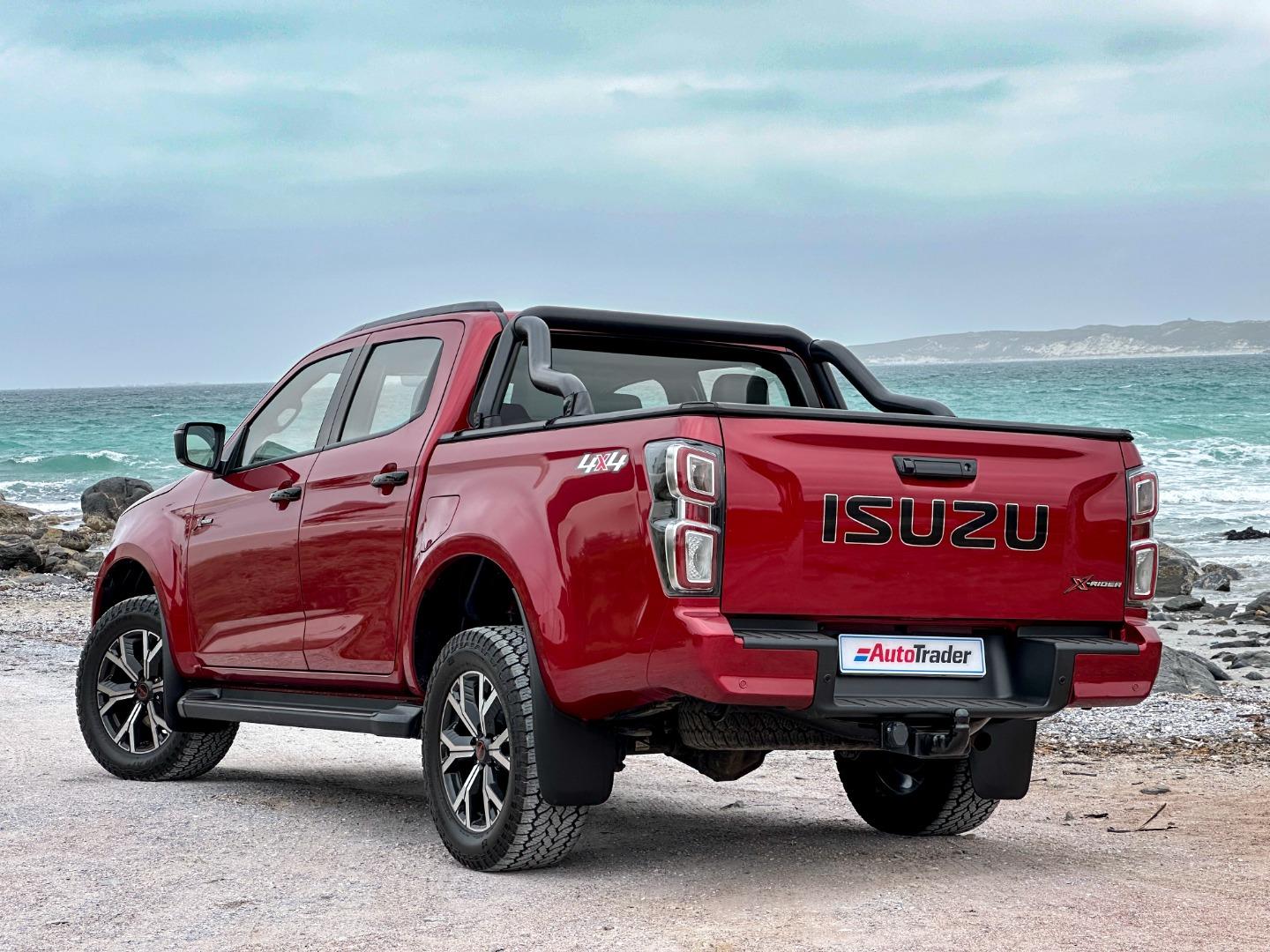
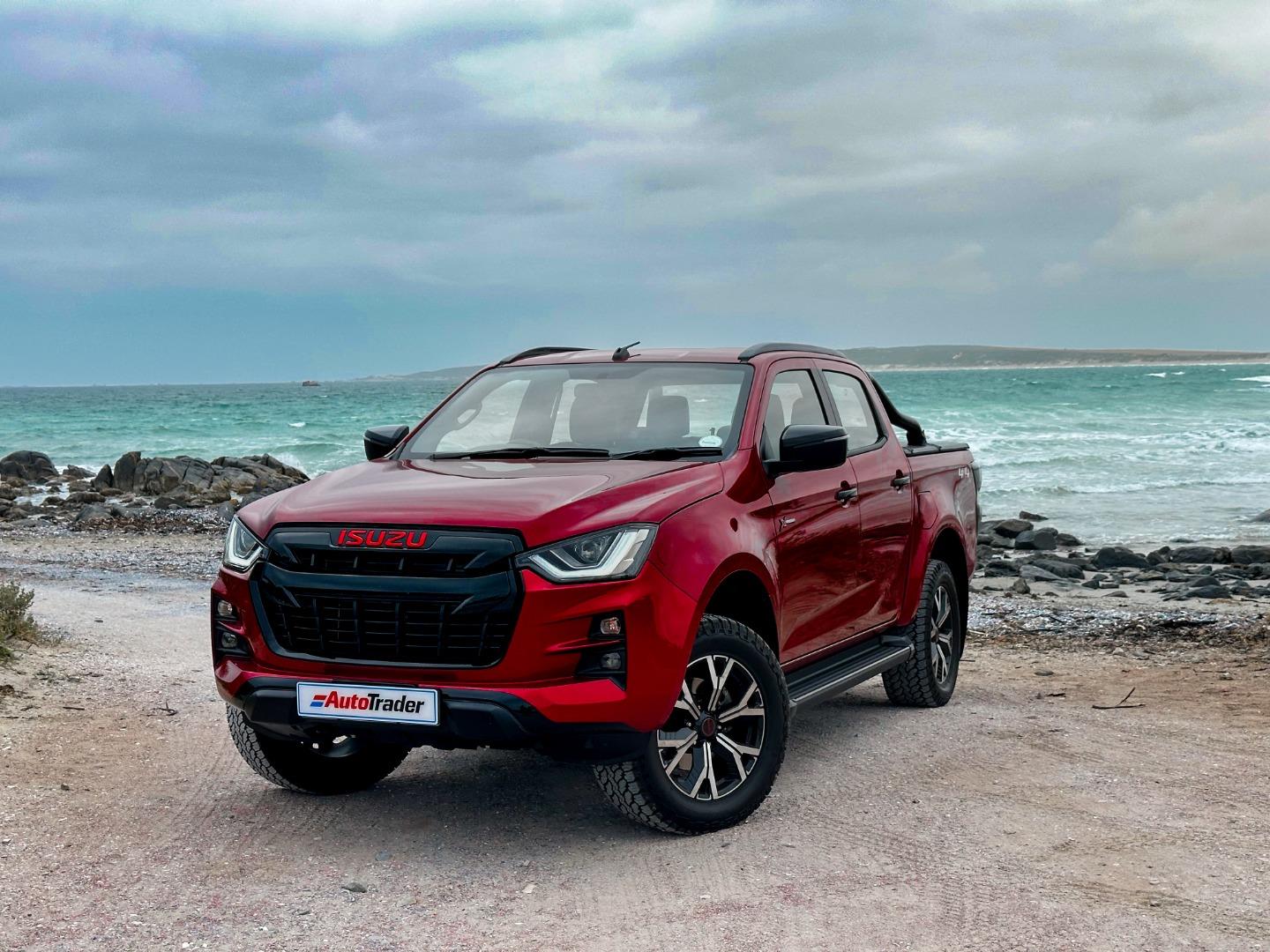
The exterior is characterised by a gloss black radiator grille and a red Isuzu badge, an X-Rider decal on the side fenders and tailgate, LED Daytime Running Lights (DRL) with LED front fog lamps, a blacked-out B-pillar, and 18-inch diamond-cut alloy wheels. I feel that this X-Rider looks fantastic and will continue to be a sales hit locally!

Interior & Space
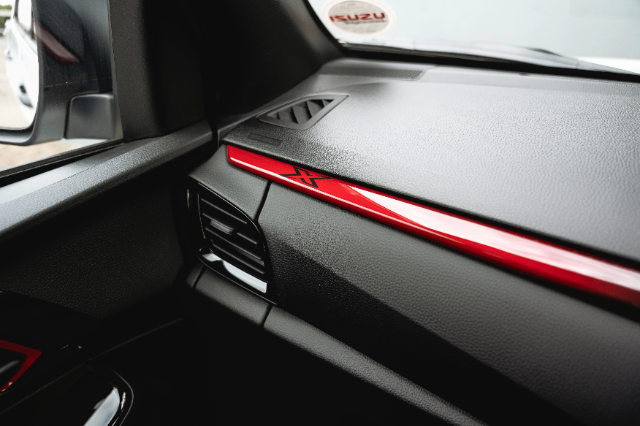
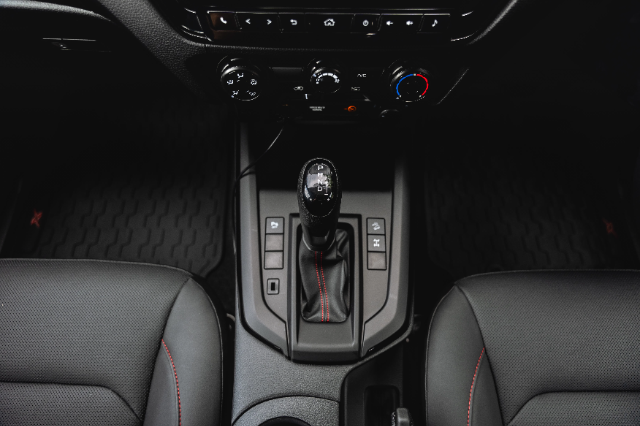
The interior of the X-Rider, much like its exterior, is a blend of sporty and utilitarian. The black leather seats feature contrasting red stitching, an "X" motif on the headrests, various gloss black and red door accents, a leather-wrapped multi-functional steering wheel with red stitching and an X mark on the multi-information display.

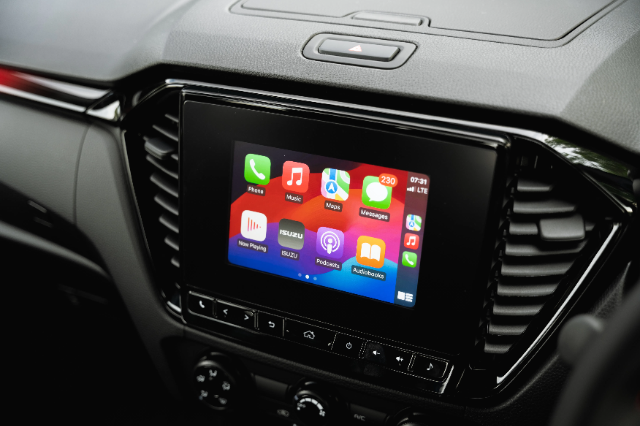
The model has a 7.0-inch touchscreen infotainment system, which is smaller and has a slightly lower resolution than the 9.0-inch system in the 3.0-litre D-Max models, but in many ways is better than the larger system as it was quicker to respond to inputs and indeed, way faster to connect to Apple CarPlay and Android Auto. However, the infotainment remains an Achilles Heel for the D-Max, particularly in these more lifestyle-oriented models where customers demand good connectivity.
Practicality and capability are where the X-Rider performs well, offering good rear occupant space and a reasonably large loading bay with a payload of 1 105kg. Off-road ability is great thanks to all-terrain tyres, a locking rear differential, a ground clearance of 228mm, an approach angle of 30.0 degrees, a break-over angle of 22.5 degrees, a departure angle of 24.0 degrees and a wading depth of 800mm. The braked towing capacity is rated at 2 100kg, less than that of its key rivals, Ford, Toyota, and Mitsubishi.
Drivetrain
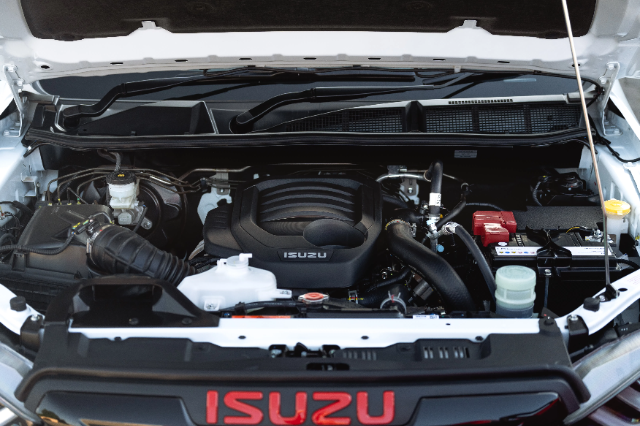
Powering the X-Rider is a 1.9-litre turbodiesel engine, codenamed the RZ4E-TC GEN2. In this guise, it produces 110kW/350Nm and is paired with a 6-speed automatic gearbox that sends power to a selectable four-wheel drive system.
Related: Isuzu D-Max 3.0TD double cab LSE 4x4 45th (2024) Review

Driving impression
I had a chance to drive the X-Rider through the Western Cape recently, where I covered 750km throughout the week before having to top up. I was expecting to cover at least 1 000km on a single tank of diesel in the 1.9-litre derivative, having seen our very own Ané Albertse having covered a story of a D-Max with the same drivetrain having covered 1 431 km on a single tank of diesel. I did not find this to be the case, as you will see in the fuel consumption component of the review, with the fuel range being roughly the same as you'd achieve in the 3.0-litre model.
Unfortunately, the performance on offer is not as good as you'd experience in the 3.0-litre model, with the 1.9 feeling sluggish at times and proving frustrating during overtaking manoeuvres. I was expecting quite a bit more from this motor, and given the option, the 3.0-litre, which is paired with the same gearboxes and four- or rear-wheel drive systems, would be the easy choice! The ride quality and refinement are about what you'd expect from a modern double cab, not exactly luxurious but more than acceptable, while one area where the 1.9-litre motor surpasses its 3.0-litre stablemate is in its noise or lack thereof.
Fuel economy
Isuzu claims a fuel consumption figure of 7.6 L/100km, but our real-world figure was 9.4 L/100km. My usage was a truly mixed driving cycle, with the lowest being 8.9 L/100km and the highest tipping past 10.0 L/100km at times.
Safety
The D-Max was crash-tested by Euro NCAP in 2022, achieving a 5-star rating, including 86% for adult occupant safety, 86% for child safety, 69% for pedestrian safety and 83% for its safety assistance systems. Safety items include driver and front passenger airbags, front side airbags, curtain airbags and a driver’s knee airbag, ABS brakes, Electronic Stability Control (ESC) with Traction Control, Hill Start Assist (HSA), Hill Descent Control (HDC), Trailer Sway Control, Cruise Control, Rear Parking Sensors with Rear-view camera.
Pricing*
At R750 200, the 4x4 D-Max is slightly higher priced than rivals such as the Ford Ranger 2.0 SiT double cab XL 4x4 auto(R 688 800) and the Toyota Hilux 2.4GD-6 double cab Raider auto(R 716 300).
*All models come with a 5-year/120 000km warranty and a 5-year/90 000km service plan, with service intervals every 15 000km.
Verdict
Overall, the X-Rider is predictably solid as a double cab bakkie offering; however, its underwhelming engine and relatively high price tag mean it is certainly not the obvious choice in the segment. We'd opt for a D-Max with the 3.0-litre engine as it is nearly identical in fuel consumption but offers a far better driving experience.


