Car brands shifting their EV strategies
There's been a gradual shift in the global perception of electric vehicles in 2024. Once touted as the proverbial silver bullet, several manufacturers have decided to take a more measured approach to new energy vehicles (NEVs). Sean gives his take on the situation!


The all-electric future seemed a sure thing just five years ago. Still, amid plunging electric vehicle (EV) residual values, fewer government-backed incentives in Europe and a general sentiment that a multi-prong propulsion approach is probably the way forward, several larger automotive brands have backpedalled their EV strategy. The brands have extended their EV deadlines but with some added context. I have only included brands that operate within South Africa.
Related: Volkswagen ID.4 Pro (2024) First Drive Review
Why are sales 'cooling'
Global reports from 2024 so far suggest a reduction in the demand for electric vehicles. These headlines are slightly misleading because EV sales are still up yearly; however, the issue for car makers is that the demand for these models is not what was anticipated, meaning a reduction in production schedules. Two key reasons for the demand for these vehicles include that in many countries, the financial incentives to purchase these products through government subsidies have been reduced. Some return to internal combustion or hybrid new energy vehicles (NEV) without financial incentives, either out of convenience or preference. Another reason is that those who wanted an EV have already purchased one, and the existing market is divided amongst traditional ICE and other NEVS, meaning that brands will have to do some market conquest to get consumers into EVs.
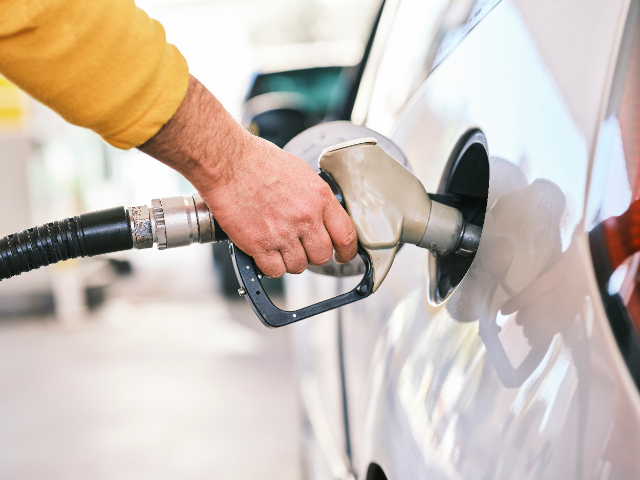
We then have a political development in the EV saga, where the European Union's seemingly steadfast legislative ban on the sale of new internal combustion vehicles by 2035 was challenged by Germany, who requested a loophole in the legislation that would allow for carbon-neutral synthetic fuels to be used in ICE cars, thereby extending their production lifespan beyond the proposed 2035 deadline. Other countries then jumped on the petrol-powered bandwagon, and it has been announced that an agreement has been reached whereby new internal combustion vehicles can be sold after the 2035 deadline, provided they are powered by carbon-neutral fuel.
Will the domino effect come into play?
With the synthetic fuel clause seemingly coming into effect in Europe, will China's goal of having 50% of its car sales being EV by 2035, the USA's ambition of a figure of 66% by 2035, Canada's aim of 100% by 2035 and Austrialia's target of a 100% ICE-free fleet by 2050 now be derailed? The aforementioned European Union targets will again be revisited in 2026, and we expect the above-mentioned country's goals to be updated, too!
Future EVs look promising
Vehicle manufacturers find themselves in the proverbial "catch-22" situation whereby they promise that the next generation of EV models will have more driving range, faster charging times, and be more affordable. This technology will come in solid-state, lithium-sulfur batteries, cobalt-free lithium-ion, sodium-ion, zinc-based or graphene batteries, all of which are less environmentally damaging while providing better longevity, performance and charging times.
However, since these businesses require profit to function, this leaves them effectively admitting that their current products are not ideal, making marketing and selling them that much more difficult and tanking the values of existing models. I always use a smartphone analogy; why would I buy a new phone now if the promise of a vastly superior variant is coming shortly? Could I not keep my existing phone and wait for the technology to be so appealing that it makes my transition to something new more worthwhile?
Again, the manufacturers must sell their current products to generate funds to develop the new models. That's where some backpedalling comes in, not only due to customer demand for various propulsion options but also because the brands know that selling various powertrain options will allow them to remain more profitable across a broader variety of markets.
What consumers have to say
Since the USA is ahead of South Africa in terms of its EV adoption rate and is currently experiencing a dip in EV demand, this is a good predictor of sentiment likely to trickle down locally. A recent AAA study in the USA shows that consumer demand for EVs is coming down, with 63% of respondents stating they would be 'unlikely' or 'very unlikely' to purchase an EV and 18% being 'likely' or 'very likely' which is down from figures of 51% and 25% respectively in 2022.
Looking at Europe, Bloomberg's most recent auto-buying intentions survey found an eerily similar 18% of respondents would consider buying an EV as their next vehicle, with 68% stating that the aforementioned 2035 ICE ban should be delayed.
The problem with depreciation
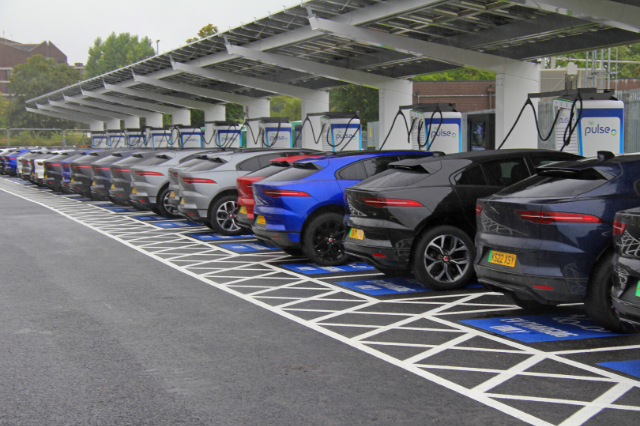
In addition to the problem of unintentionally engineered obsolescence, which drives down the value of the average electric car, we have the issue of the battery, which comprises roughly 30-50% of the average electric car's value. These last between 8-10 years of regular charging cycles before needing to be replaced, and with the battery degrading more with each passing year, the subsequent value of the product decreases more and more, with the replacement cost looming larger and larger. While the average internal combustion engine costs more to maintain over the ten-year period, it, in most circumstances, will still be good to go after ten years of use. It's relatively rare that a person must replace an entire ICE engine at great cost, which is effectively what is needed in every EV currently on the market, so you can see why the older an electric car becomes, the less value it holds within the marketplace.
Related: Toyota, Subaru, and Mazda commit to further internal combustion development!
The brands that have shifted strategy
Audi
German automaker Audi recently hinted that it may keep its internal combustion engines in production longer than initially suggested. Audi has used the word 'flexible' in its responses to questions, alluding to the brand's willingness to keep its options open and cater to consumer demand.
BMW
Full disclosure: BMW has not ever officially committed to ditching internal combustion. However, rumours were spreading throughout the industry in 2023 that it would. The brand confirmed in late 2023 that it would not commit to any end date for its internal combustion engines, but it maintains that both the Mini and Roll Royce brands, both owned by BMW, are still on course to be all-electric by 2030.
Ford
In a rather symbolic move, the Blue Oval decided, in July of 2024, to build internal combustion-powered versions of its Super Duty F-Series bakkie at its Ontario, Canada production facility instead of the previously proposed all-electric SUV. This formed part of Ford pulling a target for EV sales earlier this year, with the company saying it would focus on hybrid vehicle sales in the short term.
Mercedes-Benz
Earlier in 2024, the German brand, which seemed destined to ditch internal combustion, announced a massive R279-billion investment in the technology, meaning both petrol—and diesel-powered Mercedes-Benz and Mercedes-AMG products will be with us for the foreseeable future.
Stellantis
Auto giant Stellantis, which owns 14 automotive brands, including Jeep, Fiat, Opel, Peugeot, Citroen, Alfa Romeo, and Maserati, invested an estimated R109 billion in ICE development in 2024.
Volkswagen
Having previously stated that its entire product portfolio would be electric by 2033, Volkswagen has now taken a significant portion of its EV development budget to improve the competitiveness of its ICE products going forward. It estimates an 80/20 split in. favour of EVs by the end of the decade.
Learnings
As with many things in life, the solution here appears to be a balance, which, in this case, seems to be a mix of EV, hybrid, and ICE in the short to medium term. With a more measured approach to vehicle propulsion and mobility solutions, we can gradually reduce our environmental impact while catering to a global population cruising towards critical mass. It's amazing to be involved and form part of the process! The future looks to be exciting!