
Fanning the flames
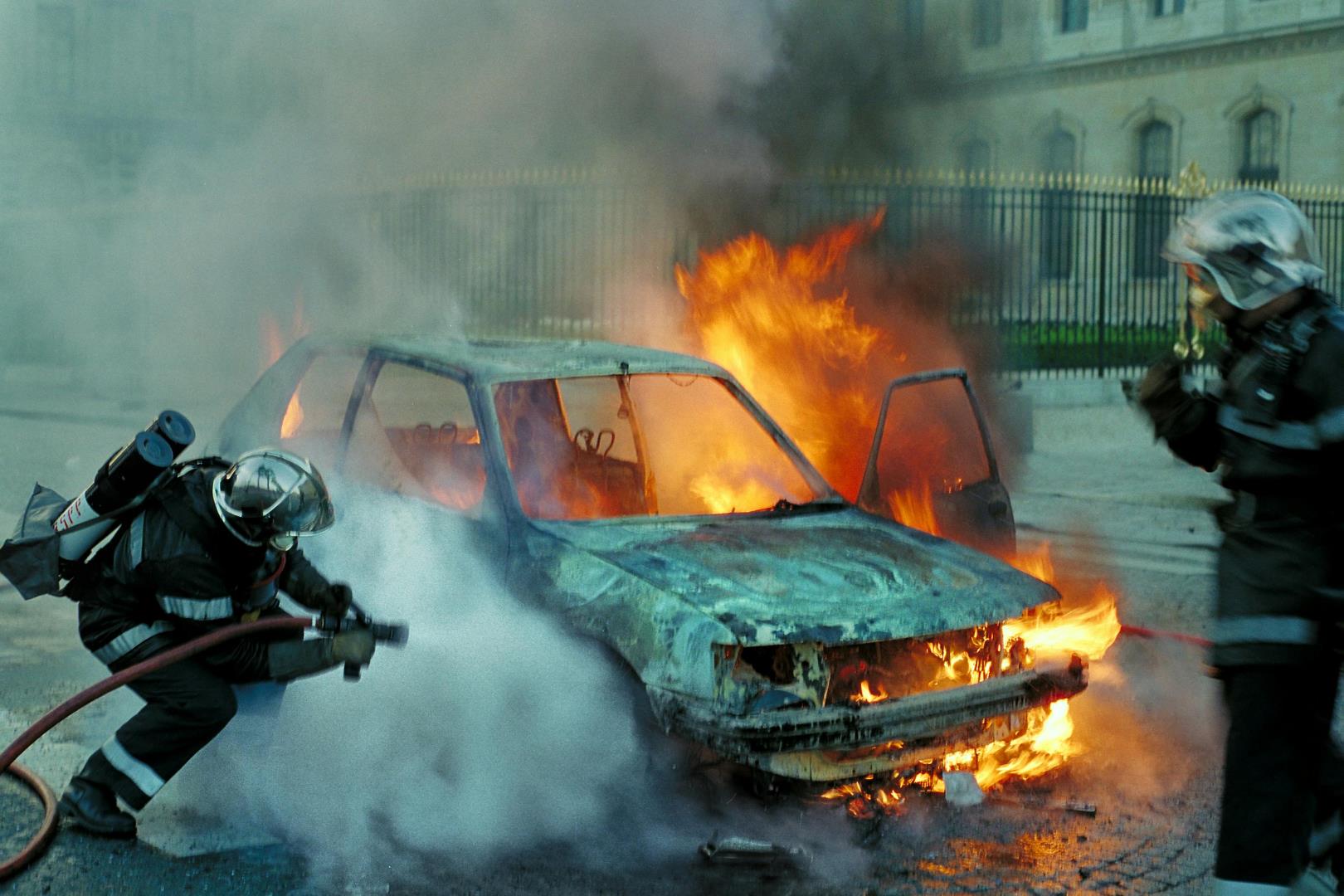
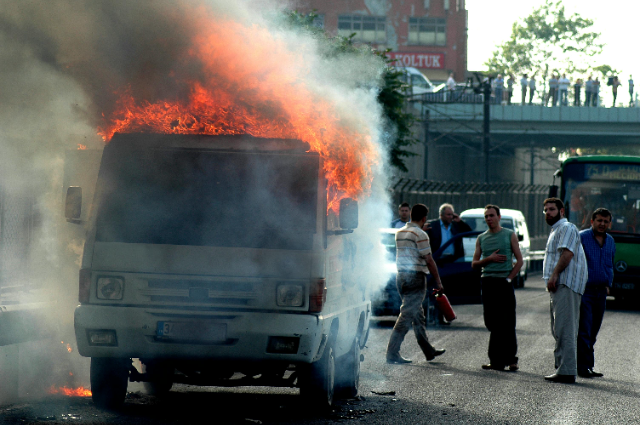
One may be rather surprised to learn that vehicle fires are far more common than one may believe. The latest statistics show approximately 1 500 fires for every 100 000 vehicles on our roads. This does not necessarily mean that the vehicle in question was engulfed in red-hot flames and burnt to a crisp but rather that a fire was present.
Related: Air-conditioning - Everything you need to know with myths busted!
If you cast your mind back to high school chemistry, we were taught that fire needs four things to perpetuate: an ignition source, a fuel to burn, oxygen and a secondary ignition gas. The ignition source can be a spark, an open flame, a chemical reaction or residual heat. The fuel is anything that the ignition source touches that will ignite and sustain a chemical reaction, the oxygen is a no-brainer, it's everywhere around us and is abundant enough and the last is the gasses emitted during the initial combustion that burn as well, sustaining the chemical reaction that we call fire.
There are different types of fires, rated in categories as follows:
- Class A: solid materials such as wood or paper, fabric, and some plastics
- Class B: liquids or gas such as alcohol, ether, gasoline, or grease
- Class C: electrical failure from appliances, electronic equipment, and wiring
- Class D: metallic substances such as sodium, titanium, zirconium, or magnesium
- Class K: grease or oil fires, specifically from cooking
Firefighters will contain and douse a fire differently for each category type, using different types of extinguishing agents and dousing plans. The scary truth is that a car fire falls into each of these categories, making it the most dangerous and difficult to fight.

Vehicle fire causes
If we remember what was just discussed, any fire needs an ignition source, and this can be just about anywhere on a motor vehicle. The most common culprits are electrical short circuits, friction from badly worn parts, fuel and oil leaks, overheating and vehicle accidents. It must be stressed that vehicle manufacturers have spent billions on making sure that their cars are as non-combustible as possible by investing in non-flammable construction materials ranging from wire coating to upholstery and even paint. Still, fire is a fickle mistress whose appetite is voracious, so let's look at the suspects closer.
- Electrical—The average family SUV contains just over 1.5km of wiring that transfers not only information but also high amperage. If any of these wires short-circuit, they can heat up extensively, melting the PVC or rubber coatings that could catch ablaze. These fires will usually fizzle out until a fuse pops unless they encounter something flammable, like paper, plastic, or fuel vapour.
- Electric vehicle batteries - The current scapegoat of vehicle fires is the battery fault and subsequent chemical fire from EVs. Due to the much lower numbers of these vehicles on the roads, the stats show that there are only 3 EV fires per 100 000 vehicles. This doesn't make them more susceptible to fire than ICE cars, ICE cars do burn more often, its just that they are more deadly to bystanders and first responders due to the noxious poisonous gasses emitted and the fully sustained chemical reaction is extremely difficult to put out.
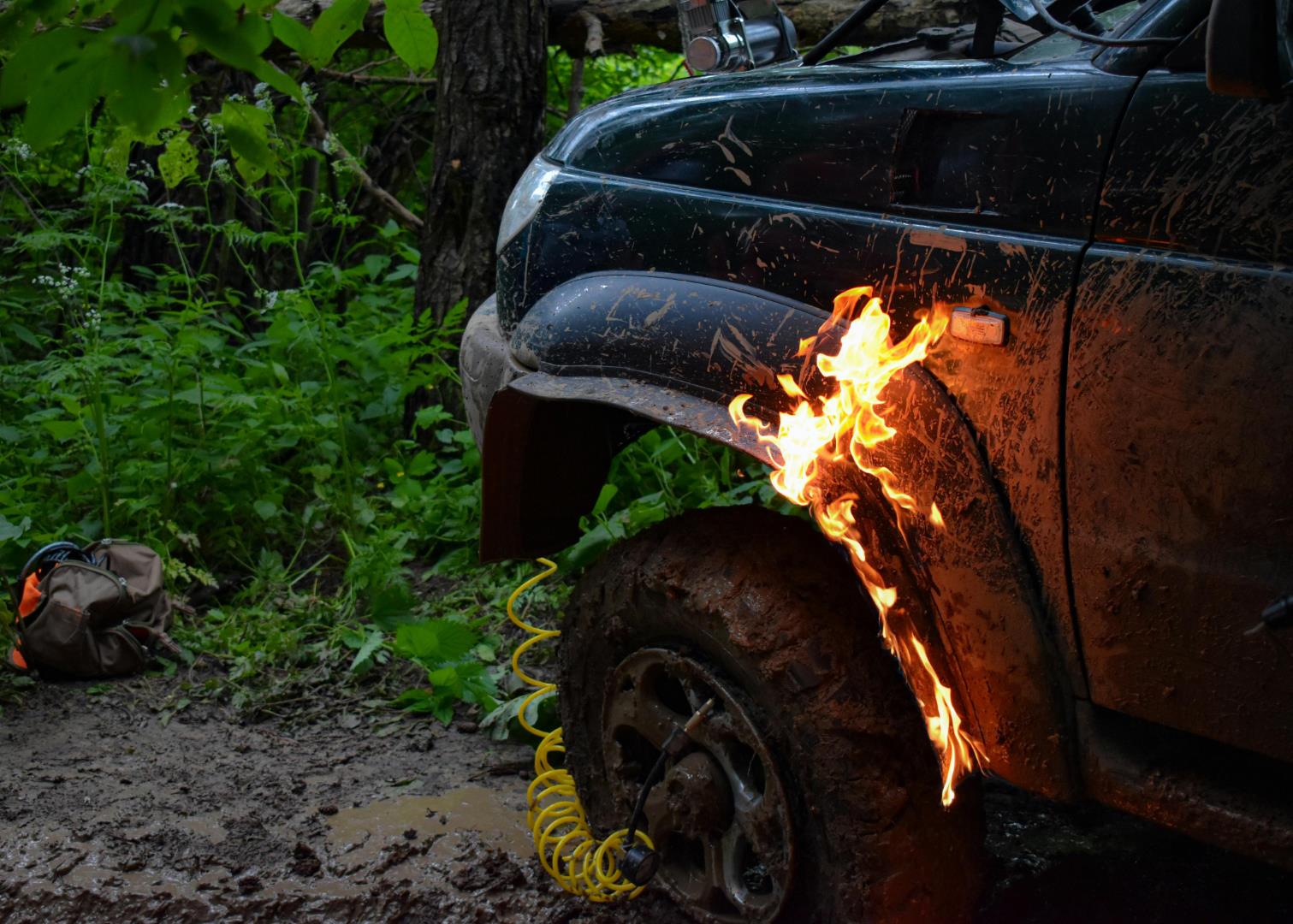
- Poor maintenance - The lack of maintenance on high friction surfaces will cause excessive heat build-up, which could be anything from wheel bearings to engine blocks and turbochargers. The heat buildup at these points could be so extreme that they ignite adjacent items leading to runaway fires
- Hydrocarbon leaks - Grease, oil, diesel and petrol are all flammable at different temperatures and will combust if heated enough. If any of these leaks find their way near an ignition source hot enough, they will ignite and continue to burn until one of the elements of the fire chemical reaction is removed.
- Overheating—Overheating mainly refers to the exhaust side of the engine block, excessive temperature retention in the turbocharger or exhaust manifold, piping, or a blocked catalytic converter. It also covers vehicles being parked over or on top of combustible materials that the hot exhaust pipe can set off.
- Accidents / Arson - Vehicle accidents happen, and any of the above triggers can occur at an accident scene. The flip side, of course, is fires that are purposefully set with the aid of accelerants. Although automakers do rigorous testing and employ the latest tech to mitigate fires, design flaws do make it through the cracks, and these sometimes lead to fires
- Vehicle faults - Although automakers do rigorous testing and employ the latest tech to mitigate fires, design flaws do make it through the cracks, sometimes leading to fires. Over the last few decades, once identified, these have resulted in recalls with the automaker addressing the fault and employing a fix or discontinuing the vehicle.

Preventative measures
If you are concerned about the potential for a vehicle fire you should get a small multi-grade fire extinguisher that you can keep under a seat. The old saying of prevention being better than the cure can also be put into effect here and regular vehicle maintenance can go a long way to preventing potential fire risks.
Due to a large part of your vehicle wiring being tucked away and hidden behind panels, it is difficult to check for corroded and pinched wires that may short out so pay careful attention to your car's electrical system by keeping an eye out for fuses that blow continuously, relay that malfunction or the smell of burning that accompanies burnt wires. If you spot any of these symptoms take your car to an auto electrician immediately for diagnosis.
Check with the automaker if there are documented cases of vehicle fires involving your make and model and if any recalls have been issued.
Keep up your vehicle maintenance schedule and don't ignore mechanical problems that may lead to excessive friction. Check wheel bearings and any other friction points regularly. This includes the vehicle's exhaust and turbo system. These parts experience high temperatures and if not taken care of can retain very high temps that can ignite other adjacent parts. Don't park on top of combustible materials such as paper, cardboard or dry grass.
Check the area under your car regularly where you normally park for signs of fuel or oil drops, as this will be the first indicator of leaks that could start fires.
Lastly, listen to your car and pay attention to error messages displayed by the vehicles on board computer which very often will tell you if something is not right

What to do if you are faced with a vehicle fire
Stop the car immediately and get yourself and passengers as far away as is safe to do so.
Make sure the car is shut off and parking brake is applied.
Call the fire service.
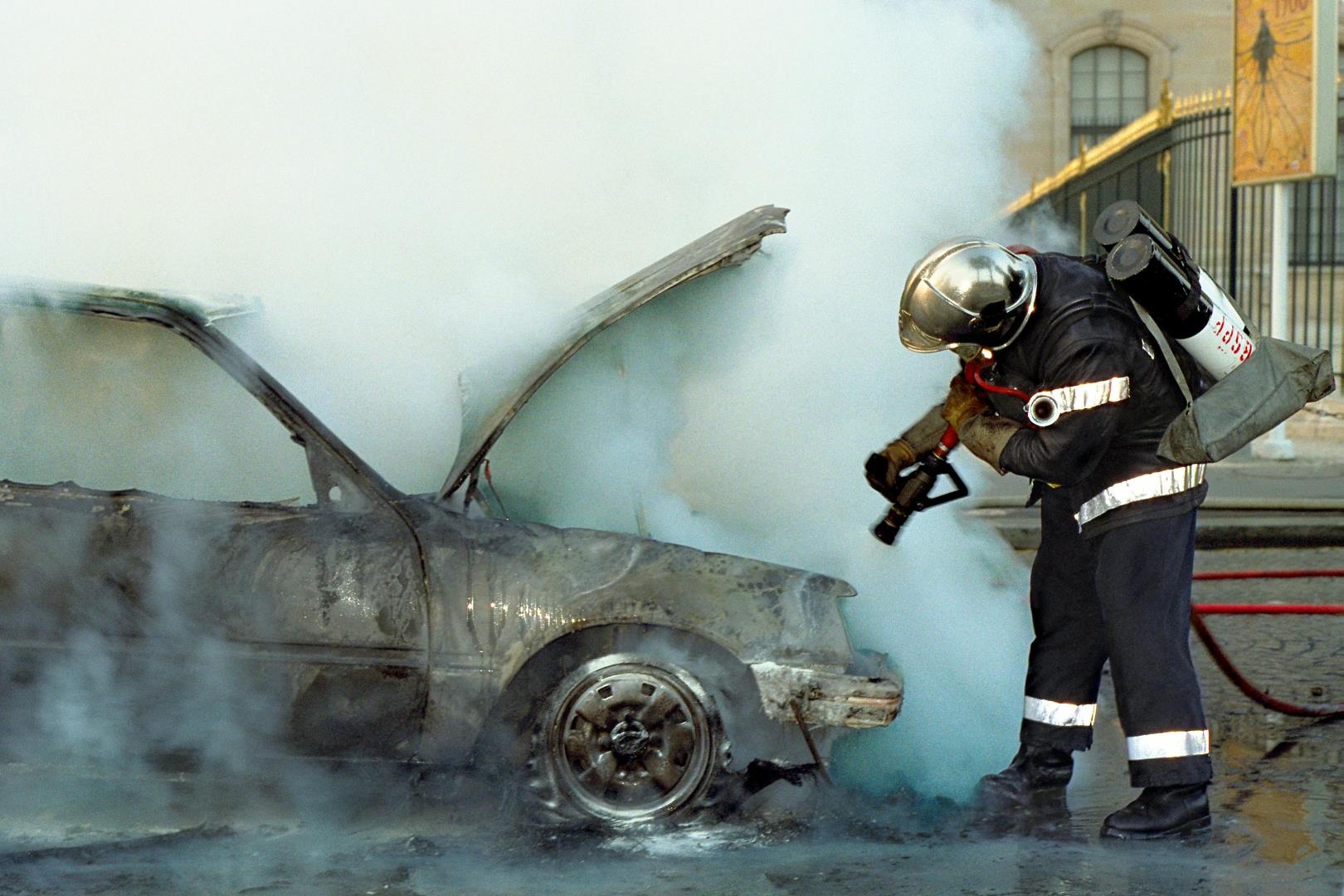
If you feel confident enough, have a fire extinguisher on hand, and the fire is not too dangerous to approach, you can try fighting it yourself. Find the base or source of the fire, aim the extinguisher there, and spray until the flames are gone. If the fire is under the bonnet, do not open it all the way; spray into the gap. The same goes for under the car or near the wheels. You are trying to starve the fire of its oxygen and combustible gasses.
If the fire cannot be extinguished this way, move away and let it burn until the fire service arrives, there is nothing much you can do without injuring yourself.
After the blaze has been put out, fire inspector will examine the vehicle to determine the source or cause of the fire and submit this report to the insurance company or to the police if there was serious bodily injury or death.
It is important to remember that you will be liable for the fire department's costs of extinguishing the blaze and removal of the wrecked car if you are not insured. A third-party/fire/theft insurance policy will cover this.