Air-conditioning - Everything you need to know with myths busted!
When spring comes, we bet you're considering cranking up your car's air conditioner. But what if your AC needs to be recharged? What myths should you be aware of? We'll investigate so you can stay cool this spring and summer.

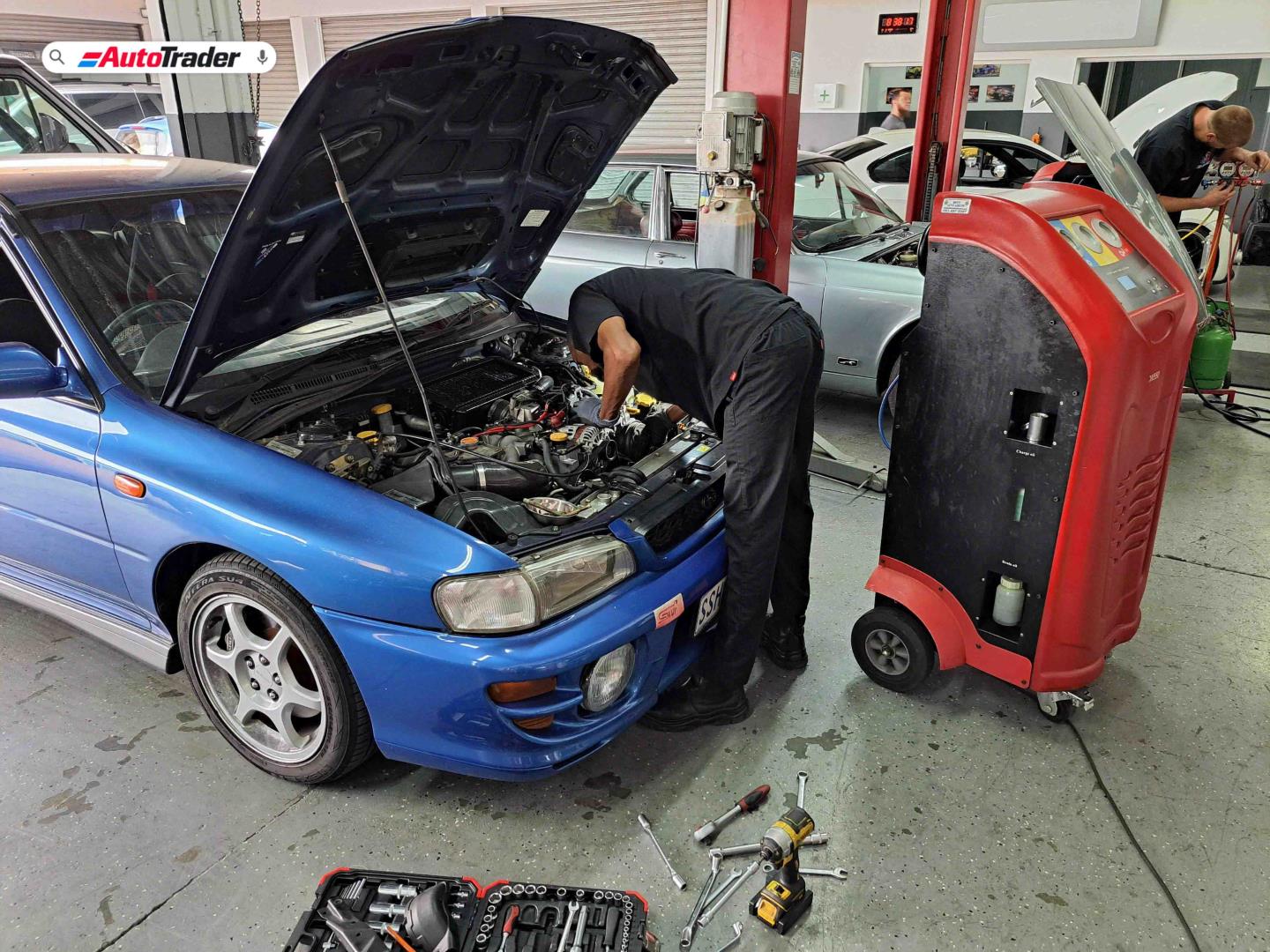
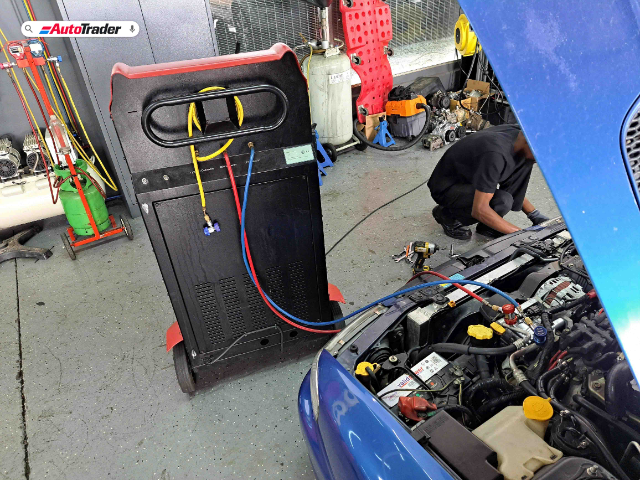
Air-conditioning (AC) in modern cars is a must, and the feature has existed since at least the 1940s. Especially when you live in a climate such as South Africa's, where the temperature extremes range from teeth-clattering cold to sizzling heat, you'll often find AC is a standard feature on many vehicles. Still, there are a few things you need to know about how it all works and just some things that need myth-busting. This writer's project car required an AC refresh, so we dived into it. After some research and a few recommendations, a decision was made. A big thanks go out to Bens Auto Aircon in Randburg for allowing us to take pictures and ask questions on all things AC-related.
Related: How to Clean Car Air Vents

How does it all work?
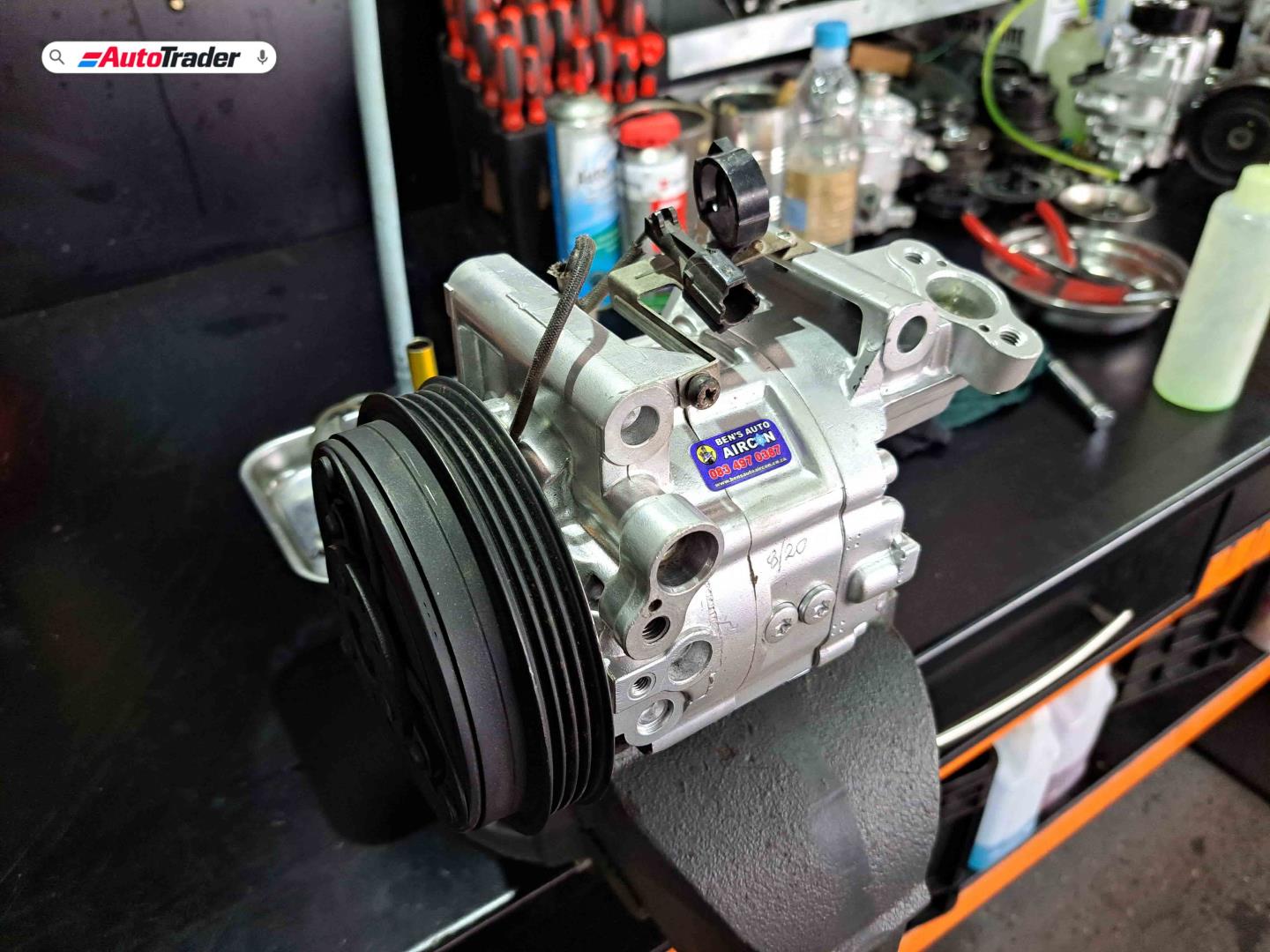
Simply put, car AC works by manipulating temperature and pressure in such a way as to move the refrigerant between liquid and gas states. The system is a closed loop with a high and low-pressure side. It also consists of components such as a compressor, condenser and the evaporator. The compressor is a belt-driven pump driven by the engine's crankshaft. When refrigerant enters the compressor, it's in a low-pressure gas form. As this component's name states, the compressor puts the gas under pressure and forces it out towards the condenser. The condenser is essentially a radiator and is typically located alongside the car's radiator, which serves the same purpose. The refrigerant enters the condenser as a pressurised gas, and heat is created during the gas pressurisation and moving into the condenser. However, with air flowing through the condenser, the refrigerant cools and turns into a liquid state. The refrigerant is a high-pressure liquid and almost ready to cool the interior of the car.
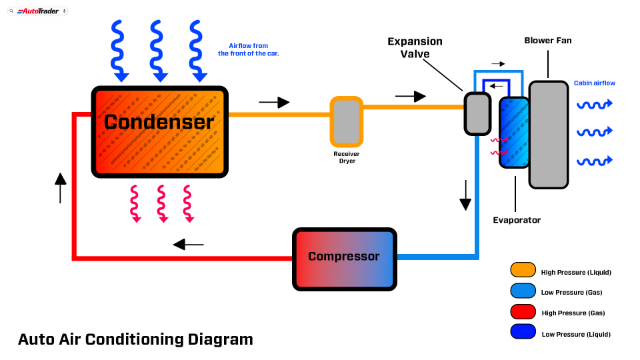
As the refrigerant moves out of the condenser, it goes through a small reservoir called the receiver-dryer, which contains granules that attract water to remove any that may have entered the system. Then, you have the thermal expansion valve, which changes the system from the high-pressure side to the low-pressure side. As the high-pressure liquid flows through these last two components, this is where the liquid refrigerant expands, and that expansion reduces pressure on the refrigerant so it can move into the evaporator. The evaporator is located in the cabin and also looks like a radiator. The refrigerant enters the evaporator as a cold, low-pressure liquid at freezing point. The refrigerant doesn't freeze, which is why you don't want water in the system. It also has a low boiling point. Your blower fan blows air over the evaporator, and then cool air enters the cabin.

Is Air Conditioning expensive to fix?
Fixing your car's air conditioning can range from cheap to expensive.
Regas
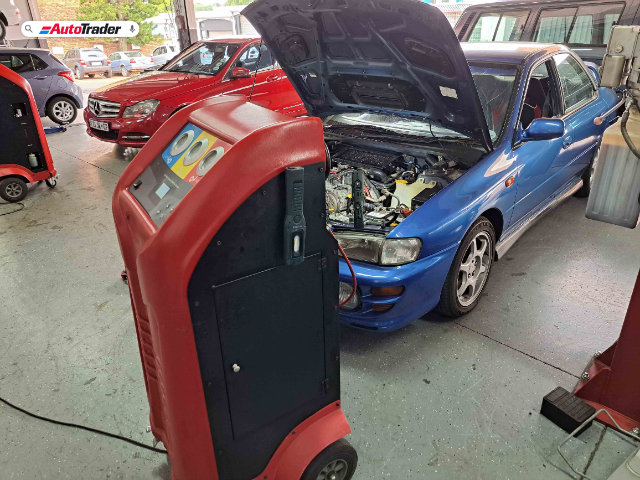
Typically, your air conditioning would just need a regas, but be mindful of what kind of refrigerant your car uses. Since the mid-90s, car makers have moved to R134a / HFC-134a refrigerant for environmental reasons. Older vehicles typically use Freon, but you can convert your car's air conditioning system to R134a. A regas service is relatively cheap and involves refilling the system with refrigerant and compressor oil. UV dye is also injected into the system to help with detecting leaks. If there's a leak in the system resulting from a failed rubber O-ring, then it's an easy and cheap fix.
Component replacement
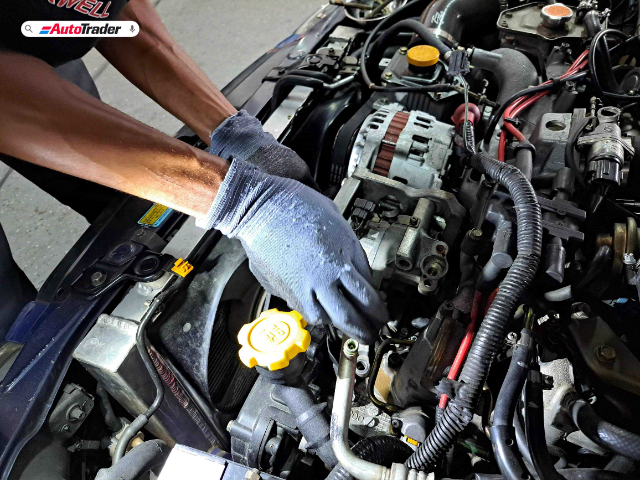
This is where air conditioning servicing can get expensive. If the three components, namely the compressor, condenser, and evaporator, fail, they are costly to replace. Depending on the state of repair, the compressors can be reconditioned, and you can save some money by buying a reconditioned unit. If the evaporator or condenser is damaged and leaking, it can't be repaired and must be replaced. Unfortunately for this writer, the compressor failed and needed replacement, which resulted in a big bill. However, components failing is a worst-case scenario, but it is something to keep in mind if you find your air conditioning isn't working and a regas doesn't work.
Ideally, you should service your air conditioning every two years, as you need to keep the refrigerant fresh and the compressor oil topped up.
Typical myths, questions and comments
Does using air conditioning increase fuel consumption?
Not exactly. This question was often raised with older vehicles since the compressor is belt-driven by the crank. Even then, the amount of fuel used is minimal at best. However, technology has improved significantly over the years, and air conditioning chewing your fuel isn't really the case. With modern cars especially, thanks to electronic assistance and efficient compressors, we wouldn't expect significant fuel usage.
Is my car slower when I use air conditioning?
Older compressors did have some parasitic draw from the engine, but this was the case with small-capacity engines. Nowadays, though, with newer-style compressors, there's next to no parasitic draw. Some budget cars still use clutch-type systems, so there is some level of parasitic draw. Newer compressors tend to be direct-drive also and operate via a solenoid rather than a clutch-type system.
I'll just pull my window down, rather
Due to aerodynamics, it's more efficient to leave your window closed when you're driving your car out and about, especially on the highway. Pulling your windows down on the highway will use more fuel than keeping them closed and cranking the AC. An episode of Mythbusters famously tested the windows down versus AC myth, and found that below 70km/h the window being open was more efficient, but above that the aerodynamic drag meant the AC was the better choice. In South Africa, having your windows down is a dangerous game, just use your AC.
The air conditioning triggers my sinuses and irritates my nose.
There's another often overlooked component of your car's AC system, and that is the cabin filter. If the filter is old and clogged, pollen and other irritants can also enter the cabin and live in the vents. It helps to change out the cabin filters, and they're generally cheap and easy to do. Another thing is to clean out your vents occasionally with air conditioning foam and a silicone tube. Air conditioning disinfectant is also a good thing to use as well from time to time to keep your vent system clean. These are cheap to do and will prevent pollen and also prevent odours from coming from the blower fans.
Can I regas my own air conditioning?
There are DIY regas kits available if you just need a simple regas, but messing with the AC system is dangerous, as the refrigerant can shoot out, cause frostbite, and blind you. If you're not confident working on your car, it's best to take it to a workshop. It's advised to go to an RMI-approved centre to regas your AC. In this writer's instance, Bens Auto Air Con was highly recommended and is an RMI-approved workshop.