If you are a South African, you will know that hijackings and vehicle theft are a serious concern for any vehicle owner or motorist. Although recent data has shown some improvement, it doesn't mean we can relax while driving or parking our vehicles, whether in public or at home. According to recent crime statistics and insurance industry reports, vehicle theft declined by approximately 9% in early 2025, while hijackings dropped by over 15%.
However, organised crime syndicates remain highly active because theft and/or hijackings are driven by demand, not by chance. And the car you own or drive, and its specification, could greatly affect the probability of it getting stolen. This is because stolen vehicles are typically stripped for parts within hours, sold locally under cloned identities, or illegally exported across borders, particularly to neighbouring countries.
Related: Avoid getting hijacked - top alternatives to South Africa's most stolen vehicles
If you see your car on the lists below and want to get rid of it, remember you can sell it quickly and easily on our website. You can also search for new or used models on AutoTrader here if you are looking for the top alternatives to South Africa's most stolen vehicles.
The biggest factor: What you drive
In South Africa, the most targeted vehicles are high-volume, high-demand models. Recent data from sources such as insurer reports consistently highlight the following as high-risk vehicles:
Toyota Hilux
Volkswagen Polo / Polo Vivo
Ford Ranger
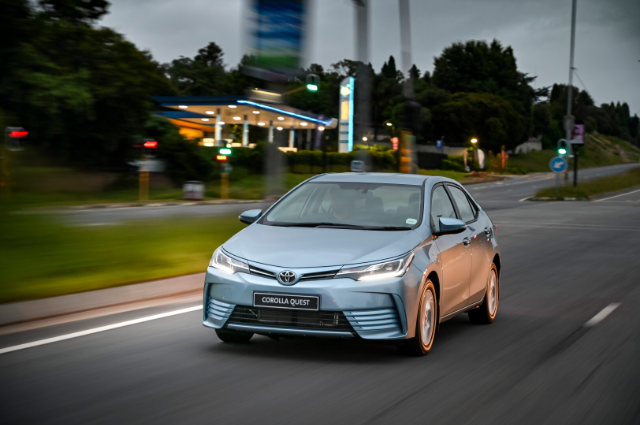
Toyota Corolla (including Corolla Cross)
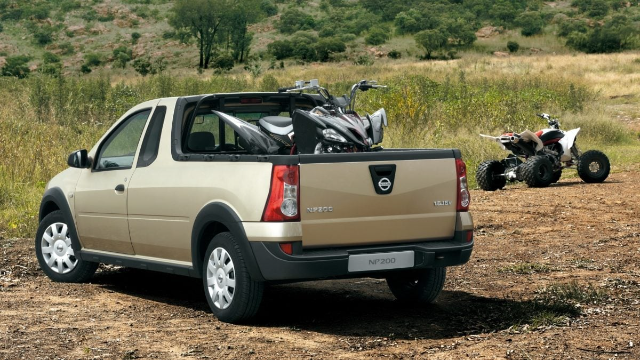
Nissan NP200
Why are these vehicles targeted?
While it is difficult to pinpoint exactly the motivation of any individual theft, there are some main reasons why a particular car and more often the cars on the list above is stolen. The first reason is strong resale value, which allows the syndicate or individual criminal to clone the vehicle's details and sell it for the highest possible price.
The second reason is a high demand for spare parts. Vehicles like the Toyota Hilux share components with other models in the Toyota line-up, so the parts are not just sold for Hilux models but also for models such as the Toyota Ses'fikile. These are parts rather than a complete vehicle; it is more difficult to verify whether they are stolen.
A third reason a particular vehicle becomes a target is that it is common on South African roads (easy to blend in). Many hijackings or vehicle thefts in parking spaces are opportunistic. The vehicle is common on the roads, blends in easily and is in the right place and the right time for the thief to steal or hijack it. Ultimately, the more common your vehicle, the higher the likelihood it becomes a target.

Does colour make your car a target?
In short, yes, the car's colour also plays a role in its likelihood of being stolen. Let's break it down a little more:
White, silver, and black dominate theft statistics
Data from SAPS and industry reports show that:
White is the most stolen vehicle colour in South Africa
Silver, black, and grey follow closely
Why?
These are the most common colours on the road
Easier to resell or disguise
Less visually distinctive
Neutral colours = lower visibility = easier movement for criminals. Many hijacked vehicles, especially Polos and Hiluxes, are specifically white due to market demand.
But note that bright colours are no longer a strong deterrent
Previously, colours like yellow, orange, or bright blue were considered safer because they were more visible. But because more bright coloured vehicles are found on the road, demand for vehicles and parts outweighs visibility concerns, the trend of only stealing neutral colours is slowly becoming less relevant to the crime.
Colour vs. model: what matters more?
Industry consensus is clear, the make and model matter more than colour. A Toyota Hilux is high-risk regardless of colour, while a rare or niche vehicle in white may still be lower risk.

The real reasons cars get stolen
Vehicle crime in South Africa is primarily driven by economic and logistical factors:
Parts demand
Many stolen vehicles are dismantled quickly.
Popular models have interchangeable parts.
Cross-border smuggling
Bakkies and SUVs are frequently exported.
Vehicles are often stolen to order.
Ease of resale
High-volume vehicles are easier to move in illegal markets.
Security vulnerabilities
Older vehicles without immobilisers or tracking systems are easier to steal.
Shift toward parts theft
Increasing cases of partial theft (mirrors, wheels, headlights).
Harder to trace than full vehicle theft.

So, is your car a magnet for theft?
You are at higher risk if:
You drive a high-demand model (e.g. Hilux, Polo, Ranger).
Your car is a neutral/popular colour (white, silver, black, grey).
You regularly park in unsecured or public areas.
Your vehicle lacks modern anti-theft technology.
You are at lower (but not zero) risk if:
Your vehicle is uncommon or niche
It has unique or highly identifiable features
It is equipped with tracking and advanced security systems
Conclusion
In South Africa, theft risk is not always random; it can be predictable at times. If there is strong demand for your vehicle or its parts, it is a target, and colour does play a supporting role, mainly by making a vehicle easier to resell or conceal, but it is not the primary driver.