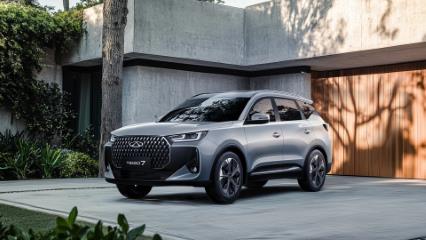


The headline act for the KP31 is its status as the world’s first bakkie to feature a diesel Plug-in Hybrid (PHEV) system. While competitors like the BYD Shark 6 and Ford Ranger PHEV rely on petrol-hybrid setups, Chery is doubling down on diesel’s traditional strengths, enhanced by modern electrification. But for South African fans, the real story isn't just the tech—it’s the growing possibility that this world-first diesel PHEV could be built right here in Pretoria.
Related: Chery South Africa to Take Over Nissan’s Rosslyn Plant: What You Need to Know
Diesel power
Under the hood, the KP31 utilises a 2.5-litre turbocharged diesel engine paired with an electric motor. Chery claims this combination achieves a class-leading thermal efficiency of 47%. For the driver, this translates to:
10% better fuel efficiency than the average diesel powertrain.
30% reduction in vibration, significantly improving Noise, Vibration, and Harshness (NVH) levels.
The production version is confirmed to provide a 1 000kg payload and a 3.5-tonne braked towing capacity.
"It’s riveting to be the first brand to offer a diesel PHEV in the dual-cab ute class, which will be our key point of difference compared to the competition," said Lucas Harris, Chery Australia Chief Operating Officer.
Design and dimensions
Visually, the KP31 concept is designed to be noticed. Finished in matte grey, it features Chery lettering on the grille and tailgate, a snorkel, and a functional tub rack equipped with 4x4 recovery tracks. It sits aggressively on 285/70 R17 all-terrain tyres.
While the concept measures a massive 5610mm in length, the brand has confirmed that the production version will be slightly more "garage-friendly" at 5450mm—positioning it squarely against rivals like the Toyota Hilux and Ford Ranger.
The Rosslyn factor
The timing of the KP31’s arrival aligns perfectly with a seismic shift in South Africa’s automotive landscape. In early 2026, Chery South Africa officially agreed to acquire Nissan’s historic Rosslyn manufacturing plant.
This deal, set to be finalised in mid-2026, includes the land, buildings, and a nearby stamping plant. While Chery initially focused on localising its high-volume SUVs like the Tiggo 4 Pro, the acquisition of a facility that has spent decades producing the Nissan Navara and NP200 makes it the logical home for Chery's new bakkie range.
Producing the KP31 locally would allow Chery to:
Avoid hefty import duties, potentially undercutting established rivals on price.
Tailor the suspension and chassis specifically for South African conditions.
Secure its position as a "local" manufacturer, qualifying for government incentives under the APDP
What lies ahead
The diesel PHEV will lead the charge in late 2026, but Chery may add a petrol PHEV powertrain, which is scheduled to join the lineup in 2027, to cater to lifestyle-oriented buyers.
While the Sydney reveal focused on the Australian market, Chery South Africa has previously hinted that "two kinds of bakkies" are on the cards for local shores. Given the similarity to South African requirements, the KP31 is a strong candidate to join the Chery Himla in Mzansi's competitive bakkie market.