

To drive a motor vehicle on the roads in South Africa, the vehicle must be registered on the national traffic registry and have a valid license disc attached to the windscreen. Failure to have done this makes the operation of said vehicle illegal and will result in impoundment and severe fines or imprisonment for the driver.
Related: Expired car license? What to do and what not to do in South Africa
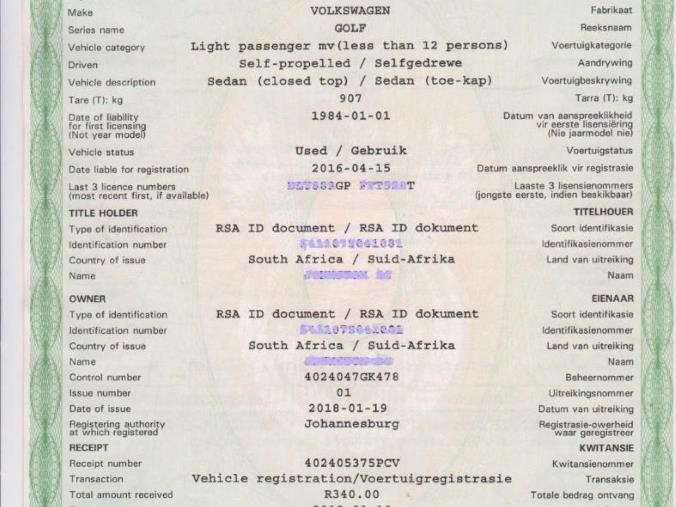
Registering a vehicle in South Africa is a two-part process: registration, which records you as the owner/titleholder on the eNaTIS system, and licensing, which involves paying for the annual disc on your windshield.
What to do if you lose your car’s registration documents

Required Documents
The specific documents depend on whether you are buying a new car from a dealer or a used car privately.
| Document | New Vehicle | Used/Pre-owned |
| ID Document (Certified copy) | Yes | Yes |
| Proof of Residence (Utility bill/statement) | Yes | Yes |
| Application Form (RLV) | Yes | Yes |
| Manufacturer’s Certificate | Yes | No |
| Previous Registration Certificate | No | Yes |
| Roadworthy Certificate (RWC) | No | Yes (if older than 60 days) |
| Proof of Purchase (Invoice/Sales agreement) | Yes | Yes |
| Notification of Change of Ownership (NCO) | No | Yes (Seller must submit) |
Note on Proof of Address: If the utility bill is not in your name, you need an affidavit from the person named on the bill confirming you live there, plus a copy of their ID.

The Registration Process
Step 1: Roadworthy test (used cars only)
Before you can register a used car in your name, it must pass a roadworthy test at a vehicle testing station. If you bought from a dealer, they usually handle this. If buying privately, ensure the seller provides a recent certificate or take it yourself.
Step 2: The seller's part (NCO Form)
The seller must complete the NCO (Yellow) form and submit it to their local licensing office. This notifies the system that they are no longer the owner. They should give you the original Registration Certificate.
Step 3: The buyer's part (RLV Form)
You must go to your local Motor Vehicle Registering Authority (MVRA) and submit the RLV (Blue) form along with your documents.
Step 4: Payment
You will need to pay two types of fees:
Registration fee: A flat fee (approx. R192 – R228 depending on your province).
Licensing fee: Calculated based on the vehicle's tare (weight) and your province.

Important timelines & costs
The 21-Day Rule: You have 21 days from the date of sale to register the vehicle. After this, you will be charged monthly arrears and penalties.
Annual renewal: Once registered, you must renew your license disc every 12 months. There is a 21-day grace period after the expiry date shown on your disc.
Registration vs. titleholder: If your car is financed, the bank is the Titleholder; they keep the original papers, and you are the Owner. If you paid cash, you are both.
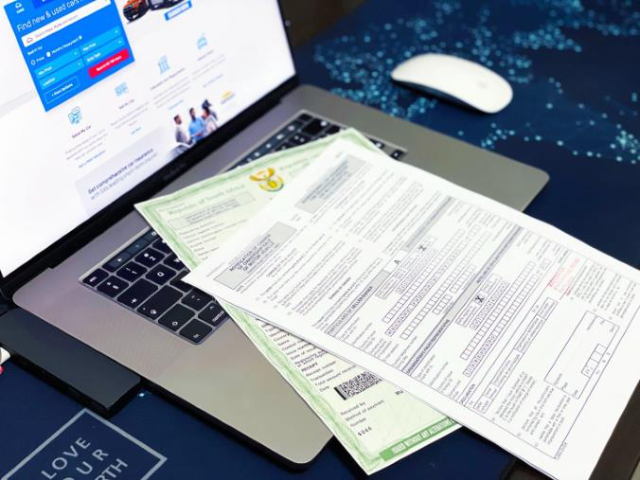
Online options
In many provinces, specifically Gauteng and Western Cape, you can now handle renewals and some parts of the process online via:
eNaTIS online portal: online.natis.gov.za
Banking apps: Most major South African banks (FNB, Nedbank, etc.) allow you to renew your license disc and have it delivered to your door.