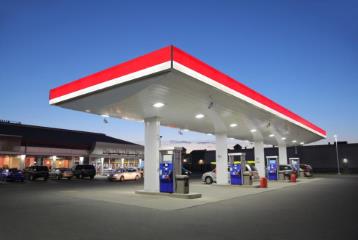
At nearly R22 per litre for petrol and R20 for diesel in July 2025, filling up your Hilux has become a serious monthly expense. But here's what we've learned after years of testing bakkies: your driving style and habits matter more than you think.
Understanding your Hilux's thirst
Toyota's current lineup spans five engine types, each with its personality and appetite:
- 2.0L petrol
- 2.7L petrol
- 2.4GD diesel
- 2.4GD-6 diesel
- 2.8GD-6 diesel
- 2.8GD-6 48V mild-hybrid
Official consumption figures range from 7.1 L/100km for the efficient 2.4GD-6 diesel to around 10.7 L/100km for the 2.7L petrol. But we all know those laboratory numbers don't reflect Johannesburg traffic or that weekend trip to the coast.
Toyota Hilux vs Ford Ranger: Which costs more to own?

Based on owner reviews and forum feedback, real-world South African conditions deliver roughly:
- 2.0L petrol: 10-12 L/100km
- 2.7L petrol: 11-13 L/100km
- 2.4GD-6 diesel: 8-9.5 L/100km
- 2.8GD-6 diesel: 8.5-11 L/100km
- 48V mild-hybrid: 7.8-9.5 L/100km
The foundation: Maintenance
Tyre pressure – your cheapest fuel saver
Under-inflated tyres are silent fuel thieves. Every 10% drop in tyre pressure increases fuel consumption by roughly 2%. With a decent tyre gauge costing R50, this might be your best automotive investment.

Check monthly, not just when the tyres look flat. Your Hilux typically runs 2.2 bar, but check the door sticker for your specific model. If you regularly carry heavy loads, you may need to increase the tyre pressure, potentially by 0.2 bar for every 100kg of extra weight. Remember that temperature also plays a part; check the pressure when the tyres are cold.
Toyota Hilux vs Ford Ranger: Which bakkie is right for you?
Air filter reality check
Our dusty roads murder air filters. A clogged filter forces your engine to work harder, especially on naturally aspirated petrol engines that depend entirely on airflow.

Replace filters every 15 000km in normal conditions, every 10,000km if you regularly drive gravel roads. This simple tip can improve fuel economy by 5-10%.
How does the Toyota Hilux compare to the Nissan Navara?
Service intervals aren't suggestions
Fresh oil, clean fuel filters, and properly calibrated systems matter. We've driven identical Hilux models, one recently serviced and another overdue, and the difference in performance and fuel consumption was noticeable within the first few kilometres.
Workhorse bakkie shootout: Ford Ranger vs Toyota Hilux
Engine-specific driving strategies
2.0L and 2.7L petrol: Working with natural aspiration
Your petrol Hilux doesn't have a turbocharger to mask poor driving habits. These engines reward smooth, predictable inputs.
Rev-range management: For optimal efficiency, keep the 2.0L between 2 000 and 3 500 r/min. The 2.7L has more flexibility, but both engines hate being lugged, forcing them to work hard at very low revs. This increases fuel consumption as they struggle to maintain speed.

Highway strategy: Petrol engines work hardest to fight aerodynamic drag. The sweet spot for both engines is 100-110km/h. Push beyond 120km/h, and watch your fuel gauge dive.
Urban technique: Use their flexibility. Unlike diesels, petrol engines handle frequent gear changes without penalty. Don't be afraid to downshift when approaching hills – maintaining momentum is more efficient than struggling in a higher gear.
Diesel models: Maximising torque efficiency
2.4GD vs 2.4GD-6: The newer GD-6 engines are more responsive and efficient. Both love being in their torque band – typically 1,500-2,500 RPM, where they produce maximum pulling power with minimal fuel.
2.8GD-6 standard: This powerplant has abundant torque. Use it progressively. Gentle pressure on the accelerator from low revs beats aggressive throttle inputs every time.

Turbo-lag patience: Give the turbo time to spool up rather than stamping on the throttle. Smooth acceleration from 1,200 RPM is more efficient than aggressive starts that bypass the turbo's optimal operating range.
Related: Toyota Hilux GR-Sport III Review (2024)
2.8GD-6 48V mild-hybrid: The efficiency champions
Only four models get the 48V system, but if you own one, you're sitting on the most efficient Hilux Toyota makes.
Stop-start optimisation: The electric motor assists during acceleration and regenerates energy under braking. In stop-start traffic, gentle acceleration lets the electric motor do more work, reducing diesel consumption.

Regenerative braking: Plan more than usual. Early deceleration maximises energy recovery, translating to less work for the diesel engine on the next acceleration.
Eco mode advantage: Owner reviews show the 48V system can achieve as low as 7.8 L/100km in eco mode.
Buying used? Read our Hilux 2.8 GD-6 4x5 Legend RS AT Review from 2021 here.
Universal techniques that work
The South African highway reality
Do you travel on our highways often? Your Hilux's aerodynamics work against you above 120km/h. An increase of 10km/h above this threshold can increase consumption by 10-15%. Stick to 110-120km/h and use cruise control on flat sections.
But, disengage cruise control on hills. Anticipating inclines and adjusting speed manually is more efficient than letting the electronic system react after losing momentum.
Load logic
Every kilogram costs fuel. Removing 100kg of unnecessary weight can improve fuel economy by 2-4%. Clear out that toolbox you haven't used in months, remove the camping chairs from last weekend's trip, along with the bags of firewood, etc.

Canopies create wind resistance. If you're not using them for load protection, remove them for highway trips. As for bicycles, fit them behind rather than on your vehicle.
4x4 wisdom
Unless you're heading off-road, keep your bakkie in 2WD. The mechanical drag from the front differential, transfer case, and additional driveline components can increase fuel consumption by 5-8%.
Traffic tactics for SA conditions
Jo'burg and Cape Town stop-start strategy
Our traffic is brutal on fuel consumption. Anticipation is everything. When you see brake lights 200 metres ahead, ease off the accelerator early rather than braking hard at the last moment.
This "eco-driving" technique can improve urban fuel consumption by 15-20%.
Climate control calculations
Open windows beat air conditioning for fuel efficiency at city speeds (under 80km/h). Not that you would drive around with open windows in high-crime areas, but it's good to know.

Technology at your disposal
Use your consumption display
If your Hilux has real-time fuel consumption data, set it to instant consumption and watch how your driving style affects fuel use.
We guarantee you'll be surprised. Minor throttle adjustments can change consumption readings by 20-30% in real-time.
Take the right route
Use Waze or Google Maps for traffic avoidance, not just directions. Sitting stationary in traffic burns fuel without covering distance – the worst possible equation for efficiency.
When to seek professional help
If your Hilux exceeds the aforementioned consumption figures and you're not towing, carrying heavy loads, or driving too fast, something could be wrong.
Common culprits include clogged injectors (especially with poor-quality fuel), worn turbochargers on diesel models, DPF issues on newer diesels, or misaligned wheels after pothole encounters.
A simple diagnostic check could identify issues costing thousands in wasted fuel.

At the end of the day...
Your Toyota Hilux doesn't have to drain your bank account, regardless of which engine variant you drive. We have seen owners of identical models achieve 15-20% fuel consumption differences by simply changing their habits. Start with basic maintenance, gradually change how you drive, and keep track of your fuel use to see what works for your specific Hilux. Every litre saved is money back in your pocket.
Your Toyota Hilux fuel-saving action plan:
- Check tyre pressure regularly
- Replace air filter every 15,000km (10,000km for gravel roads)
- Maintain service intervals religiously
- Keep petrol engines in the 2,000-3,500 RPM range
- Use diesel torque progressively from low revs
- Maximise 48V mild-hybrid regeneration (if equipped)
- Cruise at 110-120km/h maximum on highways
- Remove unnecessary weight and wind-resistance accessories
- Stay in 2WD unless actually off-roading
- Plan routes to avoid traffic congestion
- When safe, open a window at lower speeds instead of using the air-con
- Monitor the real-time consumption display
- Seek professional help if consumption exceeds normal ranges.