
Which Toyota Etios trim holds its value better?
With production of the Indian-built Toyota Etios having ended in April 2020, this model is due to be discontinued in South Africa soon. However, the Etios has built up a solid reputation for durability since it arrived in 2012, so it will likely remain a favourite in the used-car market for a few more years. With this in mind, we look at this range’s resale values, to determine which trim holds its value better.


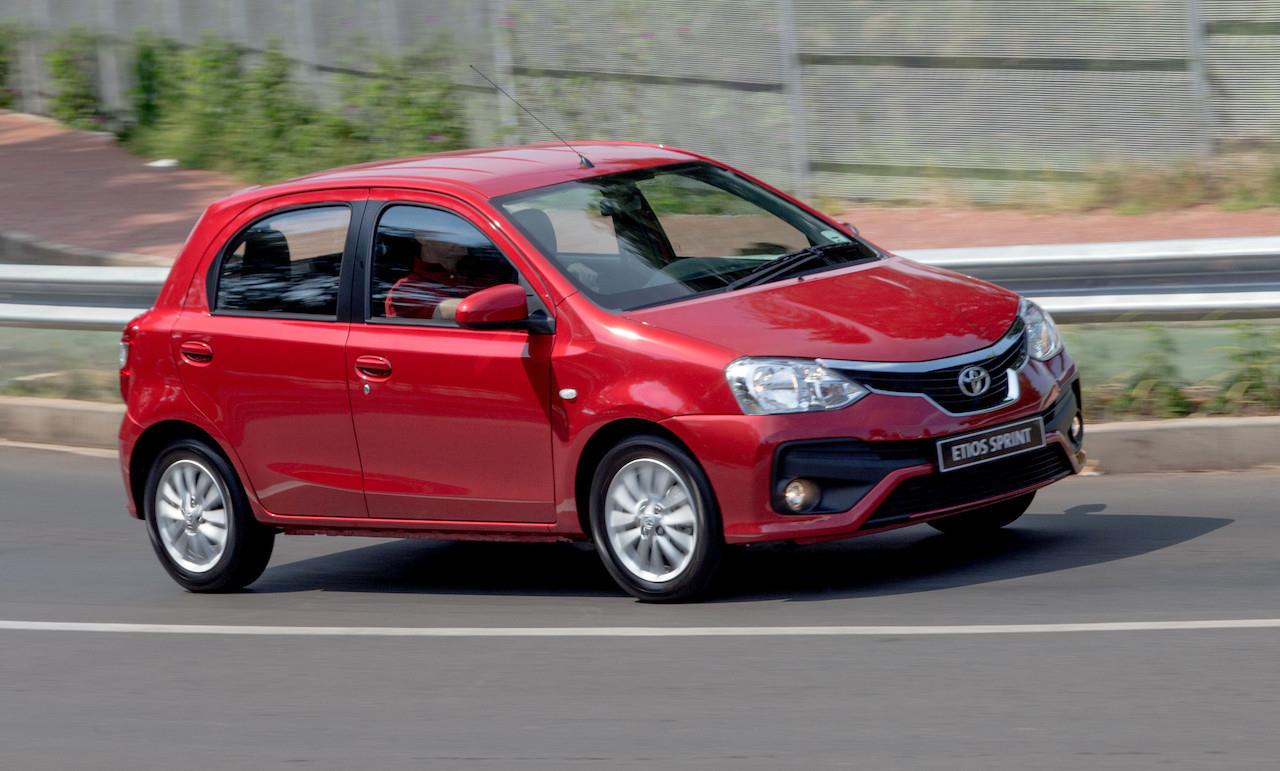
A long and successful run
To be honest, the Toyota Etios met with a certain measure of derision upon its initial South African release. Those early Etioses weren’t really built to the quality standards we’ve come to expect from Toyota, with a myriad of rattles and squeaks in the cabin, and overly-compliant suspension tuning giving it quite wallowy handling.
But Toyota kept on chipping away at its flaws, and by the time the second notable update happened in 2017, the build quality and driving dynamics had been dramatically improved to the point where the Etios can mostly stand proud in the budget supermini class. There’s one thing all Etioses share, however, regardless of build year or body shape: an unburstable engine/gearbox combination.
Related: Toyota Etios vs Suzuki DZire vs Honda Amaze – Which one has the lowest running costs?
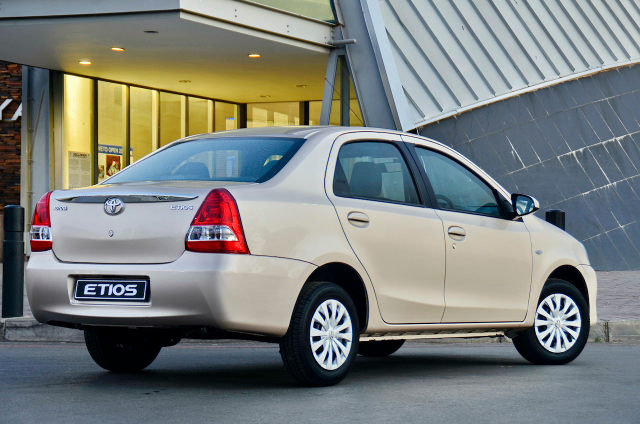
Over-engineered drivetrain
Power is provided by a 1.5-litre, non-turbo 4-cylinder engine producing 66 kW and 132 Nm, mated exclusively to a 5-speed manual gearbox. The whole assembly is (over) engineered to survive in the adverse operating conditions it was likely to encounter in the developing markets for which it was designed. This powerplant has been proven to withstand a lot of abuse, and keeps working even in the face of lackadaisical maintenance. This makes it perfect for South African conditions, then, and its mechanical integrity will ensure sustained used-car interest in the Etios for a while yet.
If you were to buy one of the remaining new Etioses on Toyota showroom floors, which one would be the best proposition from a resale value point of view? To find out which trim level holds its value best, we calculated the average prices of the various 2017 model year Etios (facelift) derivatives listed here on AutoTrader, with a mileage cap of 70 000 km (corresponding to an average of 20 000 km per year). Value retention is expressed as a percentage of the list price when new, and gives a fair idea of each derivative’s value retention.
Related: Toyota offered a limited-edition Etios Sport in 2018. Read our review of this great pretender here.
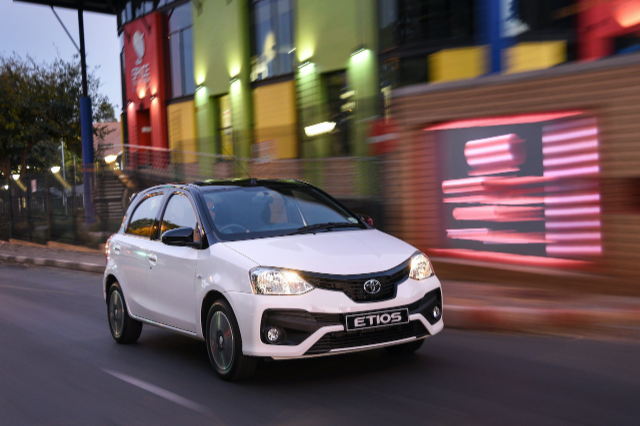
2017 Toyota Etios Xi Hatchback
There was only one Xi (entry-level trim) hatchback conforming to the above criteria listed on AutoTrader, with a value retention of 85.3%. However, a single car doesn’t make for a statistically representative sample, so this number should be taken with a pinch of salt.
Interestingly, the majority of Xi hatches show on the far side of 120 000 km already. That’s impressive mileage for such a small car in only three years, and goes some way to demonstrating its robustness. Out of curiosity, we moved up the mileage cap to 150 000 km (50 000 km per year!), and calculated their average retained value, and it came out at 76.2% - an amazing showing for entry-level budget cars with intergalactic mileages. Perhaps that 85.3% value retention of our single “low-mileage” Xi hatch isn’t so far-fetched, after all...
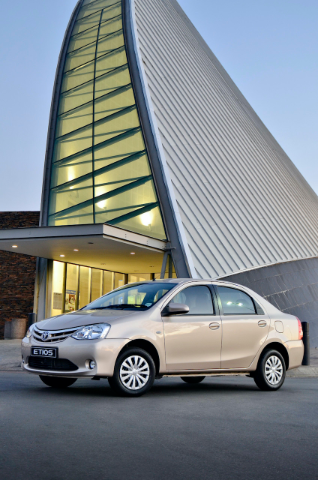
2017 Toyota Etios Xi Sedan
We encountered the same mileage issue with the entry-level Xi Sedan as we did with the Hatchback, albeit to a lesser extent: the small sample of cars listed at the time of writing all had around 80 000 km on their odos. Consequently, they don’t really conform to the “average use” criteria, either, but the overshoot isn’t nearly as severe as for the hatches.
After crunching the numbers, it transpired that these cars were listed at an average resale price of R 127 450, corresponding to a value retention percentage of 74.0%. It would appear that the Xi sedan isn’t nearly as popular as its hatchback counterpart, as indicated by its much steeper depreciation.
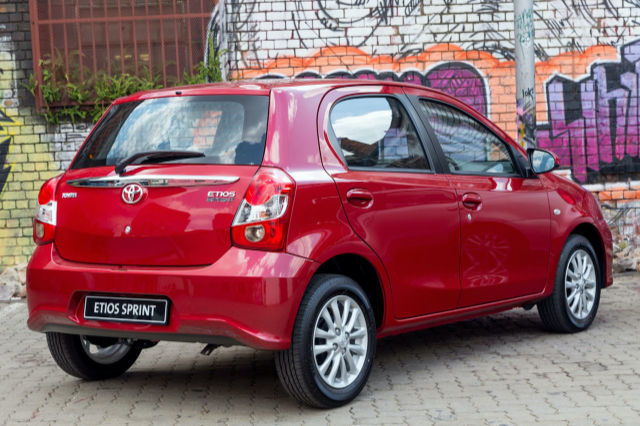
2017 Toyota Etios Sprint Hatchback
Price when new: R 172 600
Average used price: R 143 588
Percentage of value retained: 83.2%
This is the mid-level trim, with some added creature comforts, alloy wheels, and nicer bumpers. It is also by far the most widely-available hatchback derivative, outnumbering the Cross (crossover) variant by 30% in our listing pages. Over three years, its value retention of 83.2% is another indication of this model’s sustained popularity.
Of particular interest is that Etios Sprint hatchbacks fall predominantly in the “average-mileage” category. This could be an indication that the entry-level cars are usually bought for fleet use, while the up-level trim appeals mostly to private buyers. Makes sense, really – it’s not a lot more expensive than the Xi, but it’s a lot better-looking and better-equipped.
Related: Our review found much to appreciate about the Toyota Etios Sprint Hatchback.
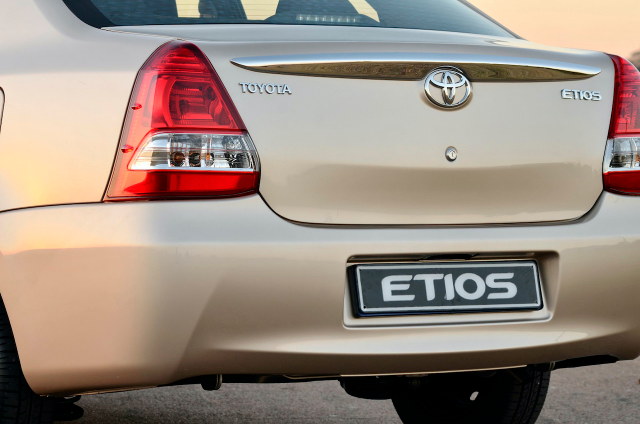
2017 Toyota Etios Sprint Sedan
Price when new: R 180 500
Average used price: R 146 631
Percentage of value retained: 81.2%
There are two points to note regarding the Sprint Sedans on site: they tend to have higher mileages than the hatches do, and they’re nowhere near as numerous, either. Given these higher mileages, it would appear that Etios sedans, in general, tend be used for longer-distance travel. “Average mileage” Sprint sedans still retain a decent chunk of value, however, with the examples on site holding onto a solid 81.2% of their new value after 3 years.
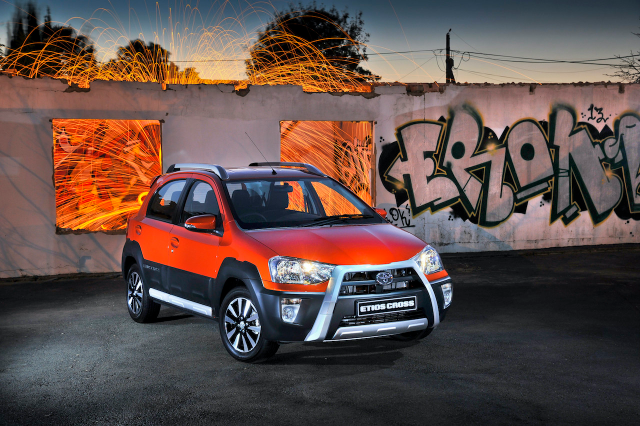
2017 Toyota Etios Cross (Hatchback)
Price when new: R 194 300
Average used price: R 156 743
Percentage of value retained: 80.7%
This result came as a bit of a surprise – we expected the most-upmarket Cross to hold its value the best, but, from this particular dataset and its mileage constraints, it turned out to be the quickest depreciator. Once again, the majority of Etios Crosses conform to the average usage case, which is consistent with our observation regarding the sedan’s fleet appeal and the private buyer’s apparent hatchback preference.
Related: Is the Toyota Etios Cross any less friendly than the hatchback?
Summary
Almost across the board, the Toyota Etios shows very strong resale value performance. The most popular variant is the Sprint Hatchback, in terms of both availability and value retention, with the Sprint Sedan following closely.
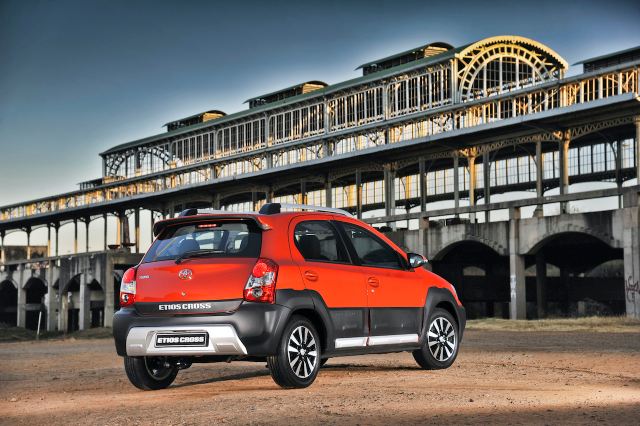
The great news is that (arguably) the most appealing Etios, the Cross, depreciates quicker than the popular Sprint, which makes for great second-hand shopping. It is currently unclear as to which model will replace the Etios, but from the outgoing range, the one that best holds its value is the Sprint Hatchback.