
Toyota Etios vs Suzuki DZire vs Honda Amaze: Which one has the lowest running costs?
They’re a favourite with fleet buyers and budget-conscious families, so it’s only logical that running costs weigh heavily on the minds of buyers who are interested in these small sedans. We chose three examples from the low end of the marketplace – the Toyota Etios, Suzuki DZire, and Honda Amaze – and evaluated them to see which one has the lowest running costs.



The compact sedan body style might be declining in popularity, but they still suit the needs of many buyers to a tee. They are especially important to the entry-level marketplace, where small sedans make up a large portion of fleet purchases, and appeal to family-car buyers who need value more than they need status. With the requirements of these buyers in mind, we investigated one of the key elements in determining which car to buy: their running costs.
Can you pre-determine your car’s running costs?
When considering a car’s running costs, it’s important to look at it over the full life-cycle. This allows third- or fourth owners of older cars to get a clearer picture of possible future expenses, and it helps first owners to determine at what age their cars may become too expensive to run. Unfortunately, most of the cars available new on our market are still too young to give accurate long-term information.
There are however certain key points which could give an idea of a car’s general upkeep requirements. This includes the length of the service intervals, the cost of replacement tyres, and the prices of service parts. For new-car buyers, the emphasis might perhaps shift more towards resale value, service plans, insurance premiums, and fuel consumption.
With these considerations in mind, we decided to pitch the ever-popular Toyota Etios against the Suzuki DZire and Honda Amaze in a running cost comparison. We picked our opponents as close as possible to the price point of an entry-level Toyota Etios Xi sedan, and then looked at the numbers. Which one has the lowest running costs?
Let’s meet the contenders!
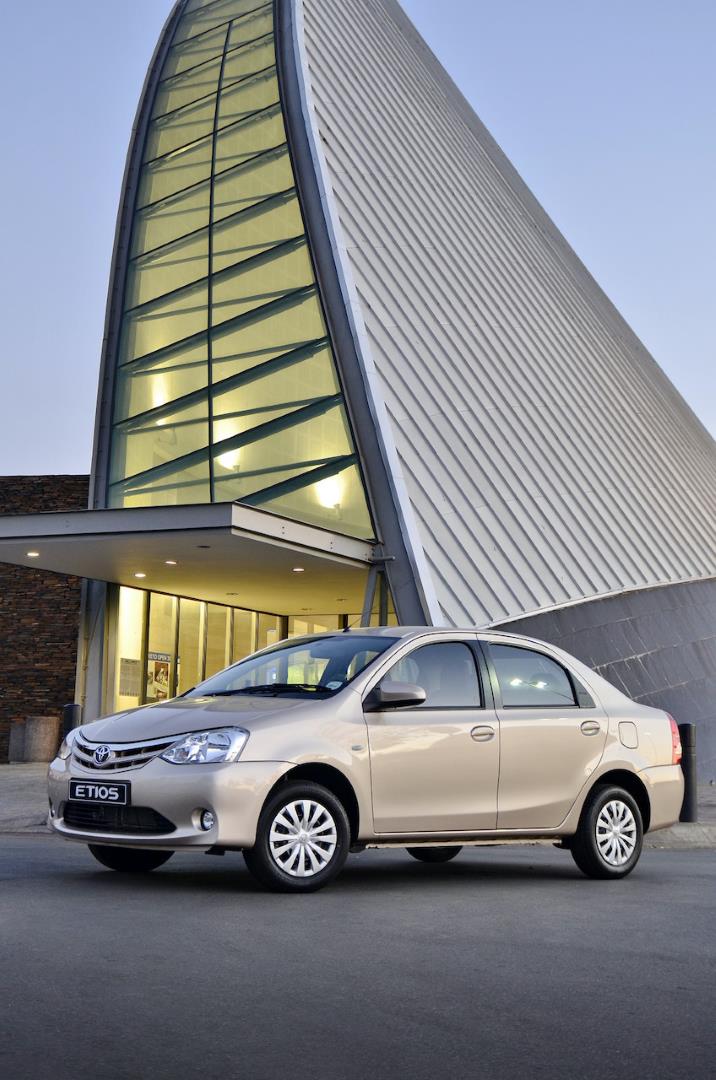
1. Toyota Etios Xi sedan (R 197 100)
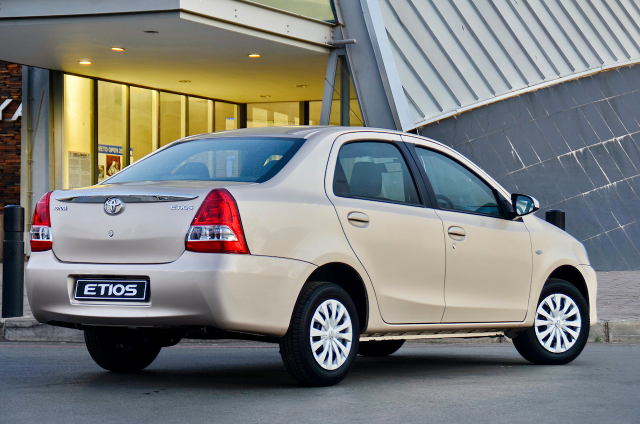
Xi trim denotes the entry-level of the Toyota Etios range, which means that it is somewhat sparsely-equipped, but not quite barren, either. Power steering, ABS with EBD, air conditioning, 4 electric windows and remote central locking, a USB/Bluetooth-enabled audio system, and rear ISOFIX child seat anchors are all present and accounted for.
It’s powered by a 1.5-litre naturally-aspirated petrol engine, sending 66 kW and 132 Nm to the front wheels via a 5-speed manual gearbox. This is the only engine/transmission available in the Etios, so all variants will have similar performance and fuel efficiency. Also note that the Etios sedan has a massive luggage compartment – in fact, it’s one of the largest boots you could find in a sedan of any size.
Related: Our review of the Etios hatchback revealed an honest, simple companion.
2. Suzuki DZire 1.2 GL (R 185 900)
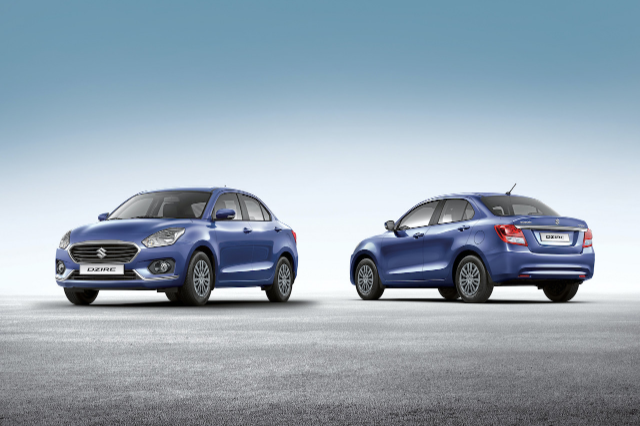
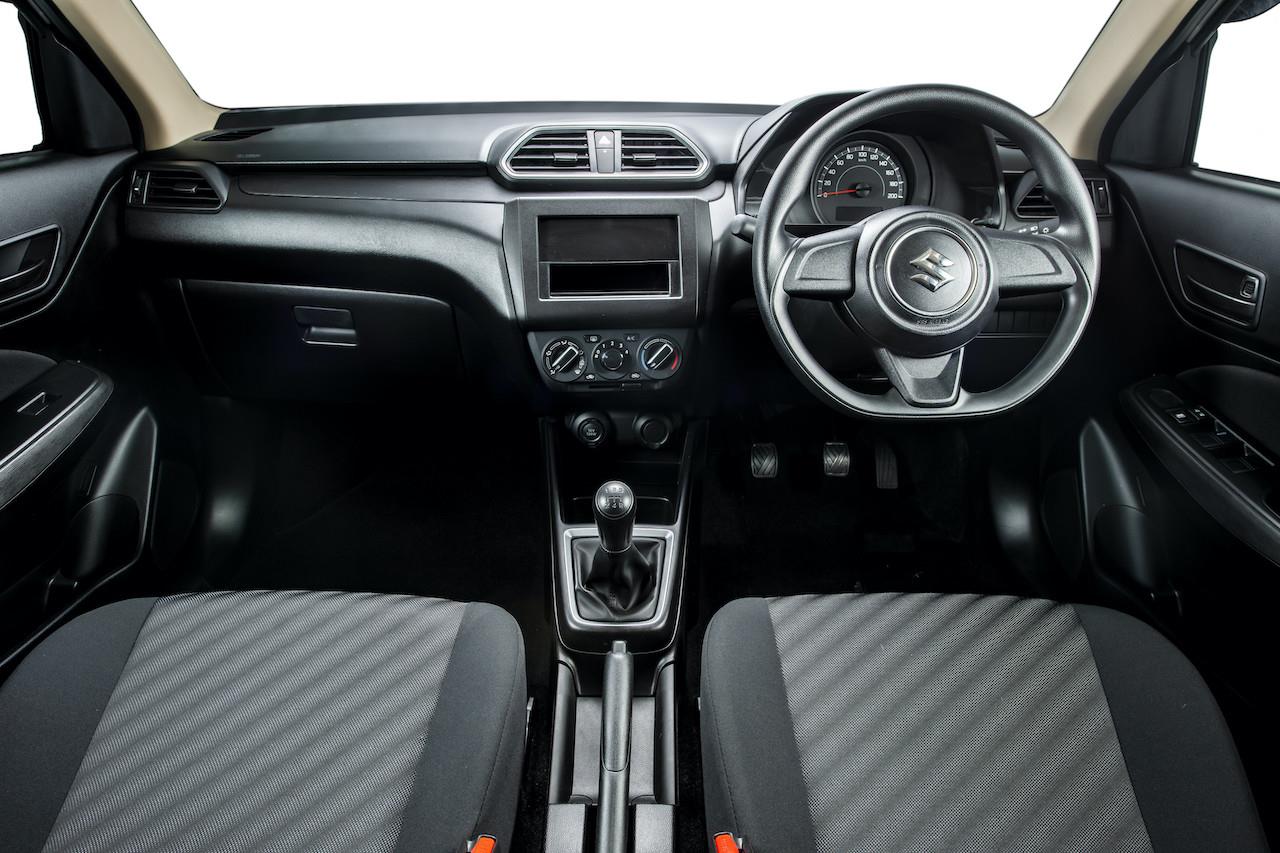
As the highest trim level (currently) available in the Suzuki DZire range, the 1.2 GL derivative matches the Etios on most key points, with the notable addition of steering wheel-mounted remote controls for its audio system and electric side mirror adjustment. For the rest, it’s much like you’ll find in the more-expensive Etios: comfortably-equipped, but not opulent by any means. Its cabin design, and fit and finish are a whole lot nicer than you’d get in the Toyota, though.
Power comes from 1.2-litre 4-cylinder, naturally-aspirated engine, which produces 61 kW and 113 Nm. This power trade-off (against the Etios) could be seen as fair, given the Suzuki’s smaller pricetag, and performance is surprisingly spritely, thanks to the DZire’s extremely low kerb weight of 890 kg (the lightest in this group).
Related: Our review of the 2018 Suzuki Dzire found it to be a likeable small sedan.
3. Honda Amaze 1.2 Trend (R179 900)
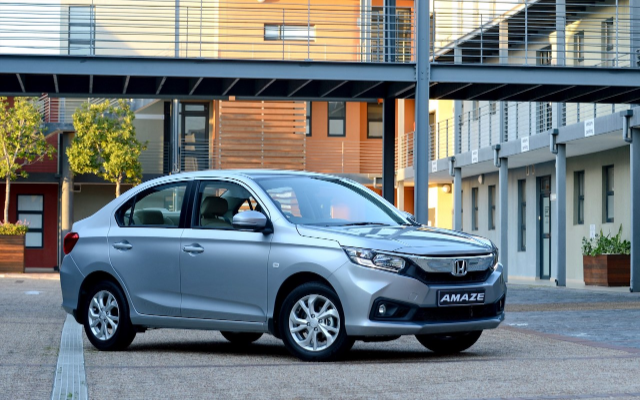
This is the least-expensive car in this group, but mostly matches the other two on standard equipment. It loses out on remote control for its central locking, but features steering wheel-mounted remote controls for its audio system (like the Suzuki does), and its cabin quality is about par with the Suzuki’s as well (and far ahead of the Etios). All in all, it’s not a bad value proposition at the pricetag, although neither the Amaze nor the DZire can hold a candle to the Etios’s enormous luggage compartment.
Under the bonnet is another 1.2-litre, non-turbo 4-cylinder engine, this time with an Etios-matching 66 kW but a lowest-in-group 110 Nm on offer. It’s barely lighter than the larger Etios, however, which means that the torque deficit will certainly have a negative impact on performance.
Related: Read our review of the 2019 Honda Amaze here.
Which one has the lowest running costs?
Purchase price and depreciation
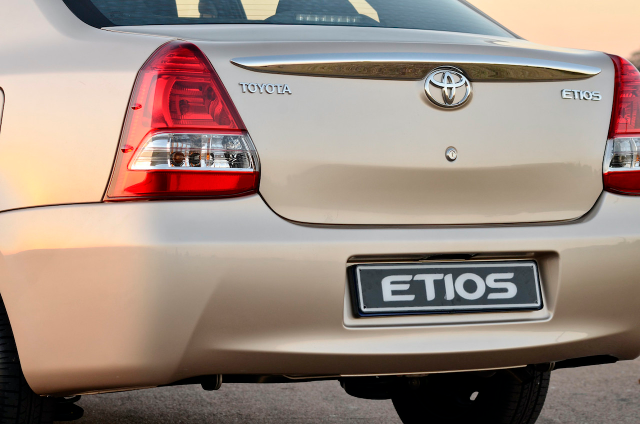
This department results in a mixed result for the Etios. It’s the most expensive car here for a start, but its will retain more of its value for longer, purely based on Toyota’s (well-earned) reputation for durability and strong market demand. Initial depreciation is very modest, with very low-mileage 2020-model Etios Xi sedans listed here on AutoTrader retaining between 93- and 96% of their value when new.
Similarly low-mileage 2020 Honda Amaze Trends listed on AutoTrader only retain between 87- and 92% of their new-car values, and nearly-new 2020 Suzuki DZire GLs on AutoTrader retain between 86- and 91% of their new-car values. The take-away here is that, while the Etios sedan costs more to begin with, it will compensate for its price premium with higher resale values right from the start.
Fuel efficiency
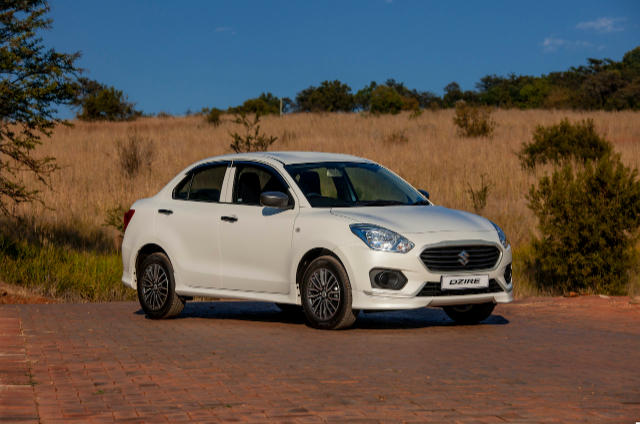
The Suzuki is the undisputed king in this department, with real-life, mixed-cycle average consumption easily hovering in the low-5 ℓ/100 km bracket. Suzuki claims an average consumption figure of 4.9 ℓ/100 km, and it’s likely that conservative buyers may easily be able to actually achieve that figure in normal driving.
Next up is the Honda Amaze, with a claimed average of 5.6 ℓ/100 km. We never managed to get anywhere near that number when we reviewed one in 2019, however, and returned an average of 6.6 ℓ/100 km over a week of mixed-cycle driving. That’s still better than the Etios, though, which likely won’t drop below a 7 ℓ/100 km average at all – something that’s reflected in its claimed average consumption of 5.9 ℓ/100 km as well. Such is the price buyers will have to pay for getting the perkiest-performing small sedan of the lot.
Related: Which engines have the best efficiency?
Warranties, maintenance plans, and service intervals
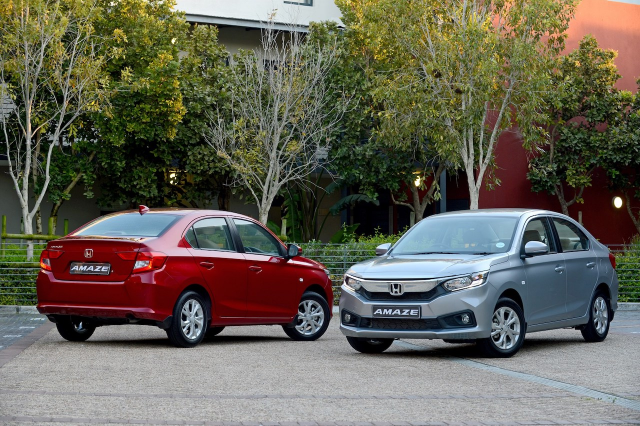
Both the Suzuki and the Toyota have warranties for 3 years or 100 000 km, while the Honda extends that to 5 years or 200 000 km. All three cars have service plans included in their purchase prices, though, and they’re all good for 30 000 km (or 2 years for the Suzuki and Honda, with Toyota not putting a time limit on their service plan offering).
There’s a catch, though: the Etios is the only car here with 10 000 km service intervals, in contrast to the 15 000 km intervals of the other two. This means that, by the time the odometer has ticked over to 90 000 km (for instance), the Etios will have 9 services under its belt, in comparison to the 6 services of the DZire and Amaze.
Over a longer term, that adds up to a not-inconsiderable disadvantage against the Etios, making its long-term servicing rather more expensive than for the other two, purely by virtue of the frequency with which it has to visit a service centre. Service parts cost roughly the same between the three manufacturers, though, with significant price deviations only resulting from different dealerships using different mark-ups on their part supplies.
Based on its stronger warranty and longer service intervals, this criterion has to go to the Honda, with the Suzuki is second place and the Toyota bringing up the rear.
Related: What is usually covered under a manufacturer’s warranty?
Insurance
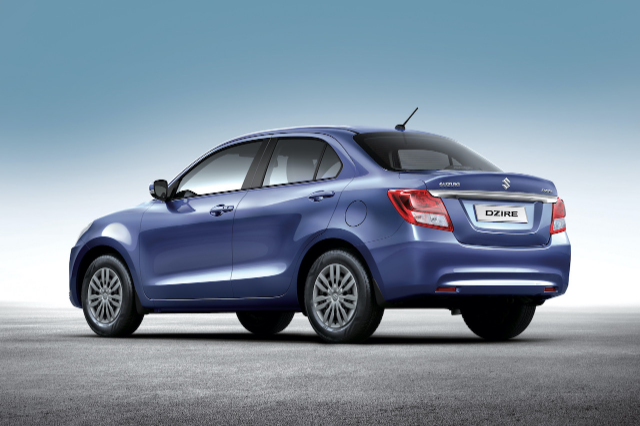
Only one of these cars is considered to be a high-risk vehicles by the underwriters, and that’s the Toyota Etios. Partly due to Toyota’s general popularity among car thieves, and partly because they have a reputation of being very quick to steal, Etios insurance premiums are likely to be about 20% higher than for either of the other two. Also counting against the Etios is its higher purchase (and thus replacement) value, so it has to come last in this department.
In mitigation, the Etios has very affordable collision repair parts prices, and thanks to strong aftermarket support and very simple construction, accident repairs will be a lot less costly than for these less-common opponents.
The Amaze and DZire don’t have the same appeal to car thieves, and their relatively underpowered engines immediately mean a lower risk to insurers as well. Let’s call it a draw in the insurance stakes between the Suzuki and the Honda, then, as premiums will vary mostly based on the projected mileage to be covered and where the cars are kept and driven, both in the daytime and overnight.
Related: Top tips to save on your car insurance.
Tyre replacement
Standard tyre prices play a significant part in any running cost evaluation, but it’s not always a given that smaller tyres will be less expensive – if they’re less commonly used, they might be harder to find and more expensive to replace than larger tyres which are in wider use.
Related: How long is a tyre supposed to last?
The Suzuki DZire rolls on surprisingly meaty (for its performance) 185/65R15 tyres, which are surprisingly easy to find and quite affordable (in most cases). Browsing through a leading tyre retailer’s website showed 15 different brands of tyre in this size, with prices varying between about R700 and R 1300 per tyre. The bottom line is that it could be either very cheap (with house-brand tyres) or quite expensive (with premium-brand tyres) to keep a DZire on good rubber.
The Honda Amaze also uses 15-inch tyres, but in a slightly smaller 175/65R15 size. In a weird twist, the same tyre retailer doesn’t list a single replacement tyre in this size, and neither do some other retailers. One retailer does offer a “house-brand” tyre in the Amaze’s size, though, with a similar pricetag to the least-expensive DZire tyre. This means that new brand-name tyres for an Amaze will have to specially-sourced, which doesn’t bode well for affordability in the long term.
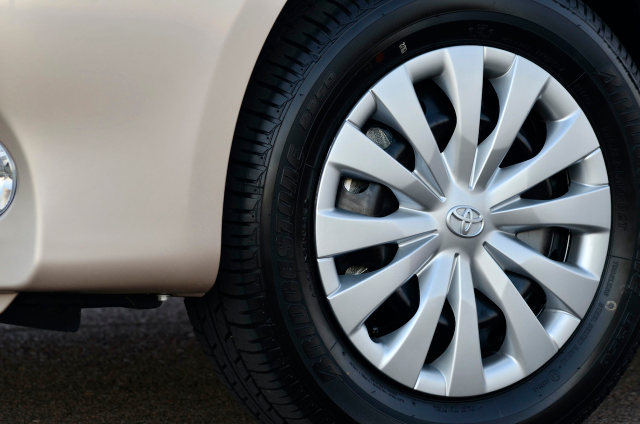
The Toyota Etios Xi is a clear winner in this regard, though. Its 175/65R14 tyres are freely available (with a choice of 19 possible replacements at the major retailer), and even the name-brand tyres are very affordable – we’re looking at Continental tyres for less than R700 a tyre, and even Pirellis slipping in below the R900 mark.
Verdict
Long-term running costs may be difficult to predict, but going on the indicators listed above, the Toyota Etios may just be the most expensive car to run among this trio. Its tyres are less expensive, and it will have the best value retention, but its need for more-frequent servicing, much higher insurance premiums, and heavier fuel consumption count against it. Of course, it’s a Toyota, so it’s likely to be exceptionally durable, but the same could also be said of both of the others.
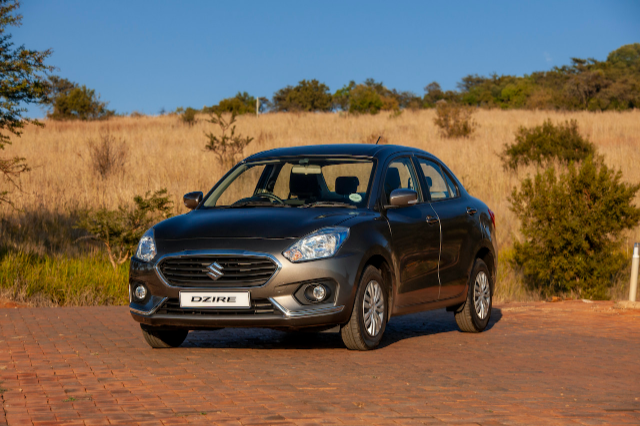
The next one to fall has to be the Honda Amaze. While it has the best warranty in this group, it’s still thirstier than the Suzuki, and its near-unobtainable tyres will present a serious obstacle. This leaves the Suzuki DZire as our overall running cost winner: it’s the most frugal on fuel use, inexpensive to insure, and uses easy-to-obtain tyres as standard.
* Prices were accurate at the time of writing, but may change without prior notice.
Recommended Next:
Shop for new and used Toyota Etios Sedan cars for sale here.