Which new Hyundai Creta is better: diesel or petrol?
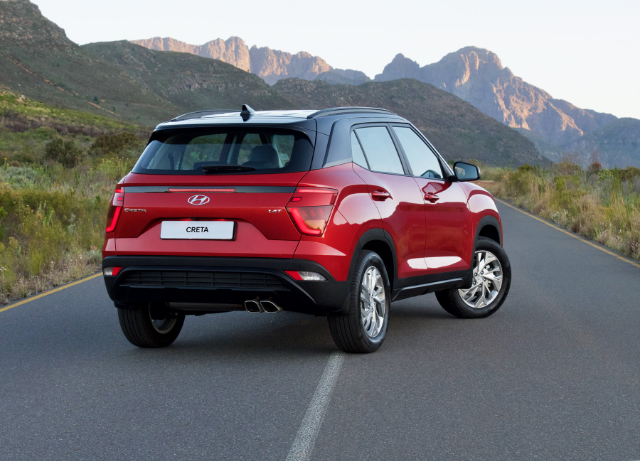
During November 2020, the new Hyundai Creta was introduced locally to the media. Offered in four model derivatives, the new Creta range is serviced by three engines. We compare the diesel and petrol variants to find out which is better.


The new Hyundai Creta, manufactured in India, not only offer drastically revised styling but a host of convenience features, revised engine line-up and new gearboxes. Occupying the niche Sub-Compact Crossover SUV segment, the newcomer faces tough competition against the likes of the Kia Seltos, Mazda CX-3, Toyota C-HR and Honda HR-V.
Related: Hyundai Creta (2021) First Drive Impression
Hyundai has also made away with the options lists, instead, the customer chooses a specific grade level of which there are two; Premium and Executive. Customers can expect airconditioning, electric windows and mirrors, park assist, reverse camera and cruise control to feature as standard equipment. An Apple CarPlay and Android Auto compatible 8.0-inch touchscreen infotainment system also comes standard.
Powertrain line-up
The entry-level or 'Premium' derivative also features the same 1.5-litre motor as in the Executive variant, however, comes fitted with a 6-speed manual transmission. While it delivers the same power and torque figures as its higher-specified sibling, its acceleration is slightly slower and fuel consumption slightly higher. For this reason, we will be comparing the Executive range of vehicles.
| Hyundai Creta 1.5 Executive | Hyundai Creta 1.5D Executive | Hyundai Creta 1.4T Executive | |
| Engine | 1.5-litre, 4-cylinder, petrol | 1.5-litre, turbocharged, 4-cylinder, diesel | 1.4-litre, turbocharged, 4-cylinder, petrol |
| Transmission | 5-step, CVT | 6-speed, automatic | 7-speed, dual-clutch, automatic |
| Power | 84 kW | 84 kW | 103 kW |
| Torque | 142 Nm | 250 Nm | 242 Nm |
| 0-100 km/h | 12.0s | 11.7s | 9.7s |
| Top speed | 170 km/h | 173 km/h | 185 km/h |
| Fuel consumption | 6.3 L / 100 km | 5.9 L / 100 km | 7.2 L / 100 km |
| CO2 emissions | 149 g/km | 147 g/km | 172 g/km |
*This table was compiled with information sourced from www.duoporta.co.za

Verdict
Although both the 1.5-litre petrol and 1.5-litre, turbocharged diesel motors provide the same amount of power, the diesel benefits from more torque, quicker acceleration and lower average fuel consumption. While the 1.4-litre, turbocharged petrol also develops slightly fewer torques than the diesel, the flagship model offers the most power, quickest acceleration and the highest top speed.
While it quickly becomes apparent that the diesel is the most balanced option in performance, frugality and price, the 1.4T will provide better performance and a smoother transmission but at a 1.3 L / 100 km premium. The 1.5-litre diesel and petrol offerings also produce significantly less CO2 emissions than the 1.4-litre turbo petrol.
In the end, it comes down to your driving style and personal preference. For those looking for optimal performance, the 1.4-litre, turbocharged petrol will come as an easy choice but for us at the AutoTrader office, the 1.5-litre, turbocharged diesel comes out on top. Not only is the diesel R15 000 cheaper to buy but should prove cheaper to own too, with that low average fuel consumption.
Recommended next:
Which Hyundai Creta holds its value better?
Hyundai Creta vs Kia Soul vs Opel Mokka: which one has the lowest running cost?