Which new Fiat Fullback is better: diesel or petrol?
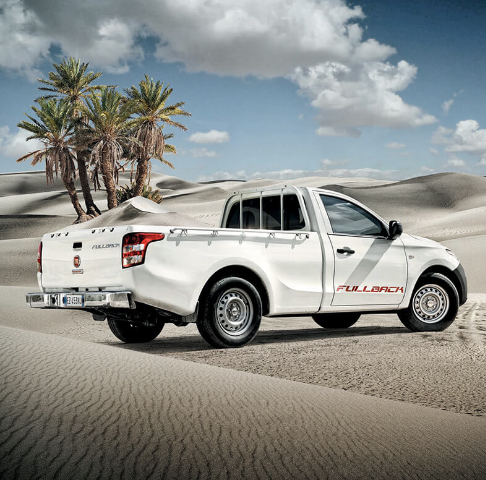
The Fiat Fullback range is a bit of an unsung hero locally, featuring underpinnings and engines from the Mitsubishi Triton and an attractive pricing structure. Today we compare the single cab Fullback engines to determine which is best, petrol or diesel.


The Fiat Professional marque was officially introduced to the local market in 2016 as the brand brought in the Fullback, a bakkie aimed at increasing the Italian brand’s presence within the local market. While sales of the Fullback have been lacklustre, to say the least, there are four single cab models that many of us do not consider when shopping in the workhorse segment. Let us compare the two engines available in the Fullback single cab range to determine which is best.
The figures
|
|
Fiat Fullback 2.4 |
Fiat Fullback 2.5 Di-D |
|
Engine |
2.4-litre, 4-cylinder, petrol |
2.5-litre, 4-cylinder, turbodiesel |
|
Power/Torque |
97kW/ 202Nm |
94kW/ 240Nm |
|
Transmission Type |
5-speed manual |
5-speed manual |
|
Driven wheels |
Rear |
Rear |
|
Towing Capacity (unbraked) |
750kg |
750kg |
|
Fuel Consumption(claimed) |
10.3 L/100 km |
7.8 L/100 km |
|
Payload |
1 000kg |
1 000kg |
|
Price |
R323 900 |
R369 000 |
Related: Fiat Fullback 2.4Di-D Double Cab 4x4 LX Auto
Four models, two engines
The single cab range within the Fullback line-up consists of two petrol and diesel models, with the entry-level models being the so-called 'de-spec' variants with niceties such as airconditioning removed. Since the de-spec models and the regular single cab variants are both available with the aforementioned petrol and diesel engines, we have selected the regular single cab models for the purposes of our comparison today.
Related: Fiat Fullback test drive: make sure to check these features out.
The petrol
The petrol engine in the Fullback single cab range is sourced from Mitsubishi, with the engine code 4G64. It is a naturally aspirated engine with a displacement of 2.4-litres, with its peak power of 97 kW being available at 5 250 r/min while its peak torque figure of 202 Nm is available at 4 000 r/min. The petrol variant tips the scales at 1 410kg and consumes unleaded at a claimed rate of 10.3 L/100km, allowing for 728km between fuel stops.

The diesel
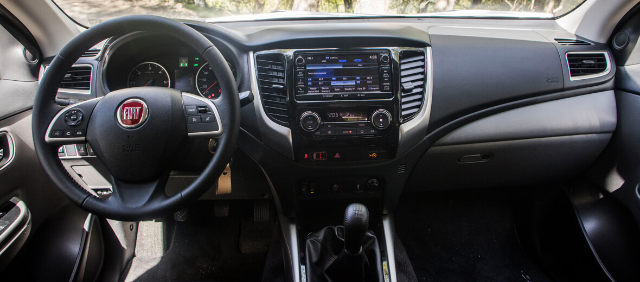
The 2.5-litre turbodiesel variant in the Fullback is the rather well-aged 4D56 unit seen in various Triton models. This engine consumes diesel at a claimed rate of 7.8 L/100km, meaning 962km between fuel stops. The engine produces its peak power of 94 kW at 3 500 r/min and its peak torque of 240 Nm at 2 000 r/min. The diesel model weighs-in at 95kg more than the petrol model, which will have an effect on efficiency.
Analysis
When analysing the two engines in the Fullback single cab range, it is important to consider that those purchasing a vehicle of this type are looking to maximise the amount of useful work that these products can do while ensuring that they are cost-effective to both buy and run. Off-road dynamics, refinement and comfort will play second fiddle to the reliability, practicality, and load-bearing ability in this segment, which is not necessarily the case with a double cab, which is a far more lifestyle-oriented vehicle versus the workhorse single cab.
Both products have the same 5-year/100 000km service plan with intervals pegged at 15 000km, meaning that maintenance will be identical for the first half a decade of the vehicle’s life. The immediate discrepancy between the two products is the list price, with the petrol version of the Fullback retailing for some R45 100 less than the diesel. The oil-burner fights back though, with a superior fuel consumption figure, some 2.5L/100km better than the petrol. Both models offer the same payload and unbraked towing capacity, however, the way in which each delivers its power is quite different, with the diesel offering more torque lower down in the rev range while the petrol has a superior peak output, despite it being high within the rev range.
Verdict
Having viewed the figures, both Fullback models will provide many years of satisfactory single cab service. The price discrepancy between the petrol and diesel models means that it will take some time to offset the additional capital outlay required for the diesel and its superior fuel consumption and added torque.
It is, therefore, the petrol model that will, in the short-to-medium term at least, provide a better commercial bakkie experience for budding owners from a cost perspective. Couple this with the fact that owners in this segment do not care as much about driveability as they do reliability and running costs and you have the petrol eking out a small lead over the diesel when it comes to maintenance when the mileage is higher, too.
Recommended next:
What is covered under Fiat Fullback manufacturer warranty?
What are the safety features on the Fiat Fullback double cabs?