
Which Mercedes-Benz X-Class diesel would you choose?
Mercedes-Benz’s stab at a “premium bakkie” wasn’t the roaring sales success they had hoped it would be, officially going out of production in May 2020, almost exactly two-and-a-half years after the first ones rolled off the production line. There are many reasons for this, but the lack of a capable powerplant was never one of them. We compare the three available diesel engines to pick our favourite.


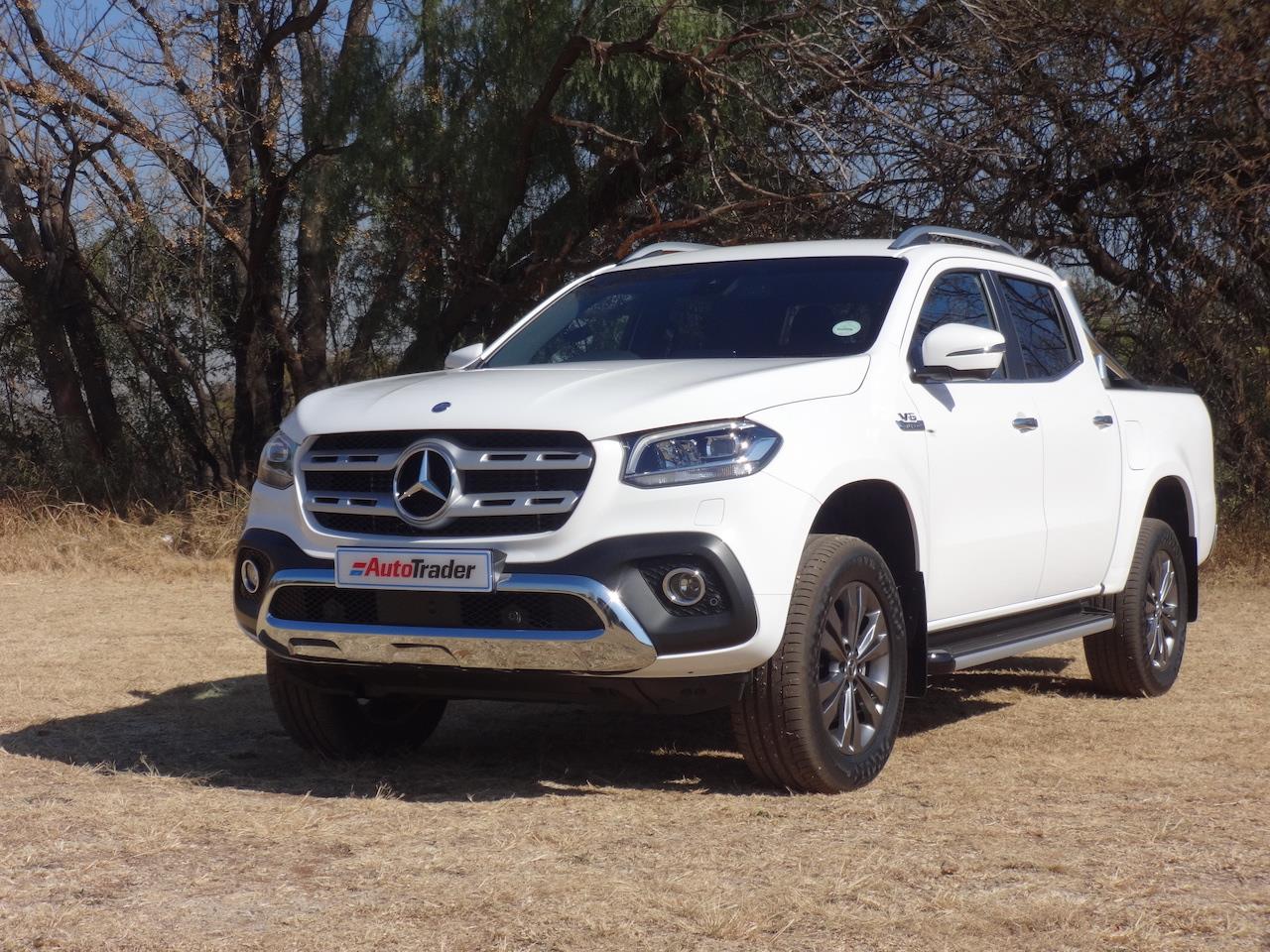
It was always a bit of a challenge to make a rational case for the X-Class, with especially the 4-cylinder variants always facing an uphill battle against much less-expensive and better-equipped mainstream competitors. Buyers simply couldn’t understand why they were asked to pay at least R 100 000 more than they would for an equivalent Nissan Navara: whatever differentiated the 4-cylinder X-Class from its Nissan twin, it just wasn’t enough to justify that elevated pricetag.
Related: Back in 2019, we speculated about the imminent demise of the Mercedes-Benz X-Class. Here’s the backstory.
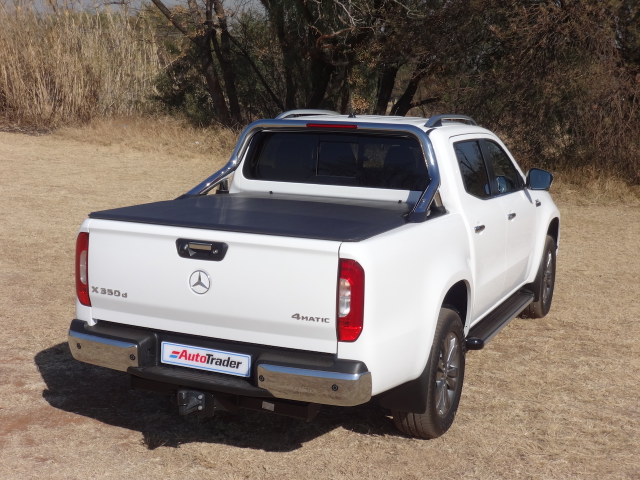
The V6-engined X350d was a rather different story, however. It employed a genuine Mercedes-Benz engine, for one thing, and its suspension was allegedly tuned by AMG... although the latter really only resulted in a stiffer ride with little actual benefit to real-world handling. The turbodiesel V6 gave good performance once awake and boosting, and its cabin refinement largely matched its pricetag (even if the standard equipment didn’t really).

Don’t overlook the 4-cylinder X-Classes completely, though. While the X220d and X250d were/are still very pricey from Mercedes-Benz new-car showrooms, low-mileage 2019-vintage examples are available in the pre-owned market for about R 200 000 less than they cost new, making for great used-car value. A similar X350d will “only” have lost about R 130 000 in value over the same period, and a used one will cost roughly the same as a new X250d Power 4Matic Automatic does, again offering a good value proposition.
Related: Mercedes-Benz X-Class vs E-Class vs GLC-Class – which one is the best value for money?
Which engine is best?
|
|
Mercedes-Benz X220d |
Mercedes-Benz X250d |
Mercedes-Benz X350d |
|
Engine (size/cyl/type) |
2.3-litre, 4-cylinder, single-turbo diesel |
2.3-litre, 4-cylinder, twin-turbo diesel |
3.0-litre, V6, single-turbo diesel |
|
Outputs |
120 kW/ 403 Nm |
140 kW/ 450 Nm |
190 kW/ 550 Nm |
|
Performance * |
0 – 100 km/h in 12.4s, 184 km/h |
0 – 100 km/h in 11.0s, 180 km/h |
0 – 100 km/h in 7.9s, 205 km/h |
|
Consumption * |
7.5 ℓ/100 km |
7.7 ℓ/100 km |
9.0 ℓ/100 km |
|
Transmission |
6-speed manual |
6-speed manual/ 7-speed automatic |
7-speed automatic |
|
Drivetrain |
RWD only |
RWD or 4WD |
4WD |
* Performance- and consumption figures as claimed by the manufacturer, and 4-cylinder variants’ figures are as quoted for the manual-transmission derivatives.

Mercedes-Benz X220d
This derivative opens the range, but is available only with a manual gearbox, RWD, and in entry-level “Progressive” trim. 120 kW and 403 Nm isn’t quite enough to make a bakkie this size move with vigor, so its performance is bound to be pretty leisurely. The dash from a standstill to 100 km/h takes a claimed 12.4 seconds, and it’s only 0.2 ℓ/100 km lighter on fuel than its more-powerful sibling at a claimed 7.5 ℓ/100 km.
Related: All the extras you should fit on a used Mercedes-Benz X-Class.

Mercedes-Benz X250d
The mid-line engine can be had with 4x2 or 4x4 drivetrains, with a choice between 6-speed manual and 7-speed automatic gearboxes, and in both Progressive and Power trim levels. The Nissan-sourced engine gets an extra turbo, which bumps the peak outputs to 140 kW and 450 Nm, and drops the 0 – 100 km/h sprint to as little (!) as 11 seconds flat. That’s quite usefully quicker than the X220d, and with its claimed average consumption of 7.7 ℓ/100 km (in manual 4x2 guise), it shouldn't even exact too much of a toll at the service stations.
Related: This video review tells you everything about the Mercedes-Benz X250d 4Matic Power.

Mercedes-Benz X350d
This is the big daddy in the range, and can only be had with a 7-speed automatic and a 4x4 drivetrain. It is available in both trim levels, with identical claimed performance for both variants. Outputs jump to 190 kW and 550 Nm, which slashes the 0 – 100 km/h to 7.9 seconds but makes it drink to the tune of a claimed 9.0 ℓ/100 km.
Related: Mercedes-Benz X350d – Distinctive or dreary? Our review goes into the details.
Which one would we choose?
While it’s indisputable that the X350d has a handy performance advantage, it’s still difficult to justify paying a premium of almost R 186 000 over an equivalent X250d. Whether buying new or used, an X250d Progressive (maybe 877with a few option packs and the manual/4x2 combination) looks like the best value, with improved performance over the X220d, much lower fuel consumption than the X350d, and a price tag that’s still fairly reasonable.
Recommended Next:
Shop for new and used Mercedes-Benz X-Class cars for sale here.