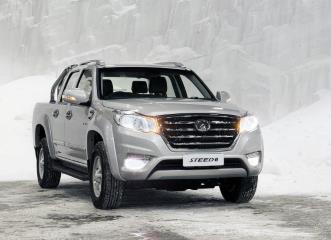
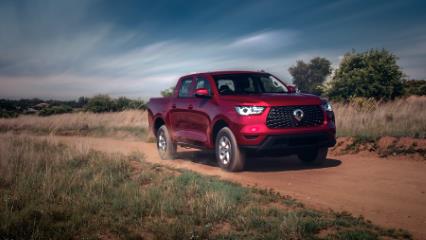
Which GWM H5 is better – petrol or diesel?
The GWM H5 (formerly Hover) dates from the era when GWM’s product range relied heavily on older technology and body styles from established manufacturers. However, it did receive some in-house GWM technology towards the end of its life, so we decided to compare the various engines on offer in this model, to determine which H5 is better: petrol or diesel?



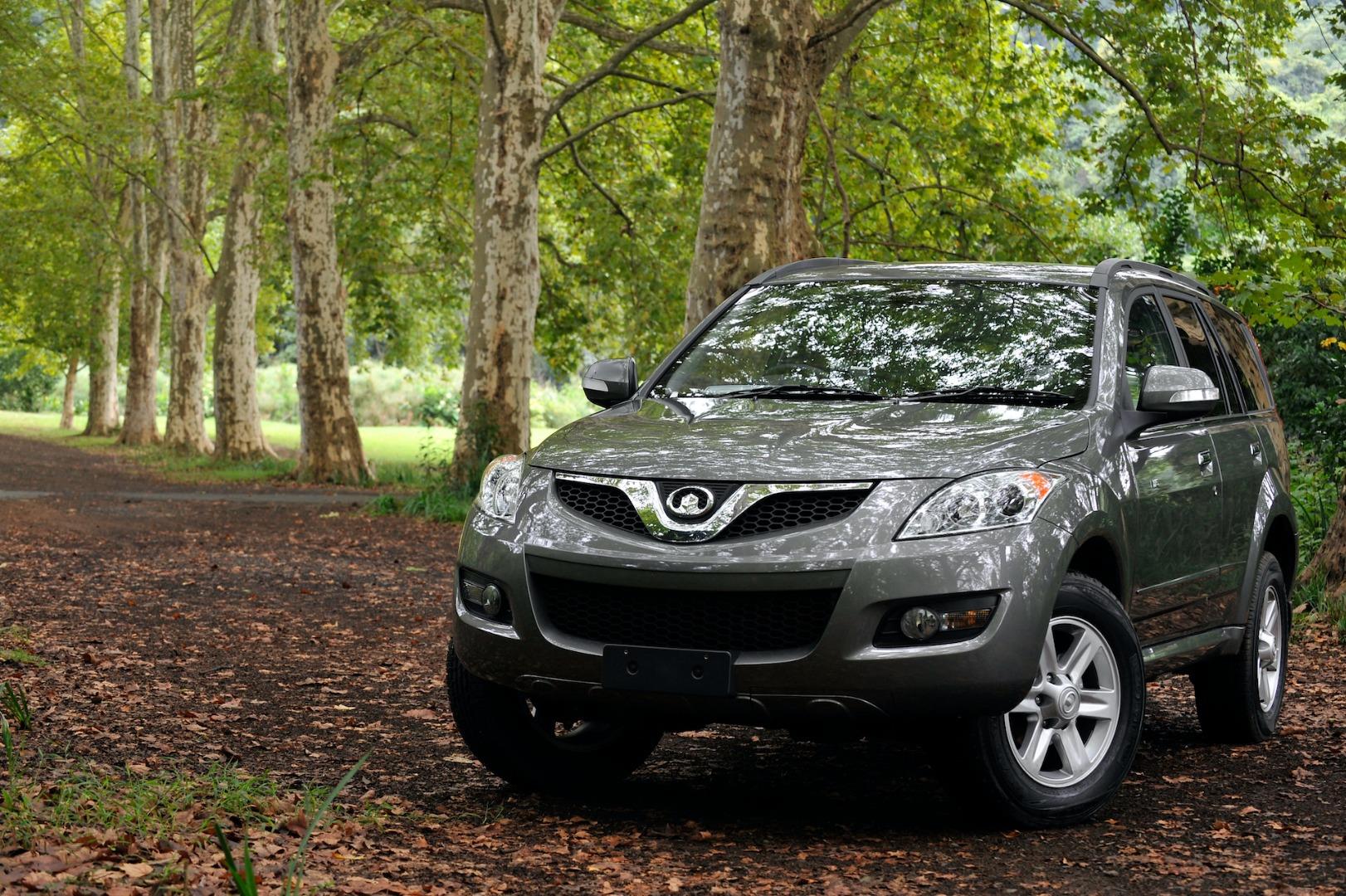

It started life as an Isuzu Axiom (a model we didn’t receive in South Africa), before being recycled into perhaps the most-convincing GWM product of its era. But, even with good standard specifications, surprisingly contemporary styling, a solid value proposition, and a choice between petrol- and diesel power, the H5 (Hover) didn’t really make much of an impression on the local market.
This lack of customer enthusiasm does make for some great used-car shopping, however. You can get a late-model, low-mileage GWM H5 for the price of a used supermini, so if you have your heart set on a body-on-frame SUV but can’t stretch all the way to a Fortuner, an H5 may be the answer to your prayers. Let’s compare the different engines employed in the H5, to decide which one is the best option.
Related: Shop for used GWM Hover/H5 SUVs for sale here.

GWM Hover 2.5 TCI
This was the diesel option in the initial Hover range (before it changed its name to H5), and employed a derivative of the ancient Isuzu-based 2.5-litre turbodiesel (built under license by GWM), and fitted with a Bosch common-rail direct injection system. In this application, it produced 80 kW and 300 Nm, making for a torquey and fairly frugal (but noisy and quite slow) SUV.

GWM Hover 2.4
Once again using outsourced technology, the initial petrol Hover featured a Mitsubishi 4G64 2.4-litre 4-cylinder engine, rated at 95 kW and 192 Nm. While it couldn’t match the 2.5 TCI on torque output or fuel efficiency, it was vastly more refined and proved to be more durable in the long term.

GWM H5 2.0 VGT
During the 2012 facelift, when the Hover name was dropped and it became known as the H5, the rattly 2.5 TCI mill disappeared, to be replaced by a new, in-house-developed GW4D20 2.0-litre 16-valve turbodiesel. Outputs increased to 110 kW and 310 Nm, while its claimed average fuel consumption was quoted as 7 ℓ/100 km. Complementing the new engine was a 6-speed manual gearbox or a 5-speed automatic, each available in either RWD or 4WD formats.
GWM H5 2.4
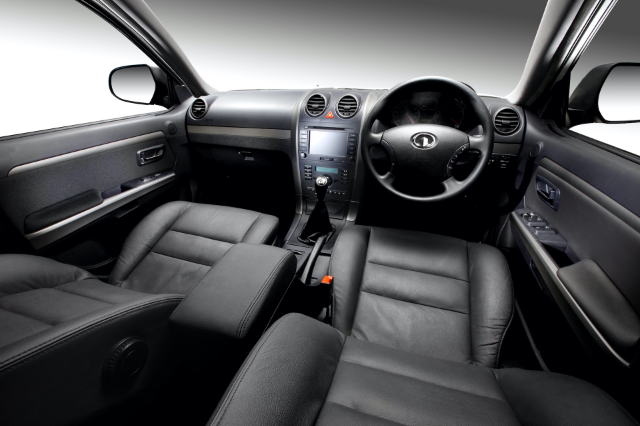
Just before the facelift arrived, the Mitsubishi-sourced 4G64 petrol engine was replaced by a more-modern 4G69 unit, increasing the petrol Hover/H5’s outputs to 100 kW and 200 Nm. Mated exclusively to a 5-speed manual gearbox, the RWD 2.4 variant’s official fuel consumption claim of 10.3 ℓ/100 km is perhaps a bit optimistic for real-world conditions. But, while it’s neither particularly potent nor frugal, it is a well-proven power unit, and will give many years of trouble-free service (provided the timing belt replacement intervals are religiously followed.)

Which one is better?
In the case of the GWM Hover/H5, newer is always better. Survivors of the early examples are more than a decade old by now, and it’s undeniable that the facelifted versions not only looked more attractive and were better equipped, but proved to be more durable as well.
As for the choice between petrol and diesel power, it’s down to personal preference. The 2.4 petrol (4G69) is sure to give very dependable service, but it will be expensive to feed in the long run and won’t give sparkling performance as compensation for its fuel thirst. With all factors considered, the torquier and much more-economical 2.0 VGT has to be the pick of the bunch.