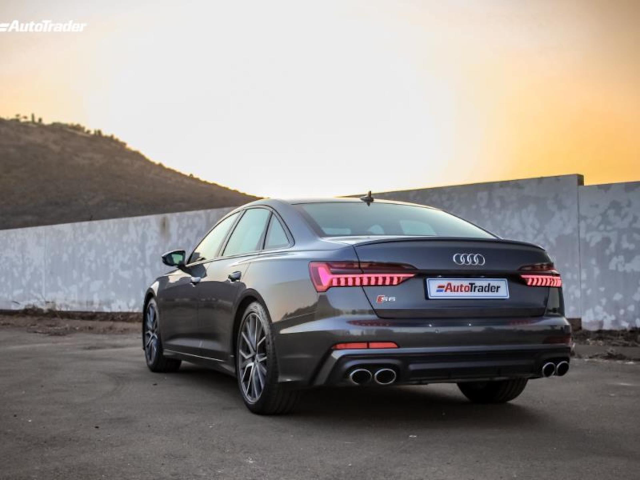
Which Audi S6 is better: petrol, diesel or... hybrid?
The concept of the diesel-fueled performance car is foreign in most world markets, except in Europe, where the idea originated. As a result, the European-spec Audi S6 is a rather different machine to the one sold elsewhere (and here in SA). We look at the differences between the European-trim Audi S6 and its exported siblings, decide which one is better, and speculate on possible future power options for this high-speed express.



The Audi S6 is a finely-honed luxury car for executives in a hurry, who don’t really feel the need to announce the success of their careers. Seen in this light, and considering that much of the world is trying to cut down on harmful emissions, it only makes sense that the latest iteration of this decades-old nameplate employs a downsized engine, with a heavy dose of turbo-boosted torque to go with the unbreakable traction afforded by quattro AWD.
In Europe, the Audi S6’s home market, fuel (and carbon tax) is even more expensive than in most other places, leading to an even greater focus on fuel efficiency for the latest model. As a result, the European S6 turned into a very different beast to the one the rest of us can enjoy. It’s still potent enough, but diesel power slashes this executive saloon’s fuel consumption and carbon emissions even further. But who’s getting the better S6 – Europe or the rest of the world? It makes for an interesting comparison.
Related: New vs used Audi S6 – what are the top 5 differences?
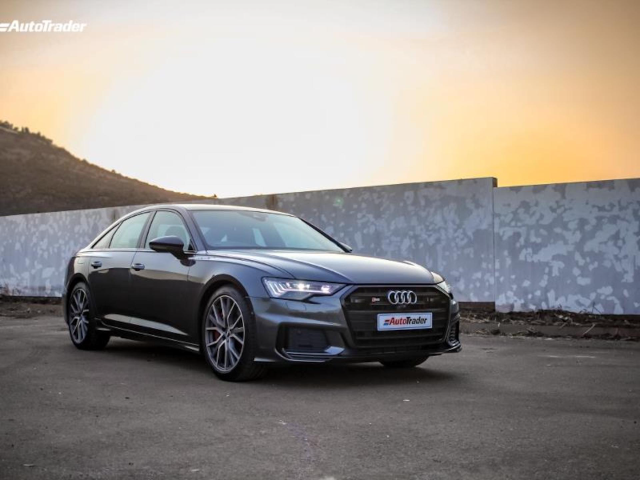
Audi S6 2.9 TFSI quattro (SA and rest of the world) – From R 1 401 500
This is the one we get (and that Europe doesn’t get at all), and it certainly delivers the goods on paper. The engine is closely related to the Audi Sport-tuned 2.9-litre twin-turbo V6 unit that’s also used to great effect in the RS4 and RS5, and delivers 331 kW and 600 Nm to an 8-speed torque converter automatic gearbox en route to the quattro AWD system.
As a result, performance is suitably rapid, with the 0 – 100 km/h dash claimed to take only 4.4 seconds. Considering the power on tap, the petrol S6’s claimed average consumption of 8.3 ℓ/100 km (according to the latest WLTP test protocol) is pretty respectable, but likely unattainable in real-world mixed-cycle driving. Count on at least 12 ℓ/100 km on real roads instead – this is still a heavy car, and shunting it about with such authority will always need plenty of energy.
*Price before options but including taxes: accurate at the time of writing, but may change without prior notice

Audi S6 3.0 TDI quattro (Europe)
If the “3.0 TDI” bit in its name looks familiar, that’s because the European S6 employs a variant of the Volkswagen Group’s corporate 3.0-litre turbodiesel. As installed in the Audi S6, it features 48V mild-hybrid technology (as does the petrol version) to cut down on turbo lag and enable a more-aggressive engine start-stop protocol.
Part of its trickery lies in the electric compressor, which builds boost long before the actual turbo can cut in, alongside an integrated starter-generator on the engine which can give a quick torque boost before the engine wakes up. The latter technology also applies to the 2.9-litre petrol engine, and helps to smooth out the power delivery while these heavily-boosted engines wake up.
To be honest, the Euro S6 doesn’t really have exceptional output figures: 257 kW and 700 Nm is handy enough, but looks rather ordinary in comparison to BMW's 3.0-litre, 6-cylinder quad-turbo “50d” engine, which generates almost 300 kW from the same engine displacement. With that said, the S6 TDI is far from sluggish: it’s claimed to sprint to 100 km/h in 5.0 seconds, which is still quite in line with the acceleration expected from the S6 badge.
The upshot to this reduced performance (relative to the petrol version) is vastly improved fuel efficiency, with the Euro S6 3.0 TDI claimed to demand only 6.2 ℓ/100 km in mixed-cycle driving. For the S6’s traditional profile as a high-speed cruiser, that fuel consumption advantage will have a notable impact on running costs, and its lower carbon emissions will give a big reduction in road taxes as well – and that’s A Big Deal in Europe.
Related: Is the Audi S6 good for new drivers?

Which one is better?
In world markets, absolute power still counts for more than efficiency or earth-unfriendly carbon emissions, which makes the petrol engine infinitely more desirable than the diesel could ever be. This prompted Audi to develop different cars to suit different market requirements, with the two divergent philosophies resulting in cars that do similar jobs in different ways.
With that said, the TDI’s torque advantage of 100 Nm may suit some driving styles better than the petrol’s high-revving nature, even if it is slower outright. But, in power-crazed markets like South Africa and America, the petrol engine is undoubtedly the better choice. Efficiency-chasers can opt for the 183 kW/600 Nm A6 45 TDI instead, and still match the petrol S6’s torque output (but not its peak power).
Related: The top 3 things you need to know about the latest Audi S6.

There is another way
With legislation increasingly turning against internal combustion engines, Audi’s engineers may need to consider a different approach towards powering the S6 in the future. The bottom line is that the worldwide executive car market is rapidly moving towards electrification, either in full-hybrid or pure-electric forms.
With this in mind, Audi may turn the next S6 into a hybrid instead, using existing building blocks to which they already have access. The latest Porsche Panamera offers two plug-in hybrid variants, with the lower-output version employing a detuned version of the petrol S6’s 2.9-litre twin-turbo V6, combined with electric assistance to achieve system totals of 340 kW and 700 Nm.
That’s more power than the current petrol S6 produces, and matches the torque on offer from the diesel. And the best bit? A usable EV-only range of about 50 km to allow access to city centres or give almost-free commuting, along with the instantaneous torque delivery of an electric motor.
Such an S6 will likely be properly quick, too, because the Panamera with this drivetrain already zips to 100 km/h in as little as 4.4 seconds, and can cruise comfortably at its governed top speed of 250 km/h. A win-win situation, if ever there was one!
Related: Reviewing the 2020 Audi S6, Chad Lückhoff was charmed by its rounded nature, but missed its predecessor’s V8 soundtrack.