
New vs used Audi S6: What are the top 5 differences?
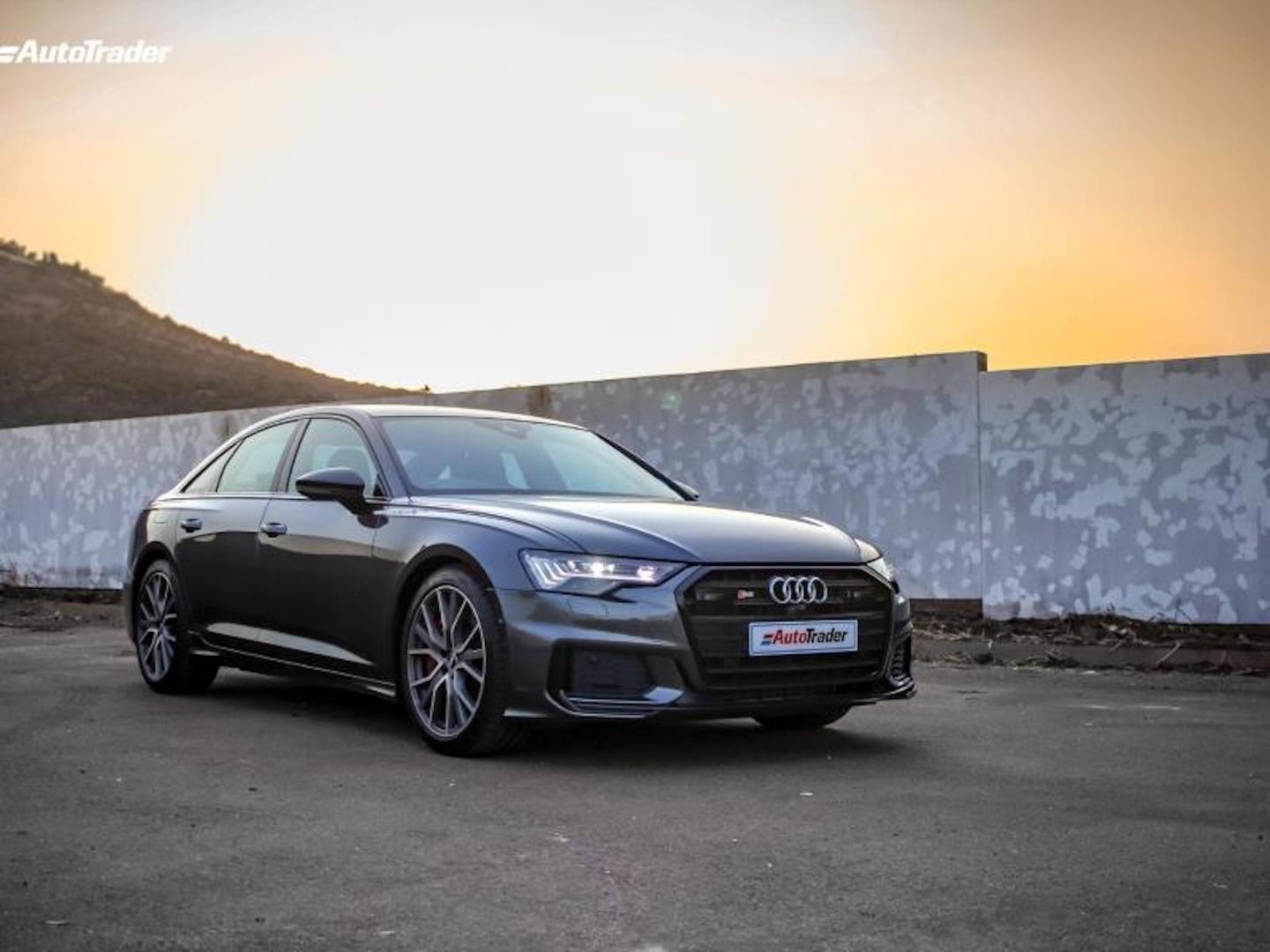
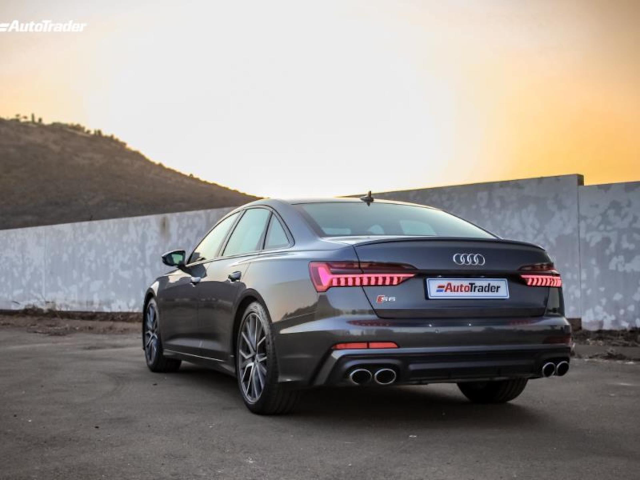
Audi’s S6 have been one of this brand’s powerhouses since it first appeared in the 1990s, and is meant to appeal to buyers who appreciate real-world performance while maintaining a high measure of visual discretion and occupant comfort. The current model, launched locally early in 2020, updates the concept to fit perfectly into today’s motoring landscape. Let’s look at the top 5 differences between a (used) previous-generation S6 and the new one.



Slipping comfortably into a niche market
It took the C8-generation Audi S6 (and its A6 sibling) almost two years after international release to get to South Africa, simply because it’s not as crucial a part of Audi’s local line-up as it used to be in years gone by. In its heyday, this large executive saloon’s early ancestors were even assembled in Uitenhage, and made up most of Audi’s local market presence.
But times have changed. Audi’s local volume sales migrated to imported, ever-smaller cars and SUVs, and the Audi 500 (as it was known then) lost its place on the Uitenhage production line to many generations of Volkswagen Polo. The Audi 100/200/500 grew up to become the A6 series and got progressively larger and more expensive with each new generation, and the rising popularity of premium SUVs further eroded the large executive car market segment as a whole.
Related: Interested in the Audi A6’s history? Click here to find out how it helped saved Volkswagen in the 1970s.

The subtle Autobahn stormer
These factors don’t render cars like the Audi A6 and S6 (or 5 Series or E-Class or XF) redundant, though. There’s still a place for large, super-powered and low-slung cars in places like Germany, where a high-tech and high-speed express sedan or wagon still have affluent buyers’ affection over most other body styles. Or in China, where the Audi A6 and its ancestors have earned a near-cult following over many decades of local production.
Moving upmarket also allowed Audi to advance the A6 family’s technology in new and exciting ways. This applies particularly to the model we’re looking at today. Against a backdrop where the S6 traditionally represented the state of the art for its era, the new one is another step ahead of its predecessor. Some of the advancements in the new S6 include:
1. Refined platform
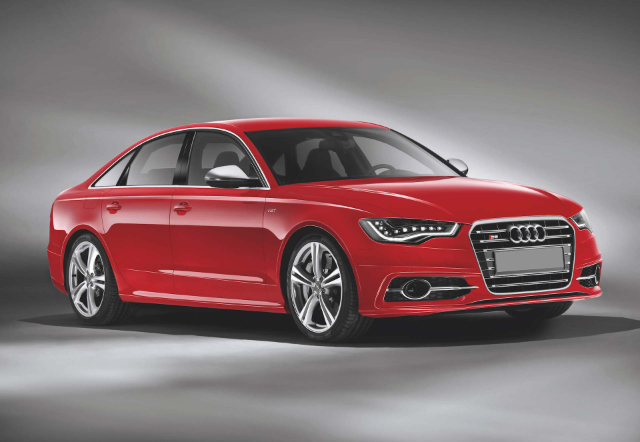
Even with just a casual glance, it’s clear that the new is derived from its predecessor, and no wonder: it employs an evolution of the Volkswagen Group MLB component matrix, aptly named MLB Evo. You’ll find derivatives of this platform underpinning cars as diverse as the Lamborghini Urus and the Audi A4, and it’s highly regarded for efficiency, performance and safety in every application.
The “Evo” bit in its name is the key here. Even though the engineers started out with the old platform, everything was further optimised, with the substitution of lightweight materials where appropriate and effective. This results in an entirely new, lighter body shell, with detail refinement to individual components of the suspension and drivetrain for ever-improving efficiency. It might look mighty familiar, but it really is almost all-new.
Related: The top 3 things you need to know about the Audi S6.
2. All-new engine
Earlier generations of the Audi S6 always had something special under the bonnet. The power unit peaked with the C6-generation’s Lamborghini-sourced 5.2-litre V10, but its C7 successor initiated a return towards downsizing, more in line with the very first S6’s approach of a heavily-turbocharged, smaller-displacement engine.
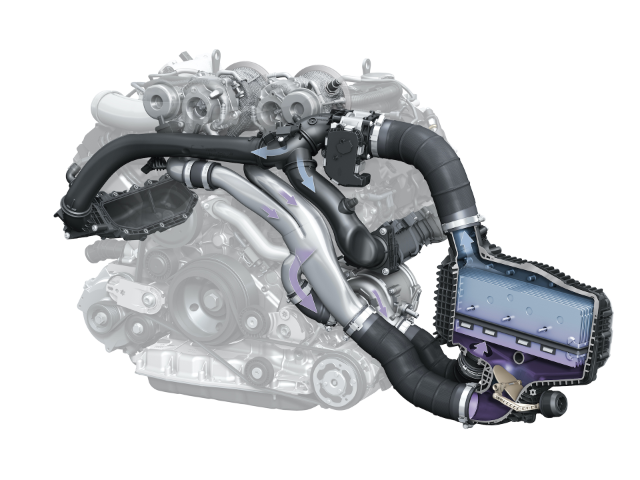
This continues with the latest model, which marks the first model in this badge’s history to use 6-cylinder powerplants, but it still delivers the goodies. Interestingly, European-market S6’s are offered in turbodiesel form, with the corporate twin-turbo 3.0-litre V6 TDI unit tuned to deliver 257 kW and 700 Nm.
Diesel power clearly won’t do in a car of this nature for export markets, though, so we receive the Audi RS5’s Audi Sport-tuned 2.9-litre twin-turbo petrol V6 instead. It produces the same peak power (331 kW) as the old S4’s twin-turbo V8, but has even more torque – 600 Nm against the V8’s 550 Nm. Power for both derivatives goes to the tarmac through an 8-speed torque converter automatic gearbox and Audi’s quattro AWD system.
Related: The top 5 Audi S6 articles on AutoTrader.

3. Similar performance, improved fuel consumption
The resulting performance is appropriately rapid: key figures include a 0 – 100 km/h dash in 4.5 seconds and a governed top speed of 250 km/h. That’s quick enough to take on the Mercedes-AMG E53 and its derivatives on equal terms, while the downsized engine should need a fair bit less fuel than its hard-drinking predecessor (theoretically), with claimed consumption down 8.3 ℓ/100 km.
It’s still likely to drink as much as the old one did in hard driving, however – this is a hefty car, and getting it up to speed this quickly means that plenty of fuel will need to be combusted. Such is the nature of this beast.
Related: Reviewing the 2020 Audi S6, Chad Lückhoff was impressed by its cultured nature, but missed the old car’s V8 character.
4. Chipping away at the efficiency numbers
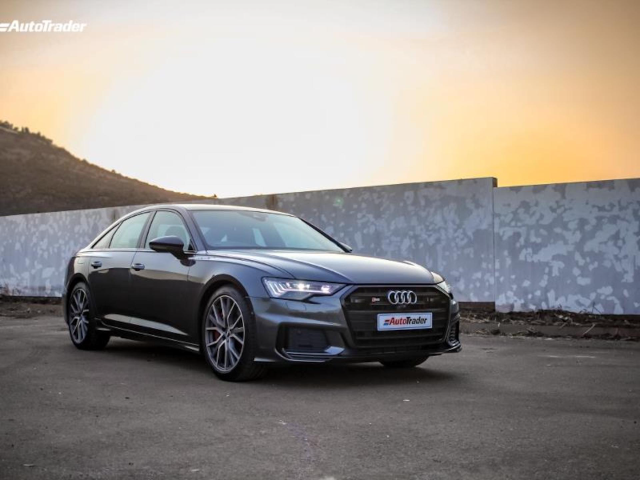
But, just because the Audi S6 is still potent doesn’t mean that it’s wasteful by nature. In the face of ever-more stringent worldwide emissions legislation, Audi applied a bundle of efficiency-enhancers to the S6. Part of it lies in the mild hybrid system, which harvests as much energy as possible from the moving car, and acts as a torque-filler during sudden power demands.
Other strategies are even more interesting, such as more-aggressive engine stop-start application even while the car is moving (smoothed out by the 48V electrics), with enhanced freewheeling programming in the transmission. Yes, the S6 is a very potent car, but that fact merely made Audi work even harder to make it as efficient as possible.
Related: Is the Audi S6 good for new drivers?

5. New cabin design
Audi is known for their lovely interiors, but that area is, ironically, the one where the old S6 fell slightly short of the lofty expectations created by earlier generations. The ergonomics were never quite spot-on, and the “stick-on tablet” infotainment screen system lost its luster pretty quickly. It was all beautifully made, of course, but the C7 S6’s interior just didn’t really inspire the appropriate sense of awe to which we’ve grown accustomed.
The new model rectifies this shortcoming, with cleaner cabin styling and vibrant display/touchscreens everywhere. Part of the C8’s evolution includes Audi’s latest electronic architecture, which is made up of a large digital instrument cluster, coupled with haptic-feedback-enabled touchscreens to control everything from the navigation, data connections and infotainment to the air conditioning, seats, and driver aids.
Related: The Audi S6 has a sexier fastback sibling, too - click here to find out why we adored the previous-generation S7 Sportback on review.
Recommended Next:
Shop for new and used Audi S6 cars for sale here.
Shop for new and used Audi A6 cars for sale here.
Shop for new and used Audi A7 and S7 Sportback cars for sale here.