What SUV will last the longest?
Even though leasing and short-term ownership is becoming ever more prevalent in the new-car market, a growing number of owners tend to hold onto their cars for longer than before. This is likely because today’s cars are built to finer tolerances and use better lubricants, but there are still some SUVs that should outlast even the best of the rest.



What affects a vehicle’s durability?
Key factors when choosing any SUV for a long life includes the amount of advanced technology in the car, the technical complexity of its drivetrain, the sturdiness of its body, and the quality of its assembly. The most important influence on the vehicle’s service life will be its drivetrain, though, because it’s literally the one thing that keeps it going.
More-advanced vehicles (with dual-clutch gearboxes and highly-tuned turbo engines) are less likely to last for a long time, simply because the extra complexity introduces more potential points of failure. So, if you want your SUV to last as long as possible, best stick to a non-turbo petrol variant of your choice, equipped with a manual gearbox (if there is one in your preferred model line-up).

Soft-roaders
Contrary to what their chunky styling attempts to portray, the reality is that the majority of modern SUVs and crossovers are really just normal cars with raised floor- and rooflines, and some body cladding. This is not necessarily a bad thing, because, while most buyers like the rugged image, they seldom use those SUVs to go where normal cars can’t go.
However, their car-like construction (with unitary body designs, independent suspension and usually FWD) also means that they’re not really suitable for really hard work, or for the stresses that come with venturing far off the beaten track. They’re meant to look like off-roaders but drive like cars, and that’s enough for most owners.

Bush breakers
But there’s also a sub-set of car buyers who value a long service life and real all-terrain abilities higher than sporty dynamics or sleek styling. For those requirements, some manufacturers produce old-fashioned body-on-frame SUVs, usually starting with the underpinnings of a heavy-duty pick-up and then placing a passenger-friendly body on top.
This arrangement allows for the easy addition of 4-wheel drive (or AWD with a low-range transfer case), while the underlying frame, which is usually engineered to absorb plenty of abuse, offers a sturdier starting point for a really long-lasting vehicle. Does this mean that frame-based SUVs will necessarily keep working for longer, though?

About our sources
Due to the differentiation between car- and frame-based SUVs, we decided to split the larger SUV group into two distinct camps, and then set about doing some research into this subject. While no local institution or publication has conducted widespread durability- or quality surveys pertaining to the service life of vehicles, J.D. Power conducts such surveys on a yearly basis in the USA.
Other sources for this article include Forbes Magazine, autobytel.com, and ISeeCars.com surveys, providing lists of vehicles that are the most likely to reach 200 000 miles (~320 000 km). And, while these surveys apply to US-market vehicles, there are some trends that should reflect in South Africa as well.

Generalised trends
Paging through the numerous overseas durability- and quality surveys regarding SUVs, there’s one factor that stands out: Body-on-frame SUVs generally rank much higher than their unibody opponents in the longevity stakes. In fact, 11 of the 15 longest-lasting US-market cars in the Forbes list are body-on-frame vehicles – the rest are Honda- and Toyota passenger vehicles...
That doesn’t mean that unitary construction is inherently incapable of lasting a long time, because the 2020 J.D. Power survey illustrates that many mid-size, car-based SUVs offer top-level customer satisfaction. But it does mean that, if you start off with a body-on-frame SUV, you already have a good chance of it lasting longer than an average car-based one would.

Unitary construction SUVs
Two names that consistently pop up across all sources is the Kia Sorento in the mid-size category, and the Hyundai Tucson in the compact category (as well as the related Hyundai Santa Fe and Kia Sportage, respectively). Their initial quality is of a high order, and their owners also rate them highly for durability.
This trend could probably extend to the rest of their line-ups as well, thanks to a corporate culture that emphasises quality across all divisions. One thing worth remembering with all on-road-biased SUVs: They will last at least as long as their equivalent passenger cars, and possibly even longer.

Body-on-frame SUVs
Toyota has an excellent name for reliability and durability the world over, so it’s perhaps only logical that their products tend to dominate surveys in this regard. Two of the top three SUVs in the ISeeCars survey were Toyotas: the big-body Land Cruiser (200 Series, now replaced by the 300 Series), and the Toyota Sequoia. While we don’t get the latter in South Africa, it’s distantly related to the Land Cruiser Prado.
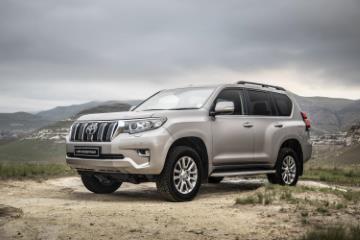
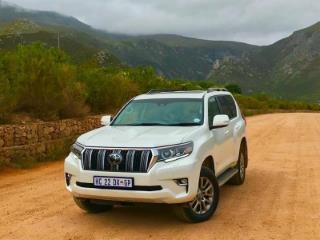
The Prado itself (sold as the Lexus GX in the USA) and 4Runner (the USDM equivalent of our Fortuner – similar, but built on a larger platform) also yield excellent durability reports. Most of the rest of these surveys are made up of American car manufacturers, however, with very little further overlap between local-market SUVs and their USDM counterparts.

Differences in the Southern Hemisphere
While the US of A gets their own models, South Africa receives some vehicles that can’t be sold in America. These are usually more in line with Australian-market models, so let’s look at Australasian trends as well. And, once again, the Toyota Land Cruiser gets the nod as the most reliable SUV, according to CarsGuide.com.au. Spotting the pattern yet?
Like the land Down Under, we also get the old-school Toyota Land Cruiser 70-Series. It’s a complex as a brick, and just as likely to break down. Further down the model hierarchy, the Toyota RAV4 and C-HR also have very good reputations for durability.
Honoruable mentions from both sides of the Pacific Ocean go to the Nissan Patrol (Armada in the USA) in the large vehicle segment, and the Mitsubishi ASX and Suzuki Vitara in the compact SUV segment. The Mazda CX-3 and CX-5 also have great reputations among the soft-roader crowd.

And the South African favourites?
No prizes for guessing that the Toyota Fortuner gets the first mention here: Now well into its second generation, it’s proved its durability over the years. Yes, it’s a bit primitive in some areas, but its underlying solidity always shines through – as is evident from the 300-odd Fortuners with more than 150 000 km on their odos that are currently listed here on AutoTrader. Whether petrol- or diesel-powered, it seems like old Fortuners just keep on going.
In contrast, not even the highest-mileage Ford Everest on our site has cracked the 300 000 km mark yet, with 256 of the 291 Everests listed on AutoTrader still slotting in below 150 000 km. That doesn’t mean that an Everest cannot last a long time if well taken care of, but the statistics do support the Fortuner’s perceived staying power. We can’t draw solid conclusions about the smaller-volume sellers, however, simply because there are fewer of them around to run up to high mileages.