Whether you are merely planning a family or a new member has joined recently, chances are you have heard about ISOfix baby and child seats. Now you might be wondering what exactly ISOfix means and if you really need it. In this article, we will be looking at exactly what is meant when a manufacturer states it has ISOfix as well as how it might bolster the safety levels.

What is ISOfix?
Traditional and even some child seats today is fixed in place with the use of a safety belt. To alleviate the complexities of installing a child seat and to ensure the seat is not installed incorrectly and that the seat fits perfectly in every vehicle, manufacturers child and toddler seats Britax Römer and automakers Volkswagen collaborated on a project to create a standardised attachment system.
This system that became known as ISOfix utilises two clips at the child seat base to attach to hooks that are attached to the chassis of the vehicle. The size and position of these attachment devices on both the seat and vehicle is regulated by an International Standardised Organisation, hence the ISO in the name.
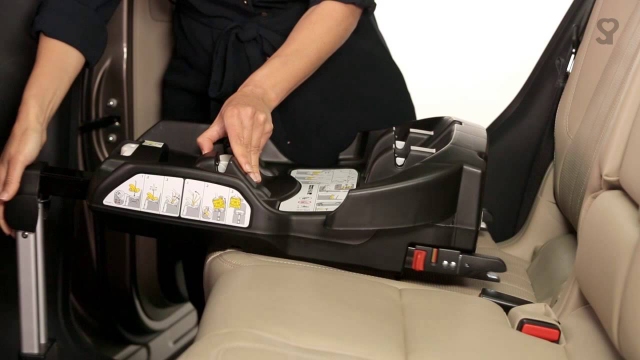
Thus all ISOfix seats and vehicles installed with ISOfix will be compatible with one another. Parents should note that ISOfix will only apply to seats manufactured for Group 0/0+ or infants and up to Group 1 or toddler sizes.
Is ISOfix safer?
First and foremost a child seat is created to hold a child in place as well as control how the body, head and limbs move during a collision. The seat will also absorb a certain amount of the impact to keep the child safe and to reduce injury. In the case of the ISOfix seats, manufacturers argue that the seat is secured to the chassis and will move around less in a collision than a seat secured with a seatbelt.
However, in comparative tests, both systems of attachment prove to be very similar in levels of safety, that is if both are correctly installed. This is where the major difference comes in between the two systems. Where ISOfix creates an intuitive installation process with little room for error during installation, seats secured with seatbelts can be more tedious to install and can result in an incorrect installation.

In fact, a study done in England has shown that nearly 8 out of 10 participants incorrectly installed the seats that utilise a seatbelt which in the case of a collision can cause a lot of injuries or even prove fatal to the child and other vehicle occupants. In contrast, 94% of the same participants correctly installed an ISOfix seat on the first try.
Thus, if an ISOfix seat is slightly out of budget, you won't go wrong by purchasing a seat that is secured with seatbelts. However, in this scenario, spend the time to ensure you have installed it correctly and even ask people you trust to confirm you if you have installed it correctly.