While many well-heeled South Africans are looking into buying an EV, the upfront cost and charging infrastructure limitations of EVs can be off-putting. This is where plug-in and (PHEVs) full hybri (HEVs) come in, but mild-hybrid electric vehicles (MHEVs) have their very own skillset. Let's delve deeper into the world of MHEVs, exploring their technical aspects, advantages, and disadvantages, to ultimately help you decide if it's worth your time and money.
Read our Mazda CX-60 3.3L Turbo Diesel Mild-Hybrid Takumi AWD (2024) First Drive Review
What happens underneath the hood of a mild hybrid vehicle?
Instead of a regular starter motor (which gets your engine going) and alternator (which powers your lights and radio), a mild-hybrid car uses an electric motor and a small battery. A mild hybrid operates on a 48-volt electrical system, which is higher than the 12-volts commonly found in traditional combustion engines. Unlike their full hybrid counterparts, MHEVs are not designed to operate on electric power alone.
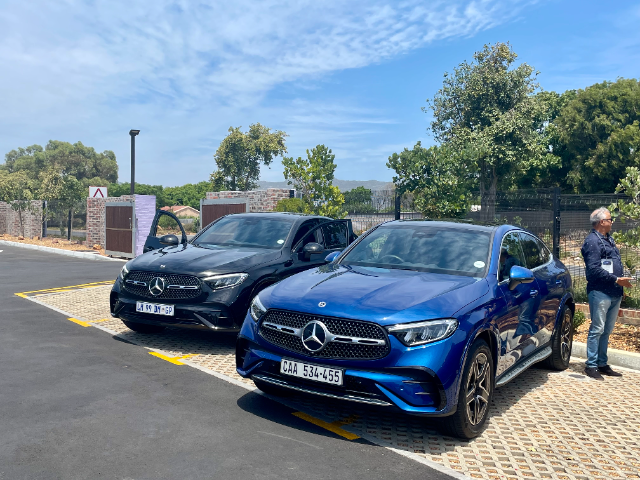
Examples of mild-hybrid vehicles include the Suzuki Vitara (top-spec model), Mazda CX-60 3.3L Turbodiesel MHEV (also the flagship model) and the new Mercedes-Benz GLC (standard across the board and available in diesel only).
How does a mild-hybrid car work?
When you brake or coast (slow down without pressing the accelerator pedal), this electric motor captures energy that would normally be wasted as heat. The captured energy gets stored in the battery, like when you recharge your phone. Whenever your car needs a little extra push, especially when accelerating, the electric motor uses that stored energy to give your engine a boost. It also provides power for the car’s other electrical components. All this reduces the amount of work that the engine needs to do.

The benefits of mild hybrid technology
Better fuel economy: Thanks to the assistance the motor provides, MHEVs can increase a car's fuel efficiency, though not as significantly as full hybrids.
Lower price: MHEVs are usually less expensive than most self-charging and plug-in hybrid vehicles but still more expensive than their ICE counterparts.
The top-spec Suzuki Grand Vitara 1.5 (mild) Hybrid GLX AllGrip, for example, costs R542 900 at the time of writing, while the Toyota Corolla Cross 1.8 Hybrid XR (a self-charging hybrid, or HEV) costs R527 200, but bear in mind that the Corolla Cross is manufactured in SA and is therefore one of the cheapest full hybrids you can buy locally.
Lower emissions: The combined efforts of the electric motor and regenerative braking lead to lower CO2 emissions compared to normal cars.
More responsive driving: The electric motor's instant torque gives you smoother and faster acceleration. The reduction in load on the engine also bodes well for future reliability.
No range anxiety: Driving an EV limits your range, and full/plug-in hybrids can be heavy on fuel when the battery is depleted, but MHEVs don't have this issue.
Read our Suzuki Grand Vitara First Drive Review here.

Limitations of mild hybrids
While MHEVs are great to own, they're really just a step up from traditional ICE cars. Here's why:
No electric range: Unlike plug-in hybrids or full hybrid cars, MHEVs cannot operate on electric power alone. The battery and electric motor in mild-hybrids are simply too small and therefore not powerful enough to propel the entire car on their own.
Emissions aren't as low as HEVs and PHEVs: MHEVs still use an internal combustion engine (ICE) to move, so they produce more pollution than full hybrids (HEVs) or electric vehicles.
Potentially higher maintenance costs than ICE cars: Regular upkeep and small repairs for a mild-hybrid cars are more-or-less the same as for a regular car, but if something goes wrong with the hybrid system after the warranty has run out, you might have to fork out big bucks.

MHEVs cater to a specific type of driver
Usually it's the kind of (urban) driver who is big on saving fuel at the pumps but who also values that extra bit of performance that the hybrid system offers.
The stop-start nature of city driving allows MHEVs to maximise the benefits of their electric motors through regenerative braking and smoother restarts, potentially leading to better fuel efficiency in urban environments.

Verdict
Mild-hybrid cars offer owners the best of both worlds: decent performance with lower fuel costs, but the higher initial purchase price tends to offset the fuel savings somewhat. If you have your heart set on a mild-hybrid model and you can afford it, however, go for it!
If I was to go the hybrid route, I'd go the full monty and buy myself a young, used Toyota Corolla Cross 1.8 Hybrid XS (HEV) but I'd sell it before the warranty/service plan runs out. (But that's just me)!
Pre-loved Toyota Corolla Cross 1.8 Hybrid models (2021 and younger) are priced from R320 000 on AutoTrader. Search here to find one!