Here's what drives car buying decisions in South Africa right now, backed by real market data and conversations with people spending their own money.
1. Affordability and value for money

Most South Africans aren't shopping for cars with trust fund budgets. Your monthly payment must leave enough money for groceries, school fees, and a few petrol tanks without forcing you to live on two-minute noodles from the 20th onwards.
Financial experts recommend keeping total car costs under 20% of your monthly income. That's everything: car payment, fuel, insurance, and those surprise maintenance bills that always seem to arrive right after you've paid school fees.
Here's some rare good news: car financing has become slightly less painful recently. The Reserve Bank finally cut the repo rate to 7.25% in July 2025, bringing the prime rate down to 10.75%. Banks are now offering vehicle finance rates around 10.25% to 10.50% - which is still eye-watering, but better than it was. If you're financing a R300,000 car, you're already saving about R225 per month compared to rates earlier this year. Over 72 months, that's more than R16,000 back in your pocket - enough for a decent family holiday or emergency fund.
This focus on affordability explains why used cars are the way to go. Sales jumped 14.9% in May 2025 compared to the same month last year, and it's not because South Africans suddenly developed a love for other people's problems.
A three-year-old Toyota Corolla Cross with 60,000km might not have that intoxicating new car smell, but it also won't lose R50,000 in value the moment you drive it off the dealer's lot.
5 New compact SUVs that offer excellent value
2. Fuel efficiency

South Africans have become fuel consumption detectives. They're hunting down owner reviews, interrogating friends about what their cars actually use, and treating manufacturer claims like they are - marketing fiction written by people who've never driven in Johannesburg traffic. Every extra litre your car drinks per 100km is money straight out of your pocket, month after month.
The Suzuki Swift sells like boerewors rolls at a rugby match because it uses only around 5.8 litres per 100km in real driving conditions. That works out to roughly R1 200 in monthly fuel costs for the average driver who goes places. It's also inexpensive to service and insure.
Compare that to a somewhat thirsty SUV drinking 9 litres per 100km, and you're looking at an extra R600 every month. Over a year, that's R7,200 - enough for a proper holiday or half a year's electricity bills.
Our AutoTrader 2024 New Energy Vehicle report revealed something fascinating: 52% of potential car buyers would prefer hybrid vehicles, while only 10% want fully electric cars, but this isn't environmental ignorance - it's pure South African pragmatism.
The Toyota Corolla Cross Hybrid averages about 5.8L/100km compared to around 8.5L/100km for the standard petrol model. That's roughly 32% better fuel economy without having to worry about whether someone's stolen the charging cable at the Engen in Beaufort West. However, a hybrid or EV's forte isn't exactly the open road. City usage is where EVs and HEVs shine their brightest.
Best fuel-efficient cars for budget-conscious South Africans (2025)
3. Reliability

Nobody enjoys watching their emergency fund evaporate when something significant goes wrong. South African drivers have learned this lesson the expensive way, which is why certain brands dominate our roads.
Research shows that cars like the Toyota Hilux, Fortuner, Ford Ranger, Mazda CX-5, Suzuki Swift, Honda Civic, Isuzu D-Max, Hyundai Tucson, Kia Sportage, VW Polo Vivo, and Toyota Corolla Cross keep on going. At the same time, their owners sleep peacefully at night.
Reliable cars hold better value, cost less to insure, and have service networks you can find. When your Toyota needs parts, you can get them in Upington or Pongola. When your obscure European import needs attention, you'll order parts from Italy and explain to your boss why you're taking a taxi for the next three weeks.
Here's the double-edged sword: Toyotas might be bulletproof, but they're also at the top of every hijacker's shopping list, which means your insurance premium will reflect that unfortunate reality to some extent.
Best and most reliable used SUVs under R200k in 2025
4. Safety features

Research shows that 85% of car buyers now prioritise having as many safety features as possible, and this is understandable, considering our accident statistics.
South African buyers focus on practical safety features that might save their lives, not flashy tech demos that look good in YouTube reviews. We want multiple airbags, ABS brakes, and electronic stability control—the stuff that works when someone runs a red light in Midrand. Cars like the Toyota Corolla Cross and VW Polo Vivo offer solid safety packages without requiring you to take out a second bond.
Cars that can handle potholes, gravel roads that would shame most off-road courses, and the occasional encounter with free-range livestock are worth their weight in gold.
These are the safest cars you can buy in 2025 so far.
5. Practicality over party tricks

Air conditioning that works when it's 40 degrees in Limpopo matters infinitely more than a panoramic sunroof that turns your car into a greenhouse. A simple, reliable infotainment system that works every time beats a flashy touchscreen that decides to glitch when you desperately need directions in peak hour traffic.
Boot space, rear seat room, and ground clearance drive real buying decisions because South Africans use their cars for living. School runs, monthly grocery hauls, weekend getaways to the coast, and sometimes moving your entire life from one province to another.
Read our VW T-Cross base model review here (2025)
Prioritise these if you're buying a car
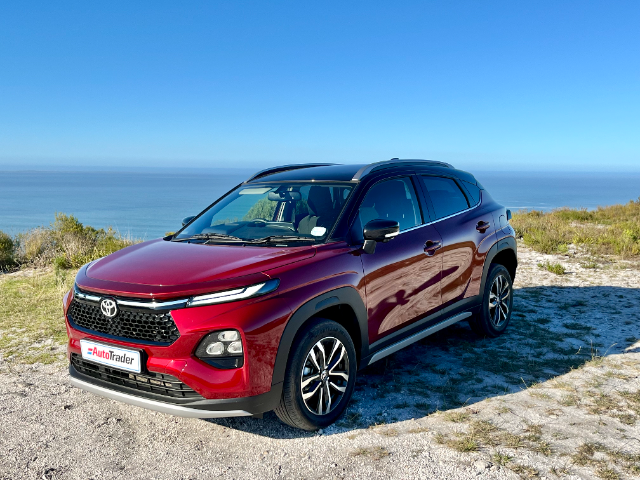
If you're shopping for a car in 2025, stick ruthlessly to these five priorities. Don't get seduced by fancy features that'll break after the warranty expires (air suspension is infamously pricey to fix), and don't fall for badge snobbery.
Buy a car that fits your actual budget, sips fuel like a responsible adult, starts every morning without fuss, keeps you alive on our roads, and does the job you need it to do.
Choose wisely, and your car will serve you faithfully for years. Choose badly, and you'll be back on AutoTrader sooner than you'd like, wondering where all your money went and why you thought heated seats mattered more than a reliable badge.
Read our Toyota Starlet Cross review