
Aside from brakes, headlights are one of your vehicle's most important safety features. The ability to see when lighting conditions are less than optimal ensures that you can detect hazards, assess situations in a timely manner, and react accordingly. Not all headlights are created equal, though. Recent advances in technology have allowed lights to have a greater effect while reducing their physical footprints and lowering their energy consumption. The sale brochures will regale you with various effects and benefits, but what are xenon headlights?
Related: What are adaptive headlights?
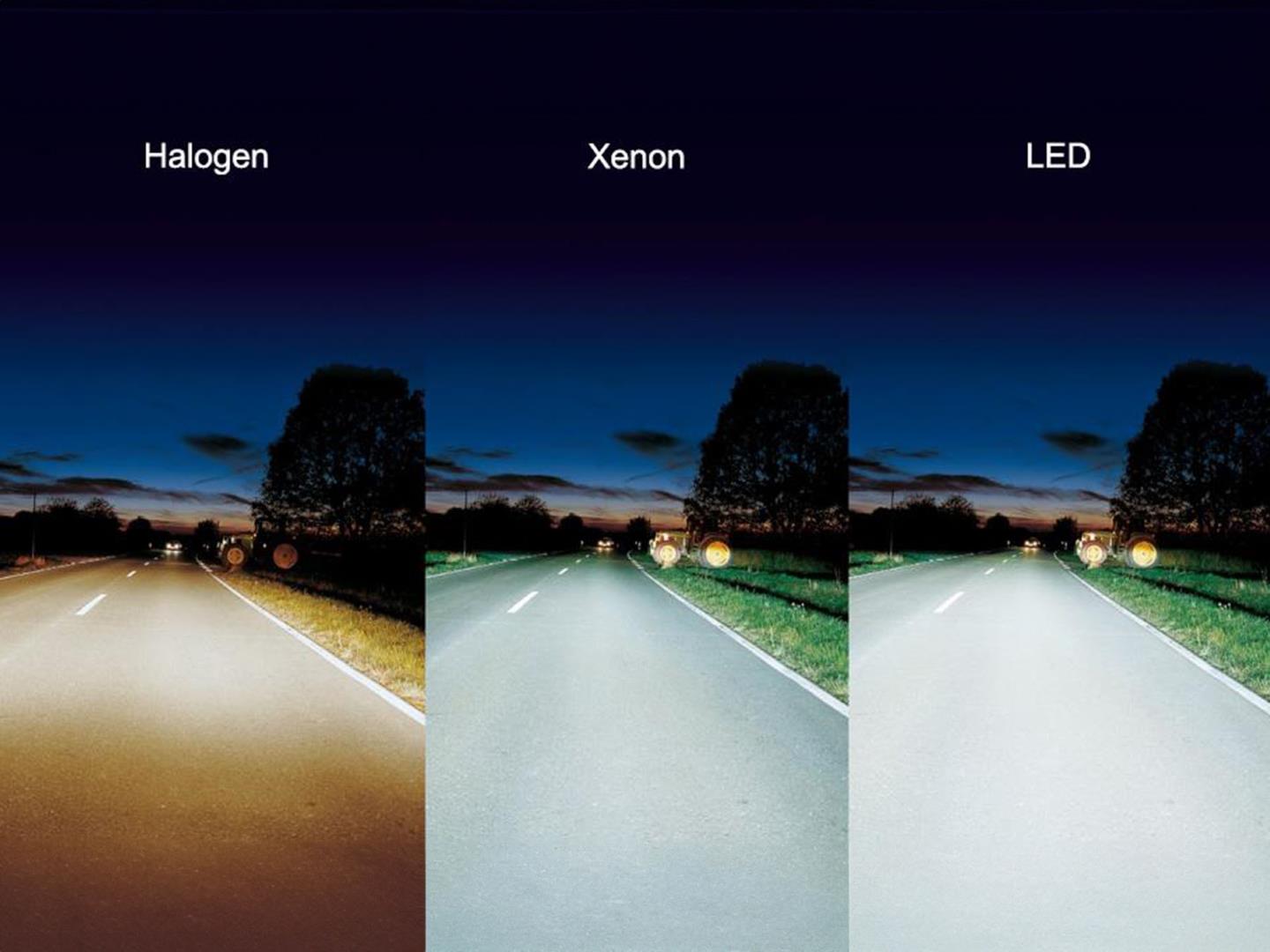
Xenon is a colourless, noble gas element found naturally in the earth's atmosphere. Its behavioural characteristics mean that it emits a bright, blueish-white light when it comes into contact with electricity. You've encountered similar in the past with xenon's other light-emitting gasses, like neon. This makes it ideal for automotive headlights, producing a clearer, more penetrating light than its halogen counterparts.

Xenon HID Headlights
You would have seen the term 'HID' used in vehicle marketing material. This stands for High-Intensity Discharge, as the bulbs used in these lights rely on an electric arc rather than the heating of a traditional tungsten element.
Halogen headlights, the most common type of automotive lighting, use a tungsten element surrounded by a small amount of a halogen, usually bromine or iodine, to create a halogen-cycle chemical reaction. The presence of the halogen allows the filament to run at a much higher Wattage, producing more light but helping improve its longevity. The result is a light that is brighter and lasts longer.
How much does it cost to replace car headlights?

Compared to halogen headlights, xenon HID headlights offer an even brighter, dense beam of light that is easier to manipulate. This allows designers to craft headlight housings that are not only smaller but also provide a better spread of light where you need it with less wastage.
You may also have encountered Bi-Xenon headlights. This means that both the dipped beams and high beams (brights) are Xenon.
Xenon headlights are also being phased out as manufacturers switch to LED (Light Emitting Diode) technology. As with many new technologies, LEDs are expensive initially, but the costs decrease over time as manufacturing processes are streamlined and more prolific. Xenon is still somewhat costly, and the bulb draws more current than LED lights. With manufacturers looking to constantly reduce emissions, even the power consumption of headlights is being looked at.