
We compared Volkswagen Polo hatch engines, and the efficiency crown goes to…
The Volkswagen Polo hatchback has for long been South Africa’s tarmac-going heartthrob. But, as many of us know, a heartthrob only remains a heartthrob for as long as it helps produce a reciprocal relationship; and these days, what more can we ask for but efficiency?


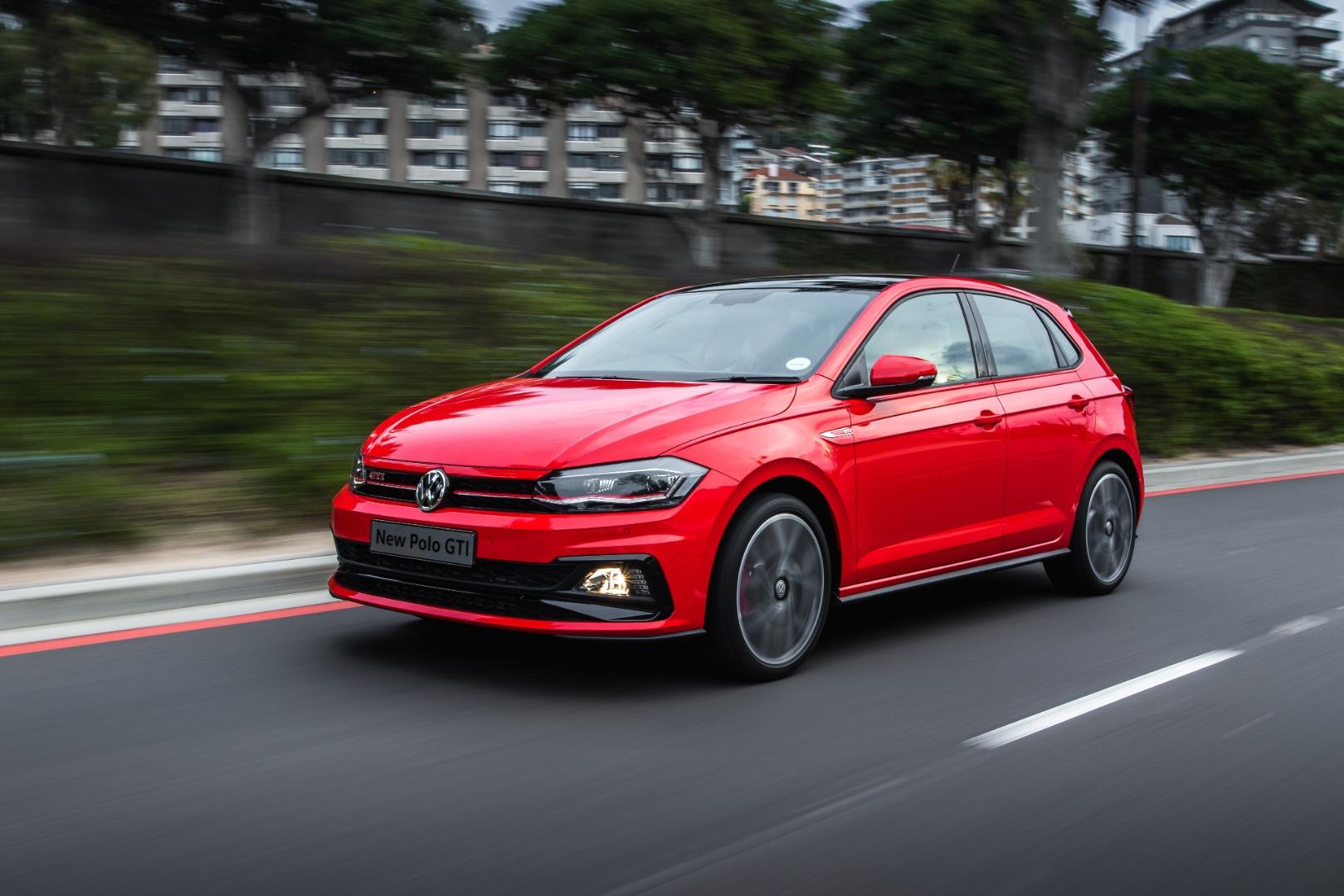

When looking at the latest Polo range, all models are exceptionally efficient straight out of the gate. But, for the nitpickers among us, there are subtle differences that may just separate the casually enviro-friendly from the militant tree-hugger.
The outliers
First off, the entry-level Polo Conceptline is the least efficient in the range – even less so than the range topping GTi performance model. This is largely thanks to a normally aspirated 1.6-litre four-cylinder engine and manual gearbox, where the rest of the range use a 1.0 litre three-cylinder engine, blessed with turbo-charging. Even with a capacity 2.0 of litres, also force fed, the GTi remains more efficient, with a combined cycle of 5.9 l/100km and 134 g/km of CO2 emissions. Compared to the 1.6 Conceptline’s 6.1 l/100km consumption and 145 g/km emissions.
To put this difference in perspective, we can consider one of the most popular indicators of automotive value: straight-line performance. The GTi accelerates from 0 to 100km/h in 6.7 seconds; while the second fastest Polo is the 1.0 TSI Highline, at 9.5 seconds. The 1.6 Conceptline cannot even participate in this debate.
The lower-middle class
With the two opposite poles of Polo out of the way, let’s look at the peak of the bell curve. Here we have the Trendline, Comfortline and Highline – the latter two variants offering automatic transmission options. Volkswagen’s DSG (Direct-Shift Gearbox) automatic transmission has come a long way to largely eradicate the decreased efficiency and performance, long associated with automatic transmissions of old. This is good news for the millions who don’t care for stick shifting or have to deal with bumper-to-bumper traffic.
The most efficient of the Polo hatch range are the Trendline and manual Comfortline models. They employ the mildly tuned 70 kW / 175 Nm version of the three-pot turbo engine. Both emit 103 g/km of CO2 while consuming 4.5 l/100km. Impressive figures, considering that you can still accelerate from 0-100 in 10.8 seconds.
Up next, we have the Comfortline DSG and manual Highline models, both consuming fuel at 4.7 l/100km and emitting 107 grams of CO2/km. The Comfortline DSG provides similar performance figures to its manual counterpart.
The upper-middle class
Lastly, the Highline DSG, arguably the range topper before we enter the realm of performance that is the GTi, consumes fuel at 4.8 l/100km and emits 109 grams of CO2/km. This is from the same 1.0-litre engine, but here it’s in a higher state of tune, namely 85 kW and 200 Nm. It produces similar performance to its manual counterpart, achieving a 0-100 sprint time of 9.5 seconds.
Looking at these figures, it is clear that our winners only make the cut by a narrow margin, which means the Polo range makes it OK to spoil yourself with the nippy GTi; but still measures enough reward for those remaining enviro-friendly to the end.
The crown goes to...
The Polo Trendline and Comfortline are both aimed at the average South African motorist. It will get you where you need to go without destroying your budget or the planet or your budget. Sometimes ‘heartthrob’ does indeed come in an average package.
Recommended next
The best Volkswagen Polo deals
Is the Volkswagen Polo good for Families?
Which Volkswagen Polo Trim Depreciates The Fastest?