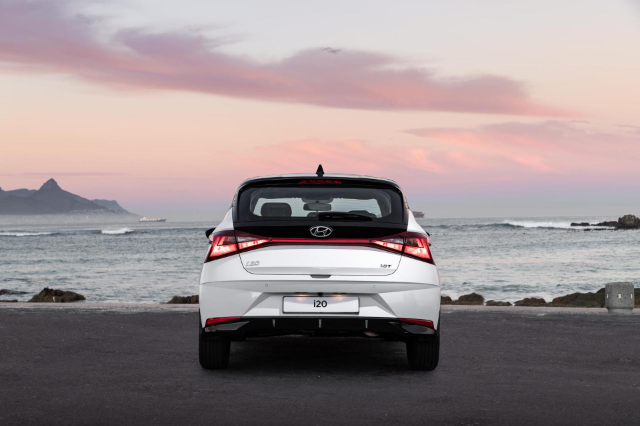
We compared the new Hyundai i20’s engines, and the efficiency crown goes to…
In an era when most manufacturers offer downsized, turbocharged engines in their superminis, Hyundai was one of the brands that held back on this trend – locally, at least. But now, with the arrival of the brand-new third-generation i20, this shortcoming has finally been addressed, so we decided to compare the new i20’s three engine choices. Which one gets the efficiency crown?


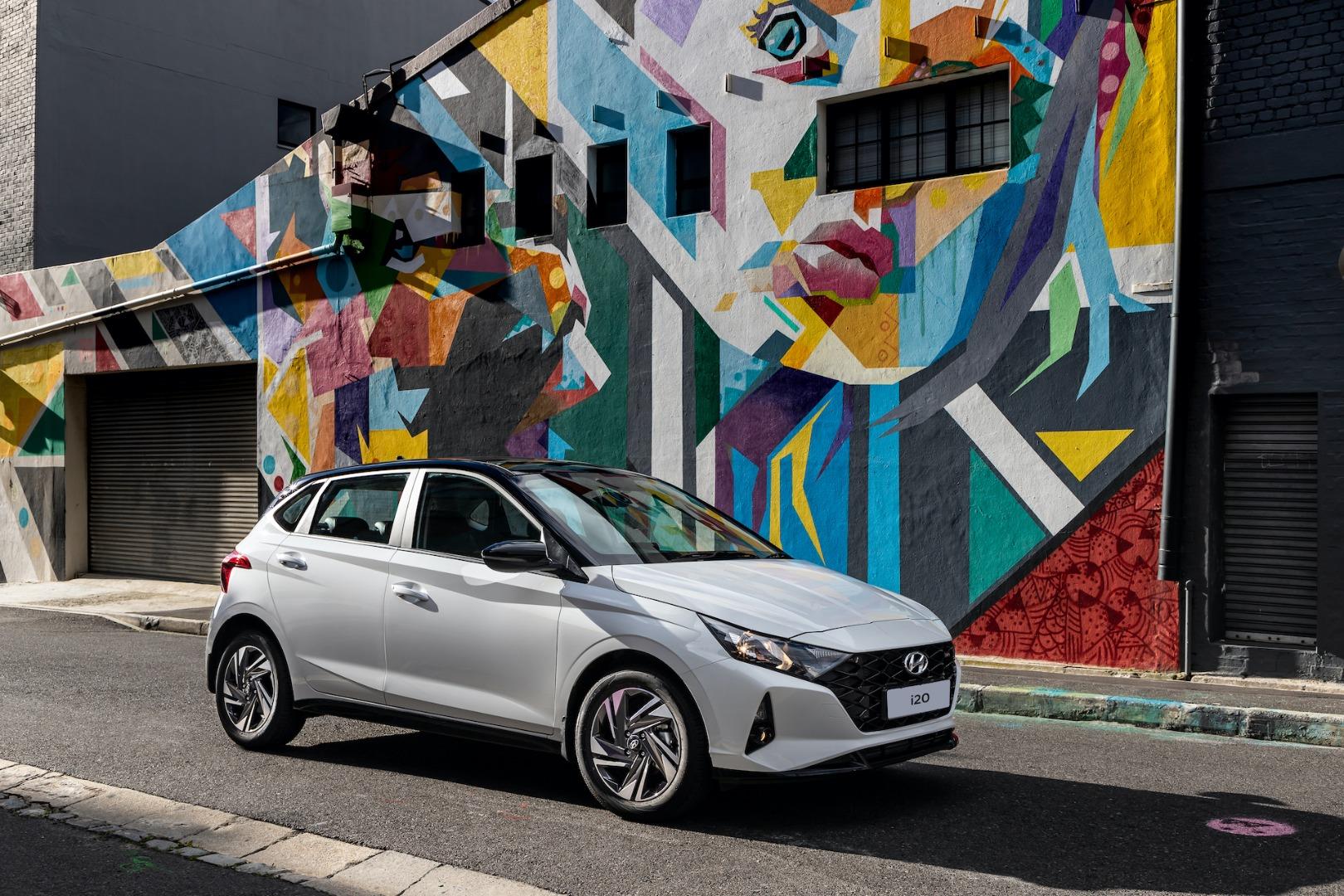
For this article, we evaluated the Hyundai i20 engines’ efficiency based on their claimed (official) average fuel consumption. However, because one of the engines can only be had with a 6-speed torque converter automatic (rather than a 5- or 6-speed manual or 7-speed DCT), it will start out with an immediate handicap.
Comparing the 1.4-litre automatic i20 to its siblings adds extra interest, though, and will give prospective buyers an indication of the efficiency penalty that opting for the less-expensive self-shifting i20 would exact. We also threw the top-spec 1.0T automatic (which uses a DCT) into the mix, to get a picture of the entire range’s efficiency.
Related: Shop for new and used Hyundai i20 cars for sale here.

Hyundai i20 1.2 Manual (From R 275 900)
Outputs: 61 kW and 115 Nm
Claimed Average Consumption: 5.9 ℓ/100 km
The entry-level engine is a good one with its own merits, but it’s a tad over-matched in the i20: It’s claimed to saunter from a standstill to 100 km/h in 12.9 seconds, and runs out of puff at 169 km/h. The 1.2-litre is only available with a 5-speed manual transmission, and posts a decent average consumption claim of 5.9 ℓ/100 km – good, but not outstanding for its class.
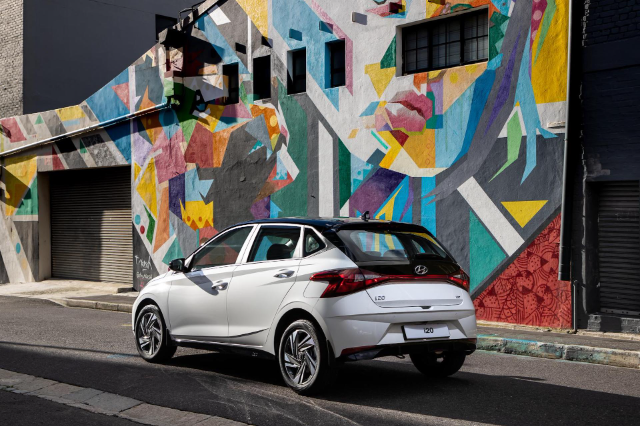
Hyundai i20 1.4 Automatic (R 305 900)
Outputs: 74 kW and 133 Nm
Claimed Average Consumption: 6.9 ℓ/100 km
This is the only new i20 to still employ the previous-generation’s 1.4-litre engine, although it benefits from a 6-speed automatic now, instead of the 4-speed that served in the old car. It’s slightly quicker than the 1.2-litre manual (0 – 100 km/h in 12.5 seconds, 173 km/h top speed), but consumes quite a lot more fuel, registering a claimed average of 6.9 ℓ/100 km.

Hyundai i20 1.0T Manual (R 330 900)
Outputs: 90 kW and 172 Nm
Claimed Average Consumption: 6.5 ℓ/100 km
The newly-added 1.0-litre turbo 3-cylinder engine, driving through a 6-speed manual gearbox, is the undoubted performance leader in its range, with a 0 – 100 km/h sprint in a claimed 9.7 seconds and a maximum speed of 190 km/h. The penalty for this livelier acceleration comes at the fuel station, because its claimed average consumption of 6.5 ℓ/100 km is quite a bit higher than the 1.2-litre’s. This could be considered a reasonable trade-off for that nice helping of extra power and torque, though.
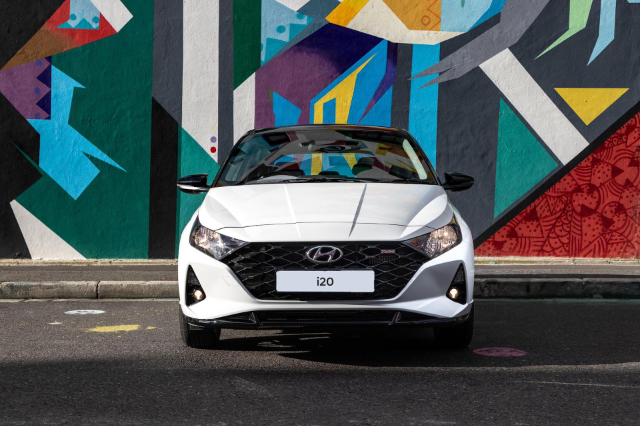
Hyundai i20 1.0T Automatic (R 330 900)
Outputs: 90 kW and 172 Nm
Claimed Average Consumption: 6.9 ℓ/100 km
The most-expensive new i20 is also the thirstiest, although its claimed average consumption of 6.9 ℓ/100 km matches that of the (much slower) 1.4 automatic. Being a dual-clutch automatic (DCT), it also doesn’t affect performance as much as the 1.4-litre’s torque converter transmission, being only 0.2 seconds slower to 100 km/h and shedding only 3 km/h on top speed.
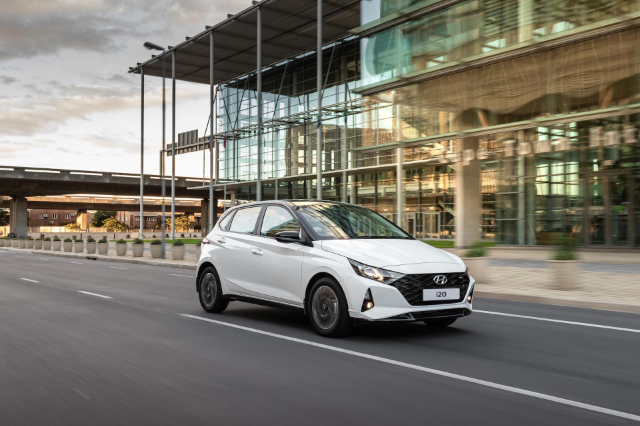
Verdict
There’s no question that the entry-level 1.2-litre manual i20 is the overall efficiency king, simply because its claimed average fuel consumption is the lowest in the range. Provided performance isn’t a priority for the buyer, the cheapest new i20 is bound to be the most frugal.
The 1.0T Automatic also makes a strong case for itself, being markedly quicker than the 1.4 Automatic, yet posting identical average consumption claims. Thus, if you want your i20 to change gears on your behalf, the 1.0T Automatic should get the efficiency crown. It really offers the best of both worlds: perky performance without a huge consumption penalty.
* Prices include all taxes and were accurate at the time of writing, but may change without prior notice.