
We compared Mercedes-Benz GLE engines, and the efficiency crown goes to…
With two petrol engines and two diesels on offer, the Mercedes-Benz (and AMG) GLE has a drivetrain for (almost) every purpose. They’re all properly modern units, too, and bristle with staunch power outputs and plenty of fuel-saving gadgetry. We investigate the current engine range, to determine which one is the most efficient.



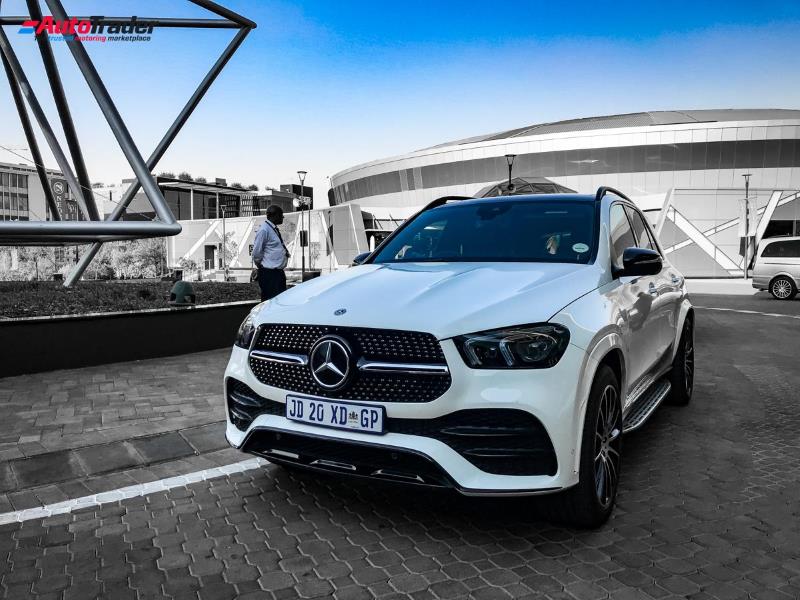
The current Mercedes-Benz GLE-Class opens with a 4-cylinder diesel (a trend started with the previous-generation model), with a 6-cylinder diesel taking up the middle ground and a 6-cylinder petrol topping off the range. That 6-cylinder petrol variant also forms the base for the only AMG-badged GLE currently available, where it’s tweaked somewhat to produce a fair whack more power. There’s no sign of an AMG GLE 63 just yet, though – that derivative should arrive soon, but hasn’t yet been revealed at the time of writing.
Related: Read our launch report to find out more about the current Mercedes-Benz GLE-Class range.
1. Mercedes-Benz GLE300d
The “300d” badge indicates a 2.0-litre, 4-cylinder turbodiesel engine under the bonnet. As with all GLEs, the power is sent to all four wheels via a 9-speed automatic gearbox. But how effective could a little 4-cylinder be in a car as big as the GLE? In short, effective enough.
Peak outputs are quite decent, with 180 kW and a useful 500 Nm on offer, so performance is pretty brisk: the 0 – 100 km/h dash is dispatched in a claimed 7.2 seconds. It’s quite parsimonious too, with a claimed average fuel consumption of 6.4 ℓ/100 km.

2. Mercedes-Benz GLE400d
Still powered by diesel, but this time with two turbos and an “eBooster”, two extra cylinders and a displacement hike to 2.9 litres, the GLE400d jumps to a useful 243 kW and 700 Nm. Performance is consequently even more impressive, with a 0 – 100 km/h sprint time of only 5.7 seconds, but fuel consumption takes a hit as a result: the claimed average fuel consumption is 7.5 ℓ/100 km.
That’s still pretty respectable for an SUV with this kind of performance, although it’s an open question how close it would get to that figure if the driver actually used all that power...

Related: Is the Mercedes-Benz GLE good for families? Here’s our verdict.
3. Mercedes-Benz GLE450
As the top-performance trim of the Benz-badged GLEs, the GLE450 has 286 kW and 500 Nm available, courtesy of a 3.0-litre inline 6-cylinder engine with an electric supercharger (eBooster) and a single turbocharger. While its torque output only matches that of the 300d (and is much less than the 400d), the power is spread over a wider rev range to produce a lot more top-end power.
However, being a high-performance petrol engine, it’s nowhere near as economical as either of the diesels. Mercedes-Benz claims an average consumption of 9.4 ℓ/100 km, but it’s unlikely to drop below 12 ℓ/100 km in normal driving – especially as its straight-6 engine makes such a nice noise. It’s no quicker than the 400d, however, because its claimed 0 – 100 km/h time is an identical 5.7 seconds, but at least it’s slightly less expensive.

4. Mercedes-AMG GLE53
Essentially using a differently tuned version of the GLE450’s engine, the GLE53 has a decent bump in power and a small increase in torque, taking its peak outputs to 320 kW and 520 Nm. This is partly due to the integration of a mild-hybrid system, which contributes 16 kW and up to 250 Nm to the system total. That’s on top of the turbocharger and the eBooster...
It’s a little faster as a result, with a 0 – 100 km/h dash in 5.3 seconds, yet it also manages to achieve a slightly lower claimed average consumption figure of 9.3 ℓ/100 km. The same concerns about the probability of consuming so little petrol still applies, and probably even more so in AMG tune. It’s available with a 2-stage sports exhaust that sounds even better than the GLE450’s, so it will be even more difficult to practice restraint with the accelerator pedal.

Let’s compare the numbers
|
|
Mercedes-Benz GLE300d |
Mercedes-Benz GLE400d |
Mercedes-Benz GLE450 |
Mercedes-AMG GLE53 |
|
Engine Type |
2.0-litre, 4-cylinder, turbodiesel |
2.9-litre, 6-cylinder, turbodiesel |
3.0-litre, 6-cylinder, turbopetrol |
3.0-litre, 6-cylinder, turbopetrol/hybrid |
|
Power/Torque |
180 kW/500 Nm |
243 kW/700 Nm |
286 kW/500 Nm |
320 kW/520 Nm |
|
Performance Data * |
0-100 km/h in 7.2s, 230 km/h |
0-100 km/h in 5.7s, 245 km/h |
0-100 km/h in 5.7s, 250 km/h |
0-100 km/h in 5.3s, 250 km/h |
|
Fuel Consumption * |
6.4 ℓ/100 km |
7.5 ℓ/100 km |
9.4 ℓ/100 km |
9.3 ℓ/100 km |
|
Price (base) |
R 1 344 080 |
R 1 501 840 |
R 1 480 000 |
R 1 744 280 |
* According to manufacturer’s official figures.
The Efficiency Champ
With driving enjoyment set as a priority, one of the 6-cylinder models (no matter which) will do nicely. There is a certain panache about the straight-6 turbodiesel that wins it the “battle of the sixes” on efficiency, because it’s hard to argue against the combination of 700 Nm and 7.5 ℓ/100 km. Between the two petrols, the AMG GLE53 is the pick of the bunch, because it’s slightly more economical and somewhat quicker.

Related: Would we choose a petrol or a diesel Mercedes-Benz GLE?
The overall efficiency crown has to go to the GLE300d, however. What it loses in straight-line speed (which remains quite sufficient nonetheless), it gains in extra kilometers per tank of fuel. It doesn’t sound as nice as a 6-cylinder would, of course, but the price difference between them will allow the buyer to upgrade the audio system to drown out any reminder that there’s just a little 4-cylinder under the bonnet...
Recommended next:
Shop for new and used Mercedes-Benz GLE-Class cars for sale here.