
Mercedes-Benz GLE: Would we choose a petrol or a diesel engine?
Mercedes-Benz GLE: Would we choose a petrol or a diesel engine?


By Stuart Johnston
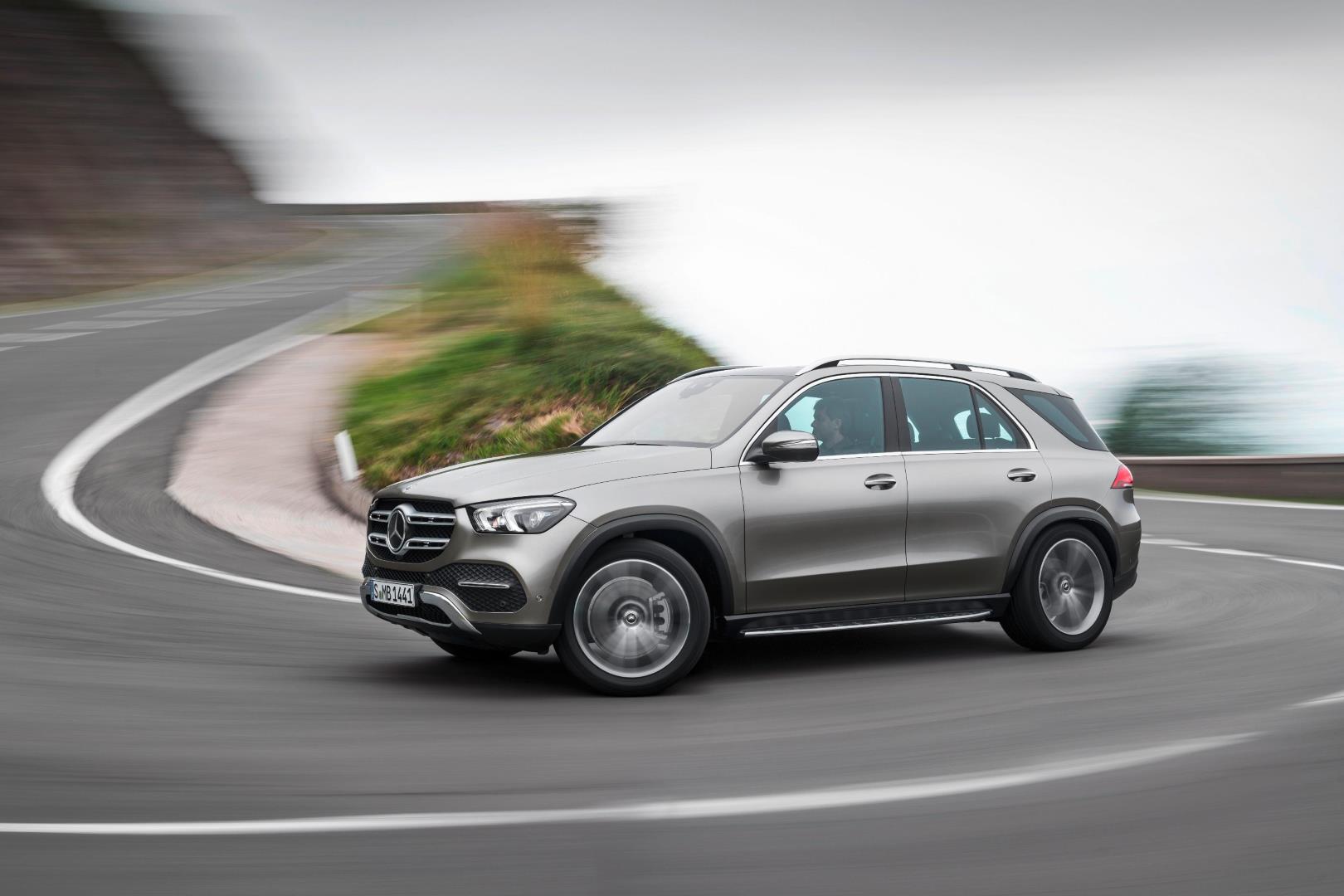
Mercedes-Benz’s GLE and GLE Coupe SUVs are brash, bold and beautiful. Crammed full of tech, they also offer a wide range of engine choices. We select the best one available in md-2019.
Mercedes-Benz’s GLE range is set at the rather exclusive end of the Merc line-up in this country. Not the most exclusive (for that read very expensive) but the upper-end GLE models sell for over R1,5-million, which is a whole lot of loot in anyone’s bank book. For an article on the latest updates to the GLE range, click here.
The range features five distinct models
The range here consists of five models. Three of them are the full-sized SUV shape, while two of them are GLE Coupes. The coupes are essentially the same car with the sloping “fast back” style roof line that distinguishes cars like these (BMW has its X5 and X6 coupe models as equivalents).
The full-size SUV recently received up-graded engines and other tweaks, while the GLE Coupe still uses previous-generation engines.
These Mercs feature an inordinate array of equipment even before any of the options boxes are ticked, and all of them are well-designed and engineered. The list of hi-tech functional equipment is as impressive as the numerous luxurious touches, and in light of this, it goes without saying that cars such as these deserve a special engine line-up.
This article doesn’t cover the Mercedes-AMG GLE
Readers should note that this article, which is comparing petrol and diesel engine alternatives in the GLE, does not cover the Mercedes-AMG models based on the GLE range here. These cars use high-performance petrol engines, along with suspension and cosmetic enhancements and fall into a different category from the basic GLE range. In fact they are called Mercedes-AMG models these days, rather than Mercedes-Benz models.
The fully-AMG-developed models encompass a lot of subtle and not-so-subtle re-engineering by the AMG people in Affalterbach, a small town about an hour away from the Mercedes-Benz headquarters in Stuttgart, Germany.
Mercedes-AMG models vs AMG trim lines
These highly-developed Mercedes-AMG cars, badged as such, should not be confused with the so-called “AMG Line” models. These cars, badged as Mercedes-Benzes but with very small AMG badging added (usually on the flanks), feature trim and wheel enhancements, and in some cases sports suspension kits. But there are no major mechanical upgrades. For this reason, in this comparison we don’t dwell on the AMG Line models listed by Mercedes-Benz, as they are mechanically similar to the standard models.
The diesel models
Mercedes-Benz GLE 300d 4Matic (R1 216 699): This all-wheel-drive SUV, with full-bodied styling (rather than the fast-back style) uses a new-generation 1 950 cc turbocharged diesel engine, producing 180 kW at 4 200 rpm. Torque is 500 Nm at 1 600 to 2 400 RPM. The manufacturer-claimed average fuel consumption is 6,4 litres/100 km. The car accelerates to 100 km/h in 7,2 seconds and maximum speed is 225 km/h. It uses a 9G-Tronic automatic transmission.
Mercedes-Benz GLE 350d Coupe (R1 325 776): This all-wheel-drive model, distinguished by its fast-back styling, uses an earlier-generation 2 987 cc turbocharged diesel V6. It develops 190 kW at 3 400 rpm and 620 Nm of torque at 1 600 rpm. Claimed average fuel consumption is 7,2 litres/100 km, 0-100 km/h takes 7,0 seconds, and top speed is 226 km/h. Gearbox is a 9G-Tronic automatic.
Mercedes-Benz GLE 400d 4Matic (R1 361 194): As the 4Matic name suggests, it is all-wheel-drive. This diesel, however is of the modern-generation introduced in February 2019. It is an in-line six-cylinder (a big shift away from V6s here for Mercedes-Benz) and displaces 2 925 cc. Highly efficient, this modern turbo unit produces 243 kW and 700 Nm of torque between 1 200 and 3 000 rpm. Claimed fuel consumption averages 7,5 litres/100 km. Accelerating to 100 km/h takes just 5,7 seconds and the top speed is 245 km/h. Transmission is once again via the nine-speed 9G-Tronic automatic.
The petrol models
Mercedes-Benz GLE 450 4Matic (R1 341 291): Once again Mercedes have reverted to an in-line six-cylinder model after a number of years, and this time it is a petrol model! This 2 999 cc dual turbo straight-six enjoys a maximum power output of 286 kW (16 kW is provided by an electric boost) and 500 Nm of torque, produced between 1 600 rpm and 4 000 rpm, for a very broad power band.
Fuel consumption is heavier than any of the diesels, at a claimed 9,4 litres/100 km, but acceleration is very impressive. The 0-100 km /h time takes 5,7 seconds and top speed is an easily-achieved 250 km/h. Once again, power is transmitted to all four wheels via a 9G-Tronic automatic gearbox
Mercedes-Benz GLE 500 Coupe (R1 597 551). This most expensive GLE class SUV (excluding the AMG models, as explained above) makes use of an earlier-generation turbocharged V8. Displacing 4 663 cc, the maximum power output is 335 kW and 700 Nm of torque between 1 800 and 3 500 rpm. Those are very impressive power figures, and naturally fuel consumption suffers, Mercedes claiming 10,9 litres/100 km on average. (Note that manufacturers’ claimed figures are laboratory tested, and in real life motoring you can probably add 20 to 30 per cent to them, at least). We use these claimed figures here so that we can compare one engine to another more easily.
This mega-V8 will blast the big GLE Coupe to 100 km/h in 4,9 seconds and on to a top speed of 250 km/h, again by dint of the 9G-Tronic automatic gearbox.
And our engine winner is?
It’s a difficult one. Much as that GLE 500 Coupe’s V8 oozes charisma, it gets blown out due to its older technology and heavier fuel consumption. Ditto with the 350d’s V6 diesel.
So fighting for top honours are the new-generation 2,0-litre four-cylinder diesel in the 300d, and the two straight-six new-generation engines in both petrol and diesel format.
It’s a close call, because we love the sound of that petrol in-line six! But our winner here is the 243 kW, 700 Nm diesel device fitted to the GLE 400d 4Matic. That mix of a 5,7 second 0-100 km/h time, allied to a 245 km/h top speed, and delivered with consumption of just 7,5 litres/100 km is truly impressive. In this class of vehicle, with its luxury family orientation, this ultra-high performance diesel makes lots of sense.