




Hyundai’s H-1 bus is one of the best-selling MPVs on the market in South Africa. This is quite a feat, considering the H-1 hasn’t changed much in essence since its launch here some 11 years ago.
For the first on-sale year the H-1 was available only in petrol form, and with a 5-speed manual gearbox driving the rear wheels. Then, in 2010, a diesel version was introduced with a 5-speed automatic gearbox. Quite logically, the H-1 diesel retained its rear-wheel-drive layout. The diesel model was badged as the 2.5 VGTi.
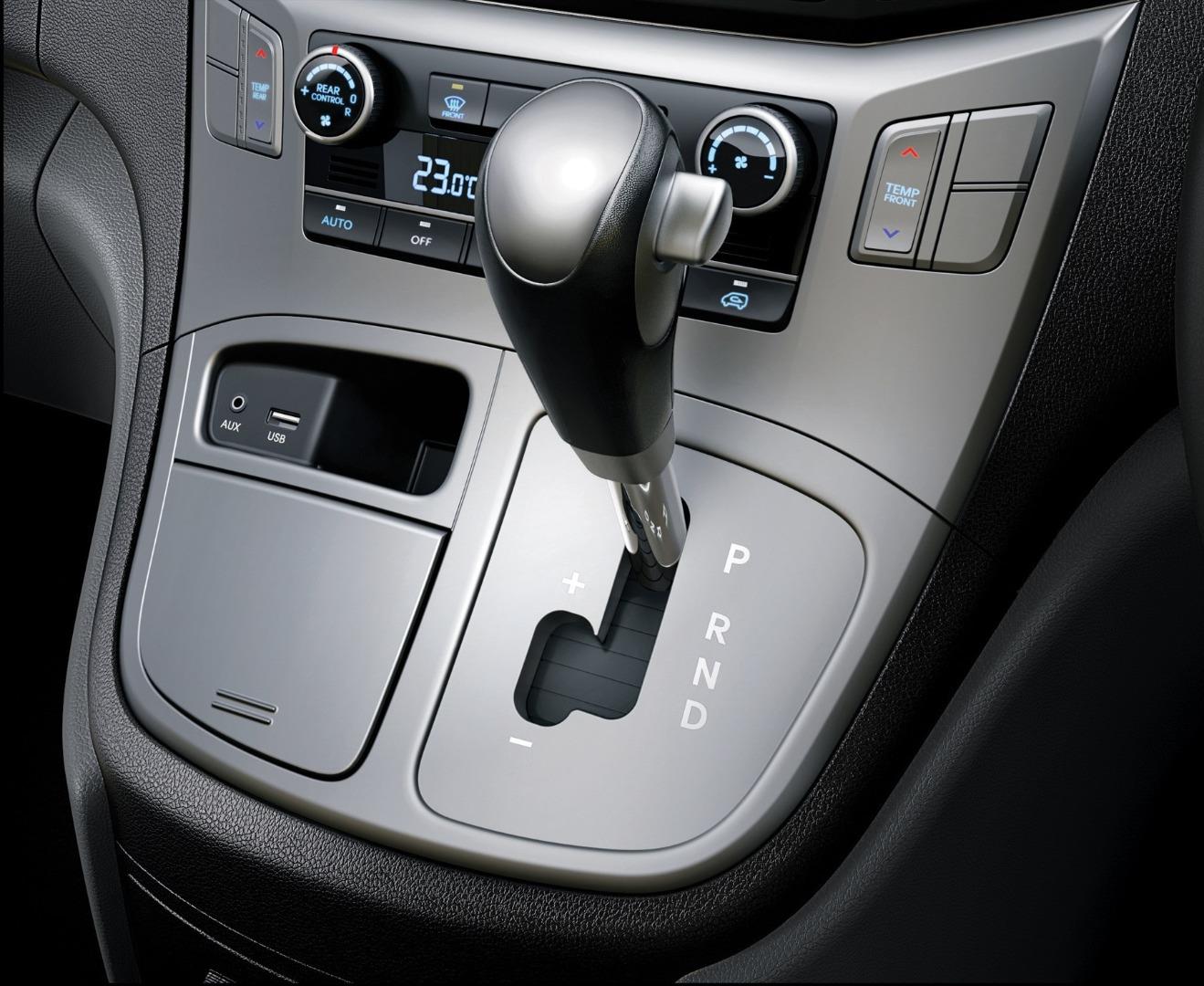
Currently the H-1 is available in panel van, multi-cab and 9-seater bus form. The lower-level trim line bus is known as the Executive, and this comes only with a petrol engine and 5-speed manual. The range-topping Elite bus uses the diesel engine and 5-speed automatic gearbox.
The H-1 range is listed as follows:
| Hyundai H-1 2.5 VGTi Panel Van | R512 500 |
| Hyundai H-1 2.4 Bus Executive | R568 900 |
| Hyundai H-1 2.5VGTi Multicab | R587 900 |
| Hyundai H-1 2.5 VGTi Bus Elite | R704 500 |
The H-1 petrol engine

The petrol engine used in the H-1 is a large-capacity 4-cylinder unit, which is naturally-aspirated, or of non-turbo design. It uses multi-port fuel injection, and displaces 2 359 cc and is thus badged as a 2.4. The power output of the petrol unit is 126 kW, which is about average for a non-turbo unit of this capacity. Torque is 224 Nm.
Performance in the petrol H-1 is moderate in terms of acceleration, the 0-100 km/h sprint time being listed at 17,1 seconds. This is to be expected in a large 9-seater MPV weighing in at some 2 102 kg un-laden. Top speed, however, is 178 km/h, which is high for a bus of this size and indicate very good aerodynamics.
Claimed average fuel consumption is 10,2 litres/100 km. However, in real terms, fuel consumption on this petrol-engined bus is likely to work out much higher, between 14,0 and 15,0 litres/100 km, depending on the number of people aboard, and whether it is used mainly in the city or on the highway. Stop-start conditions in this bus with relatively low torque to accelerate such a heavy weight will mean that the naturally-aspirated engine is going to working hard.
The VGTi diesel engine

The turbocharged diesel engine used in the H-1 is also a large-capacity 4-cylinder unit, displacing 2 497 cc. This VGTi engine is used in the entry-level panel van, known as the Multicab (essentially a panel van with one extra row of seats) and the luxurious Elite bus.
It is interesting that diesel engine is used in the more utility versions of the H-1, indicating that it is much more to load-carrying than the petrol engine.
For the record, the diesel’s maximum power output is 125 kW, almost the same as that of the petrol engine. But the torque is nearly double that of the petrol engine, at 441 Nm. This great surge of torque, used in conjunction with the 5-speed automatic gearbox, transforms the H-1 into an effortless conveyance, whether in bus or van form.
Acceleration from 0-100 km/h for the diesel bus is claimed at a modest 14,5 seconds, but tests have indicated that it will easily reach 100/h in under 13,0 seconds. Top speed is 180 km/h, slightly up on the petrol version, and fuel consumption is rated at 9,8 litres/100 km. In real life this consumption should work out to about 11,5-12,0 litres/100 km.
So, the H-1 engine efficiency prize goes to….

The diesel engine H1, without a doubt, is the best H-1 option. On flat roads, un-laden, the petrol model’s performance is adequate, but when laden it will feel seriously pedestrian compared to the diesel model that enjoys all that torque. Also, rowing along such a heavy vehicle with a 5-speed manual gearbox and a low torque engine will always feel like hard work. The diesel, on the other hand, accelerates and cruises effortlessly.
The only problem is, of course, price. The petrol-engined H-1 2.4 Executive bus costs some R135 000 less than the diesel-engined H-1 2.5 VGTi Elite bus. For this reason, there is still a market for the cheaper petrol version of the bus. But in terms of overall efficiency, diesel H-1s rule the roost.