


Imagine a world where every car on the roads was configured as an SUV (Sport Utility Vehicle) of some sort. That’s not too far-fetched a notion, as some industry watchers will tell you that things are pretty much heading that way.
Then imagine that the so-called station wagon, estate car, call it what you will, had yet to be invented. It would probably have an overwhelmingly positive reception. After all, here is a car that is lower and sleeker than an SUV, with racy lines somewhat akin to a sports car, yet offering as much passenger accommodation as your typical SUV, and nearly as much luggage space. It handles in a way that is far superior to any overblown so-called sports utility vehicle, offers as much rough-road ability as most SUVs, and is way easier to park, especially in tricky underground parking lots with those pesky pillars that need to be negotiated with extreme caution.
Such a sleek vehicle, surely, would have customers queuing for the privilege of owning one. And in Europe, where estate cars are hugely admired for their sporting versatility, that is pretty much the case.
In South Africa, estate cars are not appreciated
In South Africa, for some reason, estate cars, or wagons, are pretty much an afterthought. It’s a situation that puzzles many motoring writers who have been exposed to them in Europe and, yes, here in South Africa. But it remains true that most manufacturers have dropped their estate car model variants in favour of SUVs, or so-called cross over vehicles.
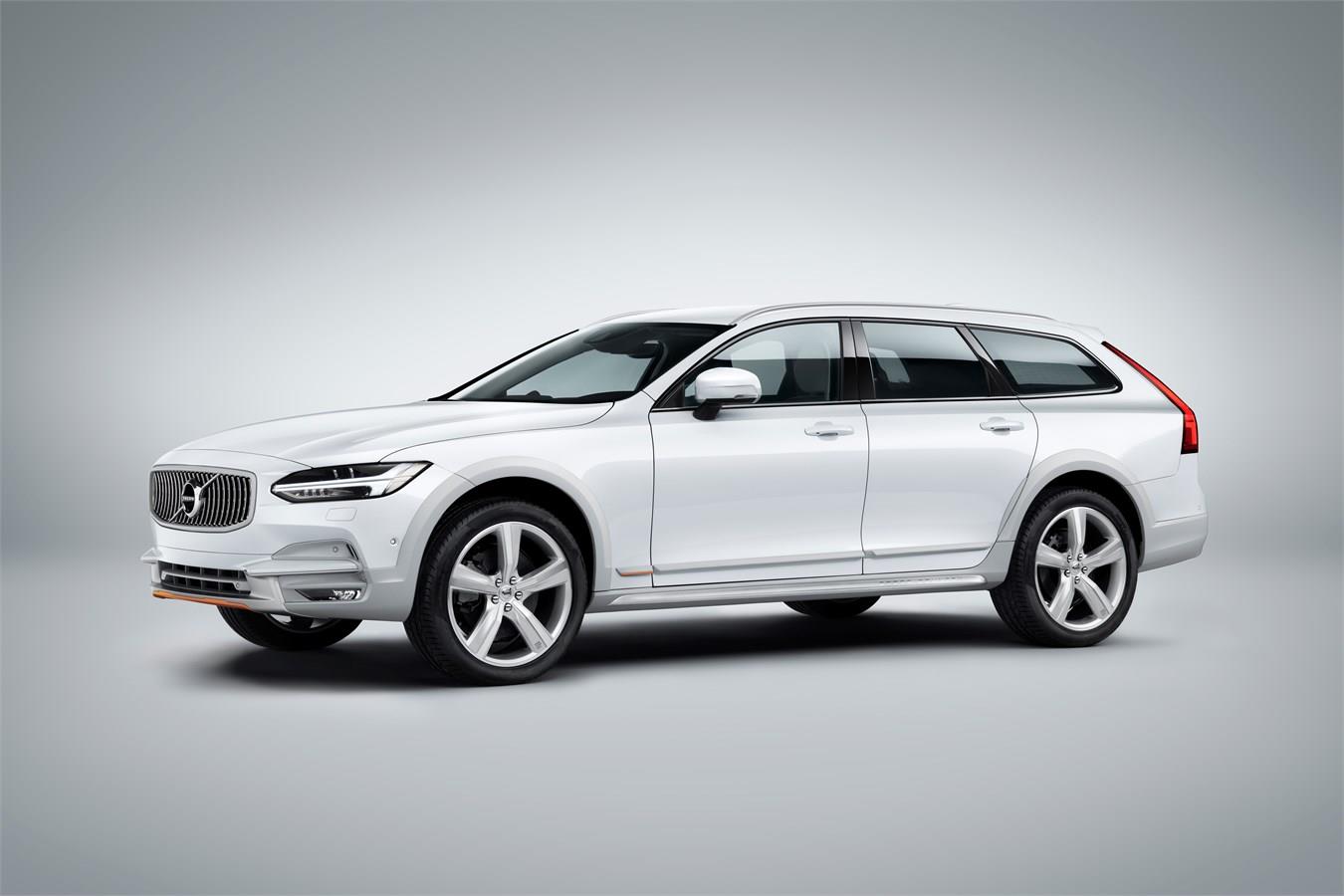
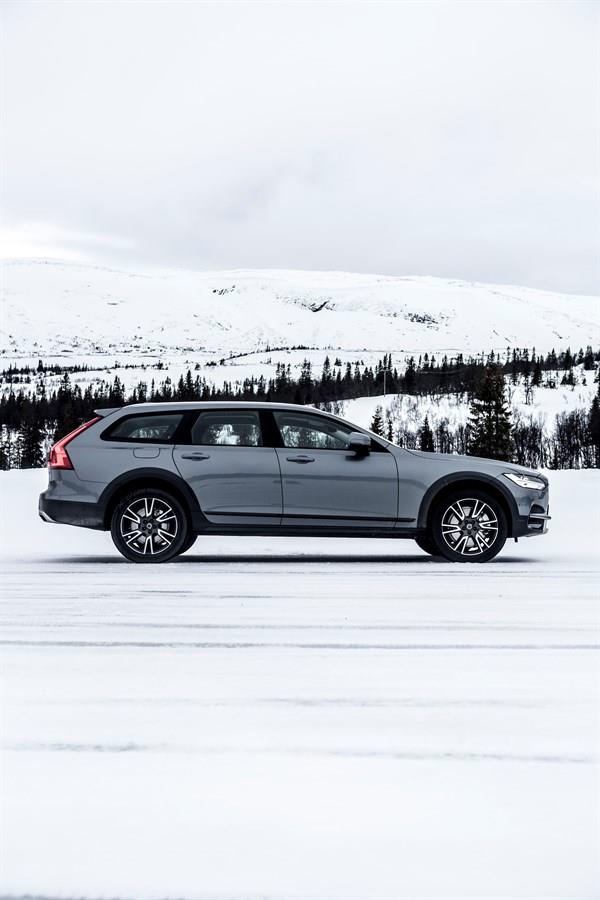
Volvo perseveres with the V90 Cross Country
Volvo, however, has chosen to keep the V90 Cross Country estate car “on its books”, at least for now. Ominously, the much-lauded V60 Cross Country, a smaller, less-expensive version of the V90, was dropped from the model range. And it is true that when it comes to customer demand, Volvo’s own SUVs outsell the V90 Cross Country by a considerable margin.
The V90 T6 AWD Inscription package
The V90 Cross Country T6 AWD Inscription is the top-of-the-range V90 and remains an excellent car, as anyone who has experienced it will affirm. It comes with a technologically advanced 2,0-litre four-cylinder petrol engine that uses both supercharging and turbocharging to provide excellent thrust. The power output is 235 kW and this is allied to 400 Nm of torque, more than enough to propel the big wagon to a 0-100 km/h time of 6,3 seconds and onto a top speed of 230 km/h.
That is impressive for a car that weighs over 1 800 kg. Even more impressive is the fact that it achieves this with an 8-speed Geartronic automatic transmission that is as smooth as silk in operation, and an all-wheel-drive system, that offers plenty of rough-dirt-road ability.
Sophisticated interior
The interior of the V90 T6 Inscription is typically Volvo. This means that it is headlined by a very up-to-date dashboard with a Sensus infotainment system that offers all the premium-level features you’d expect (navigation is standard), as well as a pinch-and-zoom feature. The audio system is high-quality, leather upholstery is standard on this high-end model, and the car comes with a total of six airbags.
Of a more practical nature, there is excellent leg and headroom for the rear passengers, and as far as luggage space is concerned, with all seats upright the boot measures 560 litres, but with rear seats folded this rises to as much as 1 526 litres.
Ride and handling
Here we come to the real reason for choosing a V90 ahead of one of Volvo’s own SUVs, such as the XC90. The V90 handles like a nimble sports machine car compared to a big SUV! The lower centre of gravity the wagon offers makes this vehicle inherently more stable than any SUV out there. For instance, the overall height of the V90 is 1 543mm. This compares to the overall height of the XC90 of 1 775 mm. What’s more, the XC90, in mechanically-similar T6 form, weighs 1 994 kg, so its kerb weight is over 150 kg greater than the V90 CC.
In terms of rough-road ability, where ground clearance is of paramount importance, the Cross Country T6 has a figure of 210 mm. This compares quite favourably to the XC90’s figure of 238 mm, and is greater than two popular SUVs, such as Volkswagen’s Tiguan and Haval’s H9.
For open-road cruising, the V90 is one of the most relaxed vehicles on the road. Small wonder that Vic Campher, who heads up the largest Volvo dealership in the country, states that if he had to choose a car right now for the Jo’burg to Cape Town trip, the V90 would be at the top of his list.
Price
The V90 Cross Country is not a cheap car. The least expensive model is the T5 AWD Momentum at R857 812, while the top-of-the-range T6 AWD Inscription costs R1 021 778.
The competitors
Sad to say, the V90 doesn’t really have any direct competitors in terms of price and configuration. We considered the Audi RS4 Avant, just for interest’s sake, as it is also an estate car. But we felt it was so performance-orientated, with zero rough-road ability, that it wouldn’t be a reasonable choice. You can read more here about the Avant in this article entitled Top 3 things you need to know about the Audi RS 4.
The only other wagon on our market that offers all-wheel-drive is Subaru’s Outback.
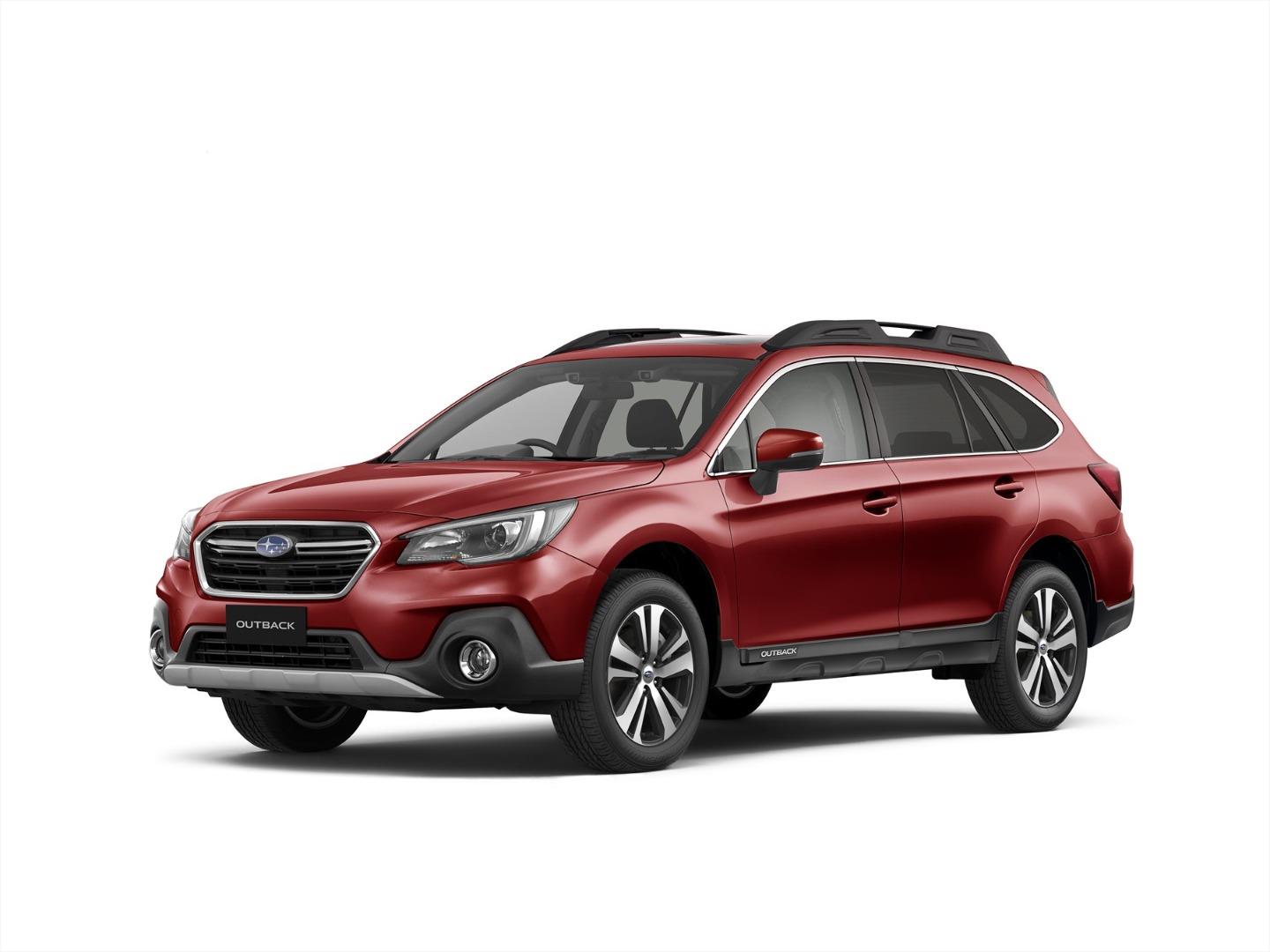
Subaru Outback 3.6 R-S ES
The Subaru Outback is at least comparable in terms of configuration, although in terms of performance and interior trim levels, it operates in a lower league compared to the Volvo V90. Currently the Subaru Outback 3.6R-S ES sells for R709 000 in premium form, and it represents very good value for money.
Like the Volvo, it has four-wheel-drive, and a rugged suspension system that can take a real pounding on rough roads. Again, like the Volvo, it cannot match the pucker SUVs in terms of ground clearance, but thanks to its well-tucked-away boxer-configuration 6-cylinder engine, it boasts a ground clearance of 213 mm, slightly better than the Volvo’s 210 mm. To give readers an idea of what this figure means , a conventional car like a Toyota Corollla, has a ground clearance figure of about 135 mm.
Outback performance
Performance-wise, the Subaru uses a non-turbo 6-cylinder boxer-configuration engine displacing 3 630 cc. This delivers 191 kW and 350 Nm of torque, figures well short of the Volvo’s, but nevertheless impressive. The 0-100 km/h time for the Outback is a handy 7,6 seconds, and top speed is an equally impressive 235 km/h.
On the down-side, the Outback is equipped with a CVT gearbox. Although it is a very good example of a CVT, not being subject to too much of the engine-droning that is often a factor with these continuously-variable power transmitters, it can’t compare to the excellent Borg Warner 8-speed automatic ‘box fitted to the Volvo
Fuel consumption is another area where the Subaru will have to give best to the Volvo. It is rated officially at 9,9 litres/100 km, some 2,2 litres/100 heavier than the Swedish car’s claimed figure.
Interior
The Outback is well-equipped and well-built. But in terms of quality of materials used, as well as ultra-modern design, it is not going to match the more lavishly-equipped (and more expensive!) Volvo. However, it also has navigation as standard, and a good-quality audio system.
Verdict
This isn’t really a true head-to-head comparison. As mentioned earlier, the Volvo CC doesn’t really have any competitors in this estate car league. The Outback offers a similar configuration, but it is out-gunned in performance, fuel consumption and interior finishes. Of course, the pricing tells the story, as the top-of the range Volvo Cross Country is some R300 000 more expensive than the Subaru.
Short answer: if you can afford the Volvo, go for it. It will continue to surprise and delight you, and the car oozes quality and ability. As for the Subaru, at its price it offers something unique too, not least of all excellent engineering and all-wheel-drive rough-road ability that is very hard to match.
Recommended next:
Volvo V90 T6 AWD Cross Country: Who needs an SUV anyway?
7 extras you should retrofit on a used Volvo V90 Cross Country
We compared Subaru Outback engines, and the efficiency crown goes to…