
Volkswagen Tiguan pricing vs Leapmotor C10 REEV: which is better value in SA?
If you’ve got around R700 000 to R800 000 to spend on a family SUV in South Africa, one of the safest, most established options includes the Volkswagen Tiguan. The curveball is the Leapmotor C10 REEV – a Chinese range-extended EV that drives like an electric car but still carries a petrol engine as backup. On paper, both promise a generous range and family practicality. In reality, they go about it very differently.
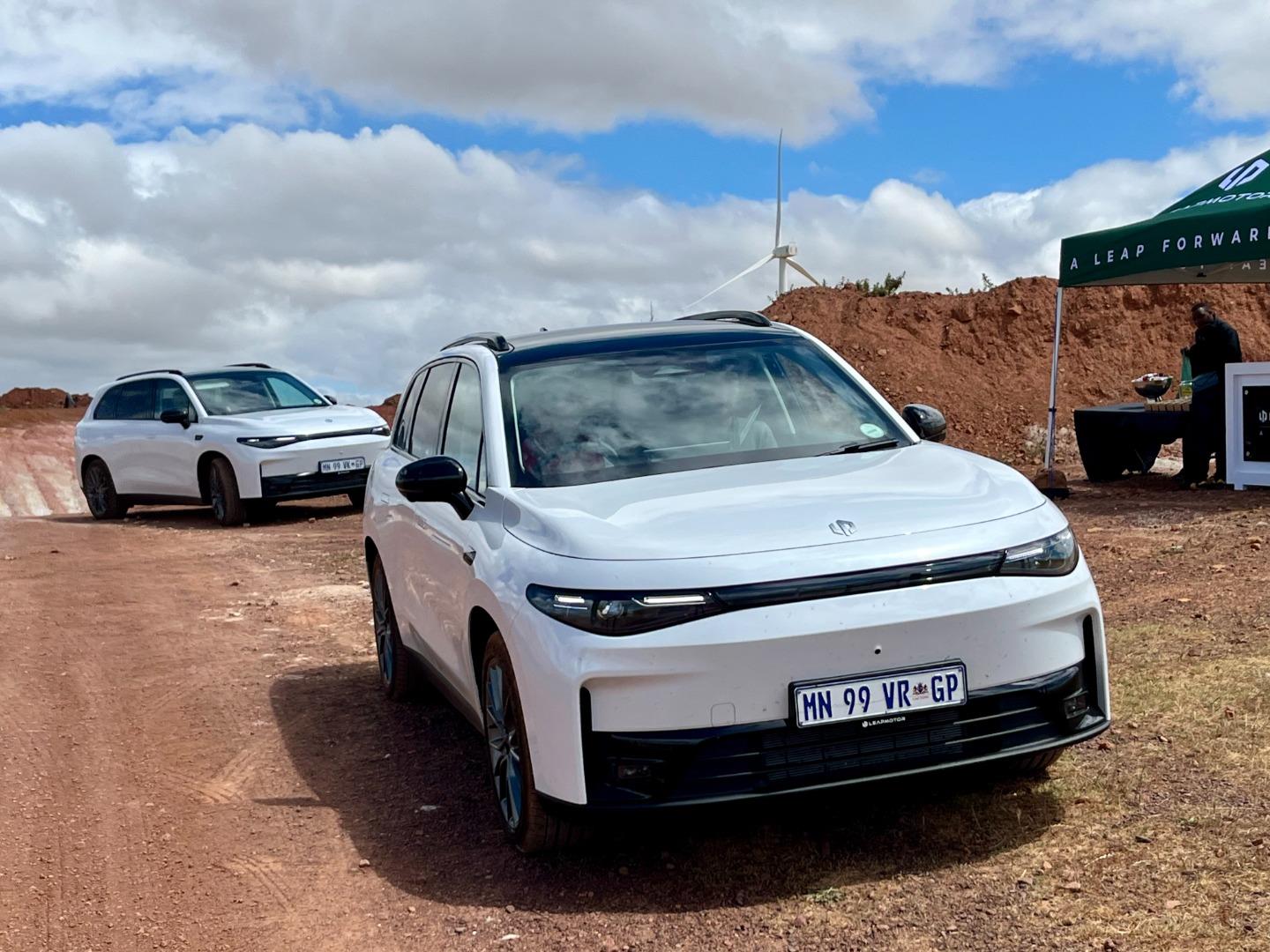
Leapmotor C10 REEV first drive review
Volkswagen Tiguan prices in South Africa (2026)
The current Tiguan line-up in SA is fairly simple, but the price spread is wide enough to cover very different buyers:
Tiguan 1.4 TSI: R664 500
Tiguan 1.4 TSI Life: R720 500
Tiguan 2.0 TDI Life 4Motion: R774 400
Tiguan 1.4 TSI R-Line: R785 200
Tiguan 2.0 TDI R-Line 4Motion: R855 100
Tiguan 2.0 TSI R-Line 4Motion: R856 200
Realistically, the heart of the range for private buyers sits around the 1.4 TSI Life and 2.0 TDI Life 4Motion. The base 1.4 TSI is the entry ticket into Tiguan ownership, while the R-Line models appeal to buyers chasing sportier looks and more kit at the very top end.
Read our VW Tiguan first drive review here.

Leapmotor C10 REEV pricing in South Africa
The Leapmotor C10 REEV is priced to land right in the Tiguan’s crosshairs:
C10 REEV Style: ±R759 900
C10 REEV Design: ±R799 900
That means:
It’s more expensive than the Tiguan 1.4 TSI and 1.4 TSI Life.
It sits on top of, or just above, the Tiguan 2.0 TDI Life 4Motion.
It overlaps with the Tiguan 1.4 TSI R-Line and undercuts the two R-Line 4Motion flagships.
On price alone, the C10 is not trying to be the cheaper Chinese option. It’s coming in as a tech-heavy, mid-to-upper segment alternative to mainstream petrol- and diesel-powered SUVs.

Powertrain and performance: ICE vs REEV
Under the skin, these two are built on completely different philosophies.
Volkswagen Tiguan
1.4 TSI:
Turbo-petrol four-cylinder
Smooth, flexible and familiar
Suits mixed urban and highway use
- 2.0 TDI:
Strong torque and relaxed cruising
4Motion all-wheel drive in key derivatives
Built for long-distance, loaded driving and towing
The Tiguan feels exactly like you’d expect: conventional, polished and predictable. If you’ve owned a modern VW product before, there are no surprises in how it responds.

Leapmotor C10 REEV
The C10 is a range-extended EV. In practice, that means:
The wheels are driven by an electric motor on the rear axle.
A 1.5-litre petrol engine never directly drives the wheels; it acts as a generator.
Power is around 158 kW and 320 Nm, which feels perfectly adequate for family duties.
From behind the wheel, it feels more like an EV than anything else – smooth, quiet, with instant response and no gearshifts to think about. When the battery depletes, and the petrol generator steps in, you do become aware of an engine somewhere in the background, but it’s still a very different experience from a conventional ICE SUV. You also pick how you'd like to utilise the power. In the city, for example, you can get by on EV power alone. Plug in overnight, and you'll rarely fill up.

Real-world range and consumption
This is where the spec sheets and the real world start to diverge – for both cars.
Claimed vs real: Leapmotor C10 REEV
On paper, the C10 REEV promises:
Around 145 km of EV-only running.
Around 970 km of total range with the generator in play.
In reality, especially in South African conditions and mixed driving, you’re unlikely to see those headline numbers unless you drive very gently and plug in often. In Fuel mode – including mountain passes and real-world speeds – the C10 sat closer to 6–7.5 L/100 km once the battery was depleted. That’s still reasonable for a mid-size SUV. Many owners report 900-1050 km per full charge and tank when driving sensibly.
Where the C10 shines is in how much of your weekly driving you can cover on electricity if you do charge at home or at the office. Short commutes and school runs can be handled on battery alone, with the engine only waking up for longer trips.
Claimed vs real: Tiguan 1.4 TSI and 2.0 TDI
Volkswagen doesn’t shout about “range” – it sticks to consumption figures. But you can infer sensible ranges from those numbers.
Tiguan 1.4 TSI / 1.4 TSI Life / 1.4 TSI R-Line:
Claimed consumption around 7–7.6 L/100 km in mixed use.
In independent testing, you’re looking at just under 7.0 L/100 km on the highway and closer to 7.7 L/100 km in town.
With a tank in the mid-50 to 60-litre region, a realistic mixed range is roughly 700 km per fill if you’re not heavy-footed.
Tiguan 2.0 TDI Life 4Motion / 2.0 TDI R-Line 4Motion:
Claimed consumption of 6.6 L/100 km.
Testing the 2.0 TDI Life 4Motion, we saw around 6.2 L/100 km in mixed driving, which is better than the official figure.
That equates to roughly 850 km of real-world range from a tank if you drive sensibly.
In short...
The Tiguan 2.0 TDI can realistically beat its official fuel consumption figure if you treat it kindly.
The C10’s “970 km” is achievable, but its real-world advantage lies more in how much of your daily routine you can shift to EV running.

Space and practicality
Both SUVs sit in the mid-size family bracket, and both are genuinely usable for family life.
Tiguan
The Tiguan has become a default family choice for a reason:
A generous boot that swallows holiday luggage, prams and groceries without much planning.
Rear seats that can slide and recline, giving you a bit of flexibility between legroom and luggage space.
A cabin that feels solid and well thought-out, with loads of storage and a sensible layout that’s easy to live with day in, day out.
If you’ve ever driven a Tiguan and thought “this just works”, that’s the vibe it continues to deliver.

C10 REEV
The C10 is dimensionally very similar:
Plenty of legroom and headroom for both rows.
A boot that compares well with the usual suspects in this segment, even with the battery pack and REEV hardware packaged in under the skin.
A more minimalist, tech-driven cabin design, with big screens and a more futuristic ambience.
Interesting features like a camping mode that turns your car into a camping pod.
If you want an interior that feels different to what your parents are driving, the C10 scratches that itch.

Spec and tech at similar price points
The fairest comparison is to line up the money.
Around R720k–R780k: Tiguan 1.4 TSI Life vs C10 Style
At roughly R720 500, the Tiguan 1.4 TSI Life is the sweet spot of the VW range. It adds the everyday kit most buyers want over the base car, without venturing into R-Line excess. It’s the one you’d recommend to a friend who “just wants a good Tiguan”.
The C10 Style, at around R759 900, sits above that and plays the tech card harder:
Large, high-resolution screens for infotainment and driver information.
A very modern interface and an electric-style drive experience, even though you have a petrol generator on board.
Here, the choice is almost philosophical: do you want a conventional turbo-petrol SUV from a brand you know, or a newer, more futuristic-feeling product with a more complex powertrain?
Around R770k–R800k: Tiguan 2.0 TDI Life 4Motion vs C10 Design
At R774 400, the Tiguan 2.0 TDI Life 4Motion is arguably the most compelling Tiguan for South Africans who drive far and often. It combines:
All-wheel drive security.
Strong diesel torque.
Real-world consumption that can dip close to 6.2 l/100 km if you drive with a light foot.
The C10 Design, at around R799 900, asks a similar amount but gives you:
The full-fat C10 experience, with all the design and tech trimmings.
The same REEV powertrain, so you can commute electrically and still road-trip without charging anxiety.
Which one is best for whom?
The Tiguan 2.0 TDI Life 4Motion is the rational choice for high-mileage drivers who value long range and towing ability over novelty.
The C10 Design is for someone who wants to blend EV vibes with road-trip freedom, and who’s comfortable being an early adopter.
Read all Tiguan news, comparisons, and advice here.

Brand trust, resale and dealer support
This is the elephant in the room. One is a South African mainstay, the other, despite its Stellantis roots, is mostly unknown to locals.
Volkswagen has been entrenched in South Africa for decades:
A wide dealer network across the country, including smaller towns.
Solid parts availability and technicians who already know the product.
Strong resale values and a used market that understands how to price and appraise a Tiguan.
Leapmotor is brand new here. While it is backed by a larger global group and arrived with ambitious plans, a few fair questions arise:
Stellantis now owns a sizeable stake in the company and runs the Leapmotor International joint venture, but how deeply will local dealers and service networks commit to the brand once the initial launch excitement wears off?
Will parts availability and pricing still look healthy in five to seven years’ time, especially for a relatively complex REEV powertrain that doesn’t share much with mainstream brands?
How will the used market respond to a range-extended EV from a badge that’s still earning its reputation in South Africa, and what will that mean for resale values versus something like a Tiguan?
If you’re risk-averse, the Tiguan’s “known quantity” status is hard to argue against. If you’re willing to take a calculated risk for the sake of tech and a different ownership experience, the C10 may appeal.

Which one should you buy?
If you’re comparing Volkswagen Tiguan pricing vs the Leapmotor C10 REEV in South Africa, the answer really depends on your driving pattern and your appetite for being an early adopter.
Choose the Volkswagen Tiguan if:
You want hassle-free ownership with a big, established dealer network.
You do regular long-distance trips, tow often or carry heavy loads – the 2.0 TDI Life 4Motion in particular makes a strong case.
You prefer a familiar driving experience and aren’t yet convinced by complex electrified powertrains.
You prefer the user-friendliness of the VW infotainment system.
Choose the Leapmotor C10 REEV if:
Most of your driving is urban or peri-urban, and you have somewhere to plug in, so you can genuinely take advantage of its EV-only capability.
You like the idea of EV smoothness and big-screen tech, but don’t want to rely solely on South Africa’s charging infrastructure.
You’re comfortable trading some brand security and resale predictability for novelty and a different kind of value proposition.
You are unfazed by a buttonless interior and don't mind using the touchscreen for even the most basic tasks, like opening your car's fuel flap!
You don't mind using the credit card-like key instead of a traditional one.
The verdict
For the cautious buyer, the Tiguan – especially in 2.0 TDI Life 4Motion form – remains the sensible default. For the curious and tech-minded, the Leapmotor C10 REEV turns that same budget into a much more interesting and slightly braver choice. As for the AutoTrader team, we agree that the Tiguan is the one to go for.