Volkswagen Tiguan Allspace vs Hyundai Santa Fe vs Kia Sorento: which one has the lowest running cost
The Allspace variant within the Tiguan line-up offers those that require seven seats or a bigger boot with an option within the Volkswagen range. We compare the Allspace with two of its key rivals in order to determine which has the lowest running costs.


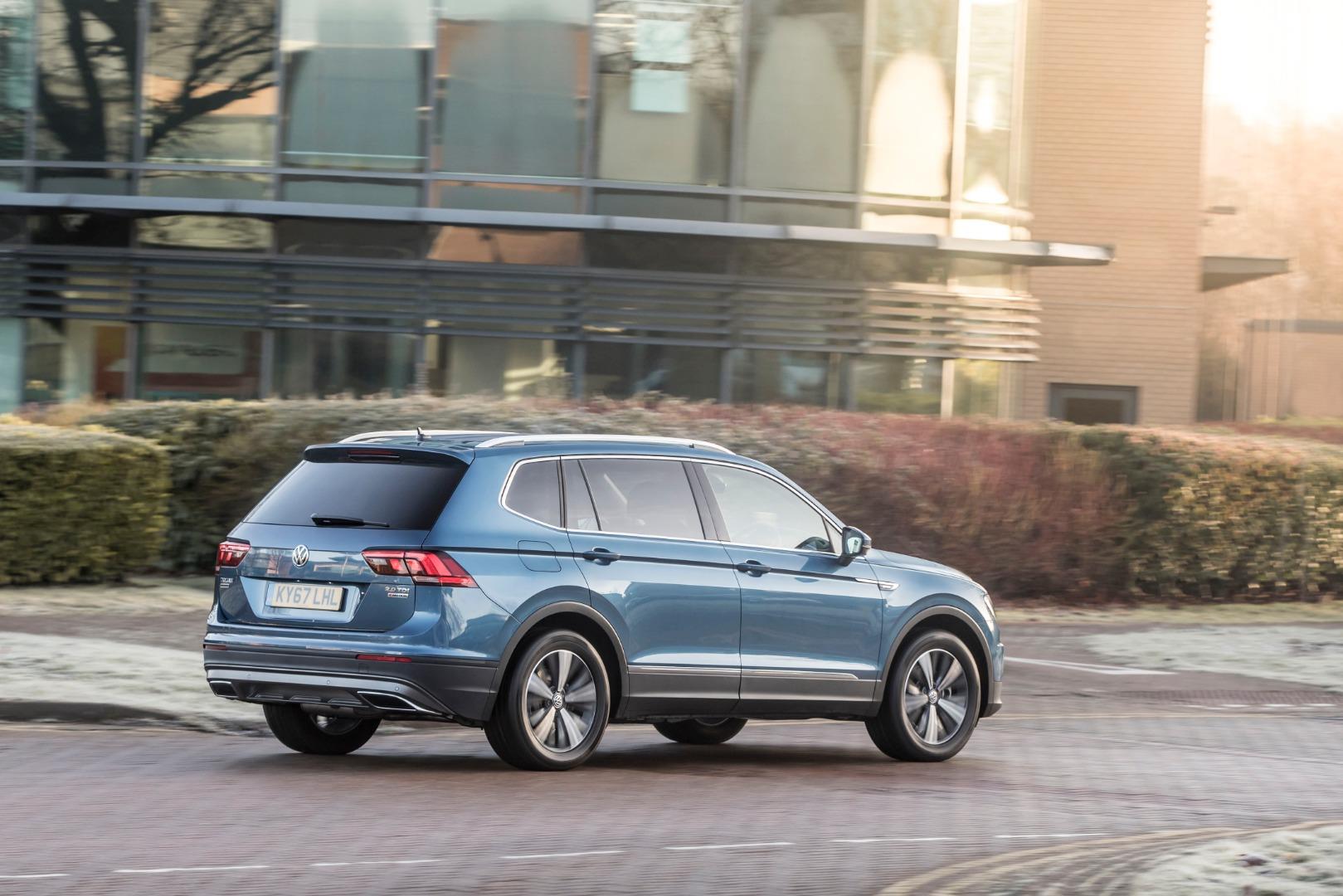

The seven-seat SUV segment is popular within South Africa, in fact, the best-selling SUV from a local perspective, the Toyota Fortuner, is a seven-seat model. The Fortuner has many key rivals, many of which are bakkie-based, such as the Ford Everest, Mitsubishi Pajero Sport and the Isuzu mu-X. There is another sub-segment within the seven-seat SUV niche though, and that includes products such as the Volkswagen Tiguan Allspace, Kia’s Sorento and Hyundai’s Santa Fe.

At AutoTrader we pride ourselves on taking you through the entire purchasing journey, informing you all the way. In today's piece, we will be focussing on the running costs of the Tiguan Allspace, the Sorento and the Santa Fe. The models chosen for this comparison all feature automatic gearboxes, are similarly priced and have seven seats. Since the Volkswagen is no longer available with the 2.0-litre diesel motor, we have selected the turbocharged 1.4-litre petrol model as it is the most efficient within the range. The rivals both feature the same 2.2-litre turbodiesel engine, however, their respective outputs are different.
Related: New vs old Volkswagen Tiguan: 3 key differences
The figures
|
|
Volkswagen Tiguan Allspace 1.4TSI Comfortline R-Line |
Kia Sorento 2.2 CRDi LX |
Hyundai Santa Fe 2.2D Premium |
|
Engine size |
4-cyl,1.4-litre turbo petrol |
4-cyl, 2.2-litre diesel |
4-cyl, 2.2-litre diesel |
|
Power/Torque |
110 kW/250 Nm |
147 kW/440 Nm |
142 kW/440 Nm |
|
Fuel tank capacity |
60-litres |
80-litres |
65-litres |
|
Kerb weight |
1 630 kg |
1 826 kg |
1 805kg |
|
Airbag count |
6 |
6 |
6 |
|
Driven wheels |
Front |
Front |
Front |
|
CO2 emissions |
161 g/km |
170 g/km |
200 g/km |
|
Claimed consumption |
7.1 L/100 km |
6.3 L/100 km |
7.8 L/100 km |
|
Warranty |
3 yr/120 000 km |
5 yr/ unlimited km |
5 yr/150 000 km/7 yr 200 000km drivetrain |
|
Price |
R 630 500 |
R 679 500 |
R 669 500 |
Comparing the trio
Purchase price
The three models chosen for this comparison form part of larger model ranges with various engines and specification options. When it came down to choosing the specific models for this comparison, we chose the 1.4-litre Tiguan Allspace model as in top-spec Comfortline R-Line guise as it is the most efficient model within the range while in the case of the Sorento and Santa Fe, the entry-level models were chosen as their respective prices were closest to the Tiguan. Insurance is nearly impossible to estimate, as each monthly premium is calculated on the insured's risk profile, meaning that it is different for each person.
Monthly instalments are calculated throughout 72-months with a 10% deposit and no balloon or residual. The interest rate is set at 11%.

Volkswagen Tiguan Allspace 1.4TSI Comfortline R-Line
With the instalment parameters in place, the Volkswagen will work out at R10 800.89 per month over the 72 months.
Kia Sorento 2.2CRDi LX
With the instalment parameters in place, the Kia will work out at R11 640.29 per month over the 72 months.
Hyundai Santa Fe 2.2D Premium
With the instalment parameters in place, the Hyundai will work out at R11 468.98 per month over the 72 months.
Fuel consumption
Making use of the claimed fuel consumption figures for the vehicle in question can be misleading as real-world consumption often varies significantly depending on driving style and driving environment. It is also important to note exactly where within the rev range each product produces their respective peak power and torque outputs as this dictates the driving style required to maximise efficiency.
On paper, the Kia is the most efficient, providing a claimed consumption figure of 6.3 L/100km, with peak power coming in at 3 800 r/min and more importantly, a healthy torque band coming in between 1 750-2 750 r/min. The issue here is that both the Kia and Hyundai feature the same Hyundai R II engine, the same 8-speed automatic gearbox and are roughly the same weight, however, the Kia appears to feature a newer development of the motor, with more power and improved CO2 emissions thanks to an exhaust gas recirculation cooler and an improved fuel injection system.
This still does not explain the 1.5L/100km discrepancy between the Sorento and Santa Fe's claimed consumption figures though. Further investigation reveals that Hyundai South Africa release its own set of fuel consumption figures that are claimed to be tested locally while Kia makes use of global fuel consumption claims. The Volkswagen sits between the two diesel-powered South Korean contenders in terms of claimed consumption, with a figure of 7.1 L/100km. The Volkswagen, despite being the lowest in terms of output, is by far the lightest vehicle in the comparison and produces its peak output between 5 000-6 000 r/min while its torque is available from a low as 1 500 r/min.

Warranties & maintenance plans
All three of these contenders are sold with a comprehensive 5-year service plans, with service intervals of 15 000km, however, Kia's service plan is valid up to 100 000km whereas the Volkswagen and Hyundai's offering extended to 90 000km In terms of warranties, the Volkswagen offers the least impressive plan, spanning 3-years or 120 000km while the Kia features a phenomenal 5-year/unlimited mileage warranty. The Hyundai may claim a victory in this sector though, with a 5-year/150 000km warranty for the vehicle itself as well as a 7-year/200 000km warranty on the vehicle’s powertrain.
Verdict
Having looked at the various factors that determine running costs, the trio of contenders here are relatively close in terms of what it will cost to run them all during the first half a decade of the ownership journey. From a monthly instalment perspective, the cars are separated by less than R1 000 per month while from a fuel consumption perspective, the Kia appears to have the edge, despite being the costliest of the trio.
The Hyundai has a superior warranty plan, but the Kia offers a slightly longer service plan. The Volkswagen, meanwhile, is between R30 000 and R40 000 less, from a list price perspective, than the Hyundai and Kia respectively. By the narrowest of margins, we have to give the crown to the Volkswagen in the particular test, by virtue of its lower list price, its second-best fuel consumption figure and the fact that all three models are not likely to cost the owner anything in terms of routine maintenance for the first 5 years of ownership, levelling the field in that regard.
Recommended next:
Which Volkswagen Tiguan engine is the most efficient?
Four extras you should fit on a used Volkswagen Tiguan Allspace
What is covered under Volkswagen Tiguan Allspace manufacturer car warranty?