
Volkswagen Polo vs Ford Fiesta vs Toyota Yaris: which one has the lowest running costs?
Volkswagen Polo vs Ford Fiesta vs Toyota Yaris: which one has the lowest running costs?




By Martin Pretorius
One of the primary reasons for buying a small hatchback is its economy of operation. There are many aspects to consider in this matter, with fuel consumption, insurance premiums, frequency of service, cost of maintenance parts, and depreciation being the major factors. We decided to pitch the top-selling Volkswagen Polo against two of its class competitors, namely the Ford Fiesta and the Toyota Yaris, to determine which one has the lowest running cost.
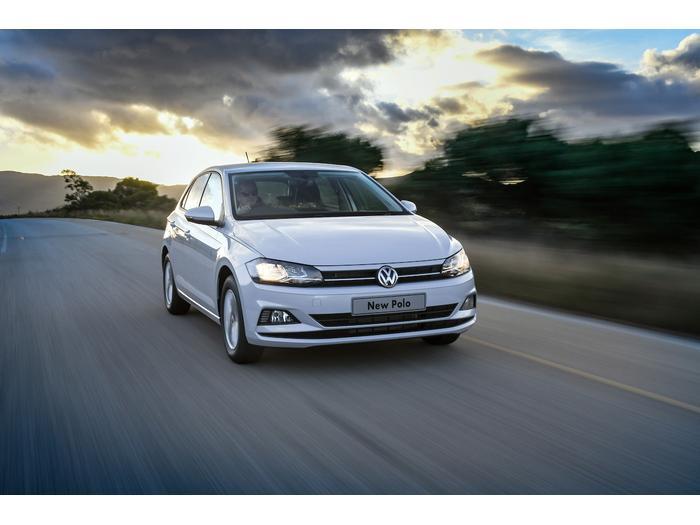
The lower-end Polos are powered by a 1.0-litre, turbocharged 3-cylinder engine, with a well-deserved reputation for excellent fuel efficiency, so it scores on this front right from the outset. And, while their list prices can get very high very quickly, the cheaper variants are quite good value for money. When you want to sell it on, the Polo’s sustained popularity will ensure that it will retain a lot of its value after a few years of faithful service.
Because it’s a Volkswagen, parts prices from the dealership, as well as service costs, may quickly become expensive. Fortunately, a service plan for 3 years or 45 000 km will soften the initial blow.
However, strong aftermarket support means that non-franchise parts, servicing and maintenance is a viable (and much cheaper) way to keep a Polo on the road – once the 3 year/120 000 km warranty has expired, of course.
Just keep in mind that, like the Fiesta, the Polo has a high-tech turbo engine with a host of added sensors and actuators to manage its fuel supply, and those additional gubbins do have a finite life. When they go bad, they will likely be pretty expensive to repair.
The Polo’s other downside revolves around insurance. Because it’s such a popular car in the marketplace, there’s also strong demand for it among car thieves. This means higher insurance premiums, especially for Polos operating in known high-risk areas.
However, the Polo's comparatively affordable maintenance costs, fuel efficiency, and slow depreciation should be enough to offset its higher insurance charges.
Running the 1.0-litre Polo close in the fuel-efficiency stakes, the petrol-engined Ford Fiesta should not be any more expensive than the Polo at the pumps. There's also a super-frugal diesel derivative, something none of the others offer.
However, the price of entry is a bit higher than that of the Volkswagen, even though the equivalently-priced variants of these two are very close in specification levels. The Fiesta is however at a disadvantage when the time comes to sell it, because it likely won’t retain as much of its value as the Polo.
As with the Polo, there’s a large dealership network to take care of the car for the duration of the 4 year/120 000 km warranty. Meanwhile, a service plan for 4 years or 60 000 km will take care of the first few years of ownership's servicing needs.
Once again, there’s fair aftermarket support, so keeping an ageing Fiesta on the road shouldn’t be too onerous, although their parts prices are historically more expensive than those of the Polo. The Polo's downside of additional turbo- and injection-related components also apply to the Fiesta, which may further increase maintenance costs.
The Fiesta claws back some ground with its insurance premiums, which should be lower than the Polo’s, due to lower demand on the underground market. Combined with the longer service plan, this should mean that a Fiesta will be easier on the pocket for the first years of ownership, before likely costing more on maintenance as it ages due to the parts pricing.
The latest-generation Yaris is a steady seller, but, like the Fiesta, doesn’t challenge the Polo for sheer sales volumes. Its entry-level pricing is fairly competitive, but high-trim variants gets expensive pretty quickly. This is offset by strong residual values, making it one of the cars which will cost the least in terms of depreciation.
It’s not particularly frugal with fuel, however, with even Toyota’s official claims running more than a litre per 100 kilometres higher than either of the others. The Toyota regains ground with its servicing- and maintenance requirements being surprisingly affordable.
Like the other two cars, service intervals are set at one year or 15 000 km, with a Polo-matching service plan for 3 years or 45 000 km. This goes with a 3 year/120 000 km warranty, after which you’ll be able to have your Yaris serviced at a non-OEM workshop to save a neat pile of money.
Good aftermarket support means that most service parts are available at much lower cost than from the agents, which are often rather pricey. However, because of the Yaris's more-conservative engineering (with no turbo or direct injection), there's less to go wrong in the engine room.
Yaris insurance often has both good- and bad news. Because they’re not seen as enthusiasts' cars, Yaris insurance premiums are generally fairly affordable, but because of the popularity of the Toyota brand, shady characters may want to steal them, adjusting the premiums right back up again.
With this car, it depends to a large degree on the areas in which the car operates: conservative middle-aged folks with good security at home and long no-claim records will do best, but young, inner-city apartment dwellers with street parking may end up paying a lot more.
Verdict
It all depends on how long you want to keep the car. If you plan to replace it after 4 or 5 years, the Ford’s longer service plan and lower insurance risk profile should give it the crown of having the lowest running costs. Over a longer term, higher parts prices and even steeper depreciation might however make the Fiesta less attractive for the financially savvy. This does turn used Fiestas into great second-hand buys, however, because they tend to become quite inexpensive as they age.
The Volkswagen Polo strikes a good balance between strong residual values and relatively affordable maintenance after the warranty has expired, making it more attractive for a longer period. However, it may still cost a lot more in insurance, and its shorter service plan makes it less appealing for short-term ownership. And, over a very long ownership term, its relative sophistication may well lead to increased maintenance costs.
And then we get to the Toyota Yaris. Yes, many of its OEM parts are expensive, and it may cost a bit more in insurance and fuel, but it’s practically guaranteed to run for longer without hassles, because of Toyota’s well-earned reputation for durability and its conservative engineering. Putting it bluntly: its OEM parts will be more expensive, but it will need fewer of them.
If you want to buy a car to keep for a very long time, the Toyota Yaris is most likely to have the lowest running costs. Maintain it according to the manufacturer’s prescriptions, and you’ll easily get more than a decade of service out of it. For evidence, just look how many ancient Yarises are still trundling around out there...