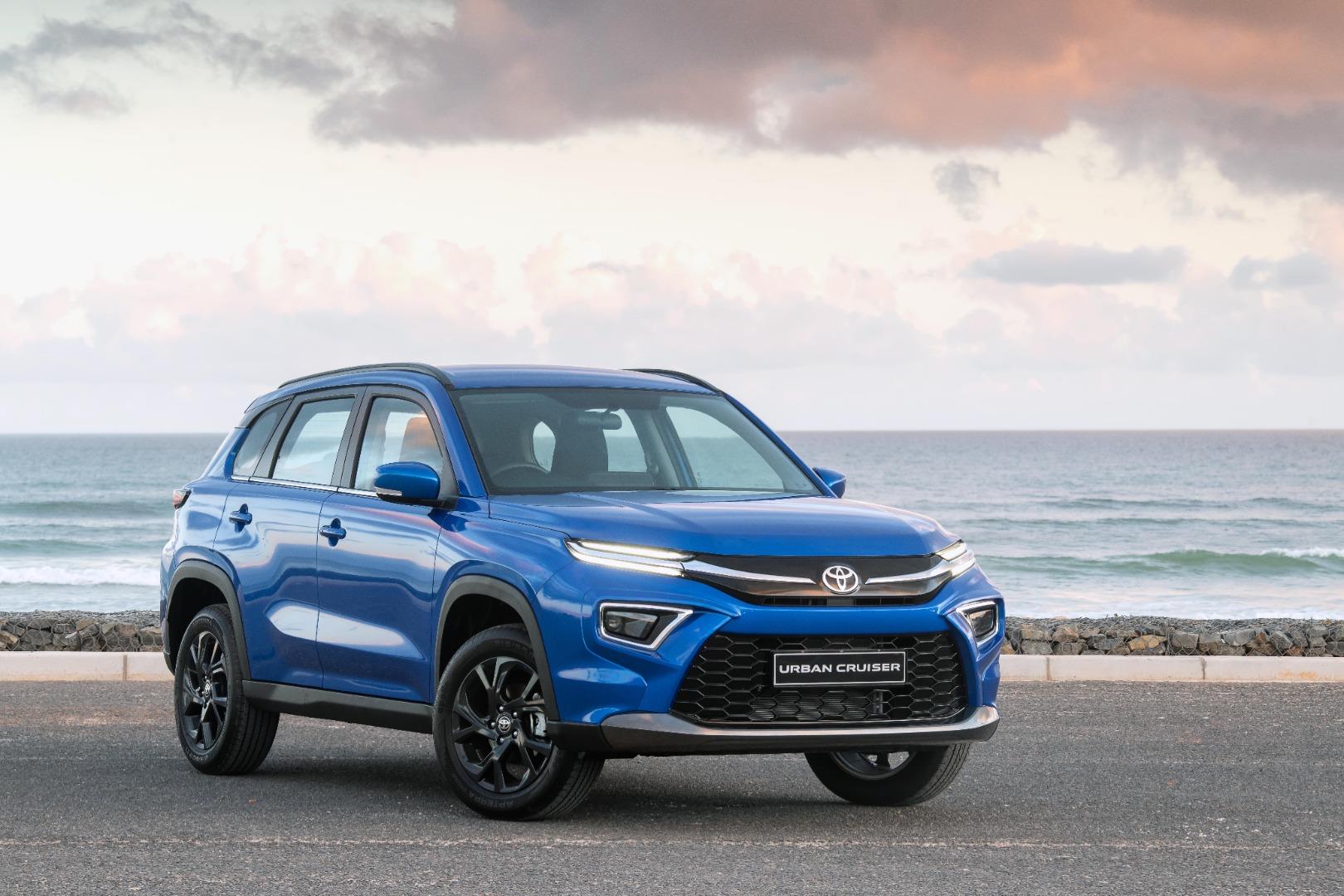


The Toyota Urban Cruiser is back, and the second generation is bigger and more sophisticated than the model it replaces. Does the latest Urban Cruiser have what it takes to take on the Kia Sonet and Haval Jolion, and if so, which one would we choose among the three?
Related: Toyota Urban Cruiser vs Kia Sonet vs Suzuki Grand Vitara: Which one has the lowest running costs?
Toyota Urban Cruiser
Powertrain and performance
The Urban Cruiser is powered by a 1.5-litre naturally aspirated petrol engine paired with a four-speed automatic gearbox. The engine produces 77Kw and 138Nm that are sent through the front wheels. Fuel consumption is claimed at 6.1 L/100km, while Toyota does not claim an official 0-100km/h time.
Standard equipment
The Urban Cruiser, in XR guise, gets 17-inch alloy wheels, roof rails, 6 airbags, outer rear ISOFIX child seat anchor points, climate control, a multifunction steering wheel, a colour screen infotainment system with Bluetooth, Apple CarPlay and Android Auto functionality, a rearview camera, multiple USB ports, front and rear electric windows, keyless entry/start, front and rear electric windows.
Safety
The latest Urban Cruiser is yet to be crash-tested, but its predecessor scored a 4-Star early in 2022, which bodes well for the newcomer.
Practicality
The Urban Cruiser boasts a 353-litre boot with 210mm of ground clearance and seating for five occupants, making it practical!
Price and value proposition
At R379 100, the flagship XR auto variant of the Urban Cruiser represents good value in this particular comparison.

The competition
Kia Sonet
The Sonet is a fantastic competitor for the Toyota, with a similar powertrain and price. It features a 1.5-litre petrol engine that produces 85kW and 144Nm but is paired with a CVT that sends power to the front wheels, allowing for a claimed fuel consumption figure of 7.2 L/100km.
The Kia, in Style specification, is just R895 more expensive, but has fewer features, with just two airbags, 16-inch alloy wheels, remote central locking, airconditioning and no cruise control, making it relatively basic, despite cloth/artificial leather-covered seats, which is perhaps is only specification advantage. The Sonet is yet to be crash-tested, so we cannot comment on its safety. The Kia is smaller than the Toyota but offers more boot space at 492-litres. From a value perspective, the Kia comes with a 4-year/60 000km service plan but less specification, providing less value for money.

Haval Jolion
The Jolion features a turbocharged 1.5-litre petrol engine that produces 105kW and 210Nm of torque and is paired with a 7-speed dual-clutch automatic gearbox that sends power to the front wheels. The Haval will consume fuel at a claimed rate of 7.5 L/100km.
In the specification department, the Jolion, in Premium guise, comes with 17-inch alloy wheels, 4 airbags, a multifunction steering wheel, attention assist, a colour touchscreen infotainment system, cruise control, keyless entry/start, electrically adjustable mirrors, cloth-covered seats, LED headlights and rear PDC with a reverse camera.
The Haval was crash-tested by ANCAP, where it achieved a 5-Star rating. Looking at the Jolion from a value perspective, it is very similar to the Toyota but has the benefit of a turbocharged engine and dual-clutch gearbox for just R10 000 more. Its service plan of 5 years/60 000km is competitive too.

Facts and figures:
|
|
Toyota Urban Cruiser 1.5 XR auto |
Kia Sonet 1.5 EX auto |
Haval Jolion 1.5T Premium |
|
Engine size (cyl/size) |
4-cyl, 1.5-litre petrol |
4-cyl, 1.5-litre petrol |
4-cyl, 1.5-litre turbo petrol |
|
Power/Torque |
77 kW/138 Nm |
85 kW/144 Nm |
105 kW/210 Nm |
|
CO2 emissions |
144 g/km |
163 g/km |
172 g/km |
|
Service plan |
4 service/ 60 000km |
4 yr/ 60 000km |
5 yr/60 000 km |
|
Airbag count |
6 |
2 |
6 |
|
Fuel tank capacity |
45 litres |
45 litres |
57 litres |
|
Ave Consumption * |
6.1 L/100 km |
7.2 L/100 km |
7.5 L/100 km |
|
Driven wheels |
Front |
Front |
Front |
|
Boot volume |
353-litres |
392-litres |
337-litres |
|
Price |
R379 100 |
R379 995 |
R389 150 |
* Manufacturer's claimed figures.
Pricing was all-inclusive at the time of writing but may change without prior notice.
Verdict
Having looked at the figures, it would appear that the Kia is undoubtedly the weakest model in the test, despite being very practical. The Toyota and Haval are incredibly close, but if it were our money, we would opt for the more economical Urban Cruiser.