Top 5 things you have to know about the BMW 118i
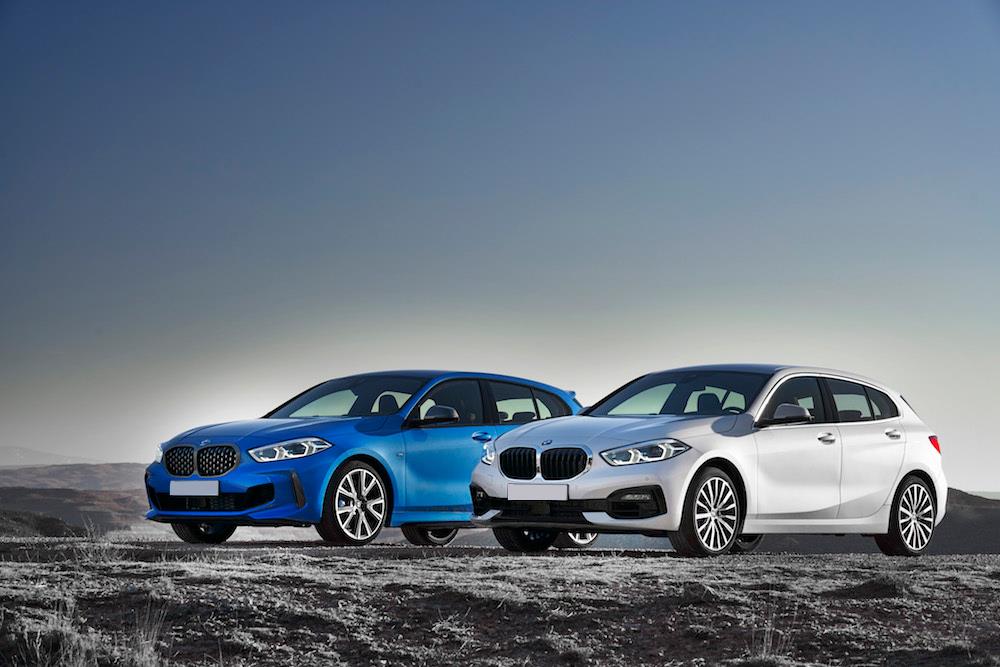
The BMW 118i is the most affordable ticket into the Bavarian brand if you’re going to buy new. Here are the top 5 things to know about this premium hatchback.




Base BMW
As the entry point into the BMW product lineup, the 118i is the first stop for many folks buying into the brand. The Bavarian hatchback however does not set the standard for what you will find in models higher up the chain.
Related: BMW M135i xDrive (2020) Video Review - Breaking Tradition
The 118i may be the cheapest BMW model and have fitment and features matching its entry-level status, but it still delivers on the BMW promise of quality and engineering excellence. We take a look at 5 things you will want to know about the 1 series if you are considering buying one.

1. It has a three-cylinder engine
In essence, there’s nothing wrong with a three-cylinder engine. Some of them, like the mills from Peugeot, Citroën and Toyota, have character in spades. The 3-cylinder in the 118i is a little more subdued by comparison.
It’s not fair to describe its power delivery as inadequate, not when considering its output figures of 103 kW and 220 Nm, enough for a 0-100 sprint of 8.5 seconds and a 213 km/h top speed. The problem is that the familiar 1.5-litre in the Audi A3 35 TFSI and the 1.3-litre in the Mercedes-Benz A200 (both 4-cylinder engines) make 110 kW / 250 Nm and 130 kW / 270 Nm, respectively. This gives them faster sprint times and higher top speeds too, without sacrificing fuel efficiency.

Owners could also feel cheated, because under the hood of the BMW 318i sits a perfectly capable 2-litre engine with 115 kW and 250 Nm.
Why not just choose a more powerful engine, we hear you say? Unfortunately, that will add nearly R200 000 to the price, because the ‘next one up’ is the BMW 128ti, and then it's the BMW M135i. That’s right – there are only three petrol engine options. Consider this: In the UK, you can also choose diesel power for your 1 Series, the options being the 116d, 118d (available in SA), 120d and 120d xDrive. Manual transmissions are available too. But don’t blame BMW. The Brits simply buy far more cars than South Africans.

2. The engine drives the front wheels
For BMW fans and fanboys the thought of a BMW powering the front wheels only doesn’t sit easy. It’s almost reminiscent of the fits of hysteria elicited by announcements from Porsche and Ferrari that they will build SUVs.
What could possibly go wrong? If Audi, Volkswagen, Hyundai and Ford (Fiesta ST) can build great FWD cars, why not BMW? Well, if you’ve ever driven a Mini Cooper S, you’ll know that BMW can mess it up by allowing torque steer to overwhelm the front wheels. Luckily, the 118i doesn’t make a lot of power, so the tramlining effect is fairly limited.
The bad news doesn’t end at torque steer. In a 118i with the standard steering and suspension, the helm feels completely lifeless – as if it’s connected to a games console. That’s truly disappointing for a brand that holds driver involvement as a cornerstone.
If you want the rear wheels to be involved in propelling your 1 Series, you’ll have to go for that M135i, which can send power to the rear axle to maintain grip, BMW says. Not that you’d notice, because it still feels like an FWD car that pushes too much power through the front wheels.

3. It has a great gearbox
Some of the best qualities of the 118i are its exterior and interior design, its solid grip and handling (when torque steer doesn’t interfere) and its 7-speed DCT “Steptronic” transmission. It’s quick and smooth and teases satisfying noises from the small engine and exhaust.
BMW says the transmission has been updated in the interests of rapid manual gear changes. The long seventh gear keeps revs low, helping to lower fuel consumption when out of town or on the highway. The transmission can also let the car coast in neutral in certain situations, while a special low-viscosity oil brings about a further reduction in CO2 emissions.

4. No Android Auto
BMW’s research must have found that most people in its target market use iPhones, not Android phones. So, you can use Apple Car Play to mirror your iPhone’s screen on the 118i’s infotainment display, but Android users (Samsung, Huawei, Sony, Blackberry, Nokia, etc.) will have to wait until BMW releases an update for its system.
If you’re in the market for a 1 Series and use an Android phone, ask the dealer about a free software update to fix this glaring omission.

5. No spare wheel
BMW equips the 1 Series with run-flat tyres and a repair kit. These tyres allow the drivers to reach a safe location where he or she can either summon BMW-on-call or go DIY. Run-flat tyres are surprisingly resilient, so you’ll be able to drive 100-200 km before stopping if you drive at a modest speed. However, if you are up for it, rather inflate the tyre with a combination of sealant and air so that you can drive at a normal speed.
The upside of not carrying a spare wheel is that you get a massive boot of 380 litres, which balloons to 1 200 litres when all three sections of the rear bench’s backrest have been flipped forward. This is super easy, and thanks to clever design, the rear seatbelts don’t get entangled with the seatbacks. There’s ample space for rear passengers too.