
Top 4 safety features on a Bentley Continental GT
Given the fact that cars of the Bentley Continental GT’s calibre are meant to transport the (very) rich and famous, it’s only logical that it will be endowed with excellent safety features as well. This high-performance luxury coupé employs the latest technology to keep its occupants safe and secure, and it’s built like a tank, too. Let’s highlight Bentley Continental GT’s top 4 safety features.


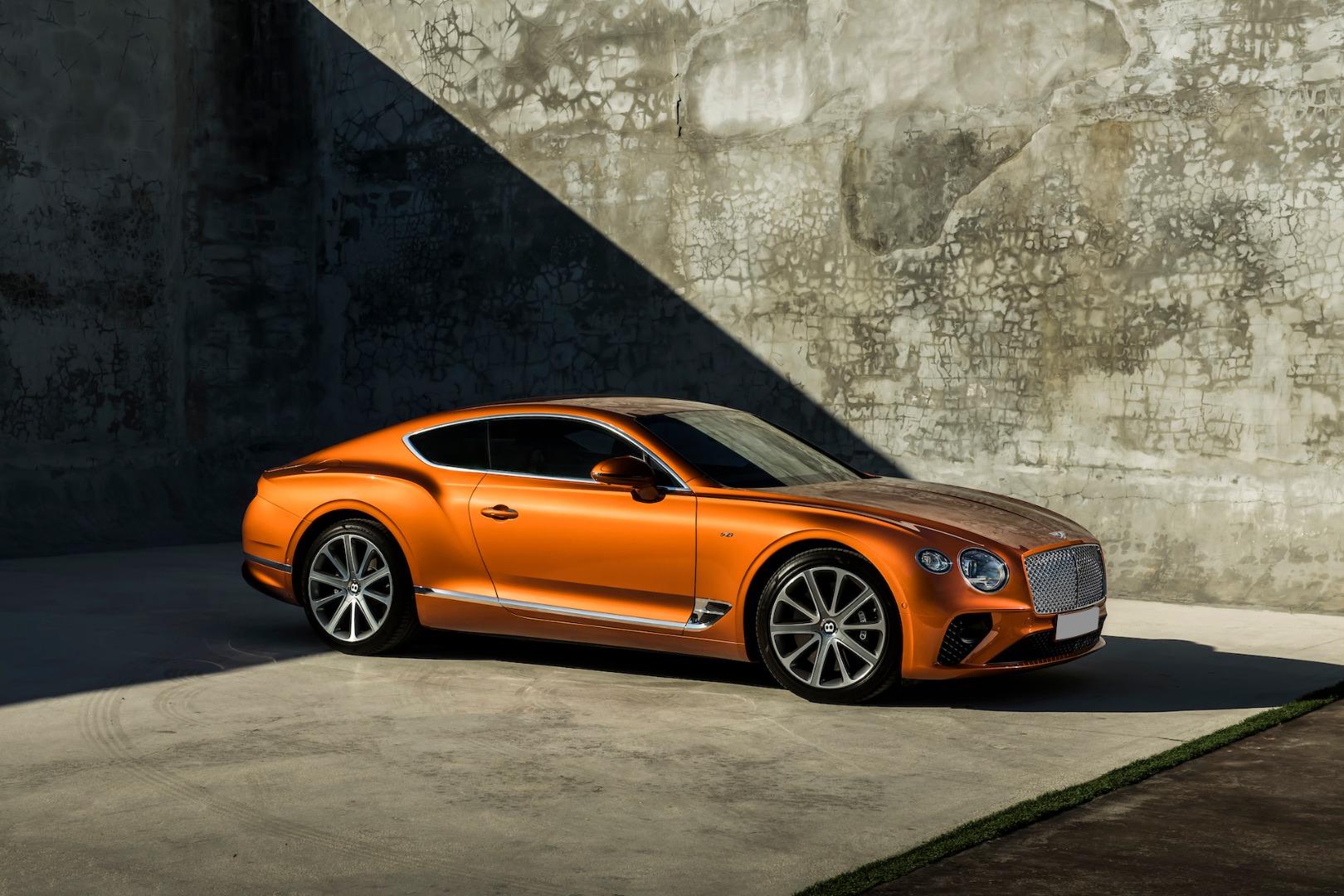
We’re not even mentioning the mundane things here. ABS, DSC, 6 airbags, ISOFIX rear child seat anchors, and a whole alphabet soup of safety abbreviations are all standard, as they should be in a car with an opening pricetag of R 3 685 000 before options and with the smaller of two engines.
No, we’ll rather focus on the clever systems under the skin of the current (third) generation Continental GT, some of which are standard, but with some options mentioned as well. Make no mistake, it takes some serious technical trickery to make (at least) 2 165 kg easy to control at speed, especially as even the least-powerful variant has 404 kW and 770 Nm to motivate that mass with considerable authority.
Related: Bentley Continental GT vs Aston Martin DB11 vs Mercedes-AMG S63 Coupé – which one is the best value for money?
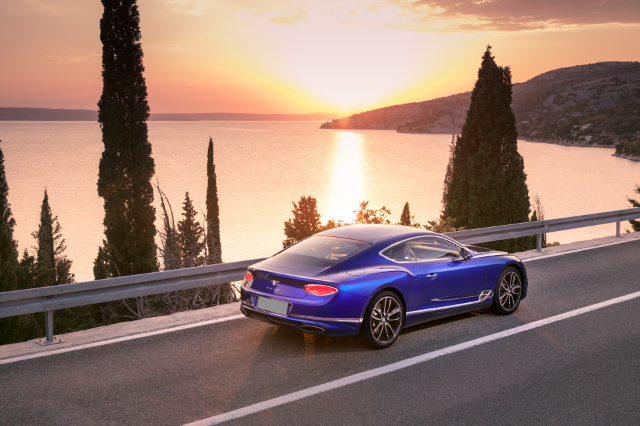
1. Sophisticated traction management
We’re not talking about a garden-variety AWD system here, even though there are numerous such systems available in the Volkswagen Group (Bentley’s parent company) parts bin. Instead, the Bentley engineers were tossed the keys to Porsche’s toy chest, from which they grabbed the second-generation Panamera’s system.
Under most conditions, 100% of the engine’s torque is sent to the rear wheels, but as soon as the control system recognises some dynamic benefit or potential loss of traction, it starts sending torque to the front. Brake-based torque vectoring manages the left/right torque split for optimised traction and safety, even in the face of 770 Nm (or 900 Nm in the W12).
And, just because they could, the engineers also programmed a controlled power oversteer protocol for the Dynamic drive mode. Because Bentley drivers apparently indulge in track days or high-speed chases...?
Related: Is the Bentley Continental GT good for new drivers?
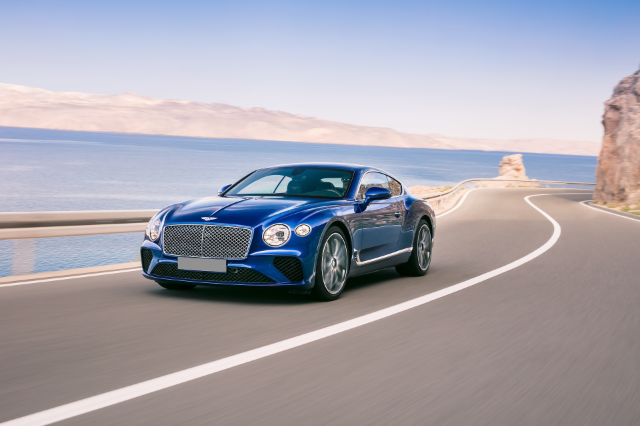
2. Active anti-roll system with 3-chamber air suspension
This combination is only found in the W12 variants (V8s make do with normal anti-roll bars), and it’s all aimed at controlling the fury of 467 kW and 900 Nm without compromising on occupant comfort. For starters, the new 3-chamber air suspension allows for variable ride height and spring stiffness (by switching various combinations of the air chambers into operation), and it also helps to control body roll stiffness.
The really trick bit lies in the anti-roll system, which is standard on the W12 and optional on the V8. Using individual 48-volt actuators to continuously adjust the stiffness of the front- and rear anti-roll bars, the Continental GT is able to respond instantaneously to road- and driver inputs, maintaining an iron grip on the road without introducing any ride harshness.
Related: New vs used Bentley Continental GT – what are the top 3 differences?

3. Gigantic brakes
This is only available for the W12 derivatives, but shows the kind of engineering “overkill” that went into the third-generation Continental GT. It’s the most-powerful steel braking system ever used in a Bentley, and its potency is only surpassed by the racing Bentleys’ carbon-ceramic systems.
The front brake discs measure 420mm in diameter, with 10 pistons in each front caliper. The rear discs are slightly smaller, but their 380 mm diameter is by no means modest, and neither are their 4-pot calipers. This makes for a total of 28 brake caliper pistons, to give the kind of potent, fade-free and repeatable braking that’s essential in a large, heavy 320+ km/h GT.
Related: Which Bentley Continental GT trim depreciates the fastest?

4. Gadgets galore
On top of such sterling active safety technology, buyers can add some more cool optional toys – some of them available separately, but many of them as part of equipment packs. One particularly impressive package is called the “Touring Specification”, and it’s designed to assist in high-speed cruising (up to 250 km/h) and in normal freeway traffic.
The adaptive cruise control gains a predictive function, whereby it monitors prevailing and upcoming speed limits, sharp turns, and the traffic up ahead (in real time), to alter the vehicle’s speed in advance of any disruptions. This package also includes a night vision system, a head-up display, and pre-collision braking, and will greatly assist in keeping the Continental GT under control at speed.
Related: Which options should you fit on a new Bentley Continental GT?

Recommended Next:
Shop for new and used Bentley Continental GT cars for sale here.