Throughout Ferrari's past, they have used a variety of monikers to indicate that the roof will come down, or even that there was no intention for a roof at all. Let us take the name Barchetta, which translates to 'little boat', which was used on models such as the 1948 166MM Barchetta of which Ferrari had no intention of adding a roof. On later Barchetta models such as the 550 Barchetta, Ferrari did add a removable soft-top that was stowed in the luggage compartment for emergencies.
Aperta which translates to 'open', is more commonly found on limited- or special-edition models such as the 599 SA Aperta or the LaFerrari Aperta. In both latter cases, the roof detaches and is also stored in areas created either behind the seats or in the luggage compartment. The Ferrari 458 Speciale Aperta, on the other hand, had an electronically controlled retractable roof as you would find on Spider models.
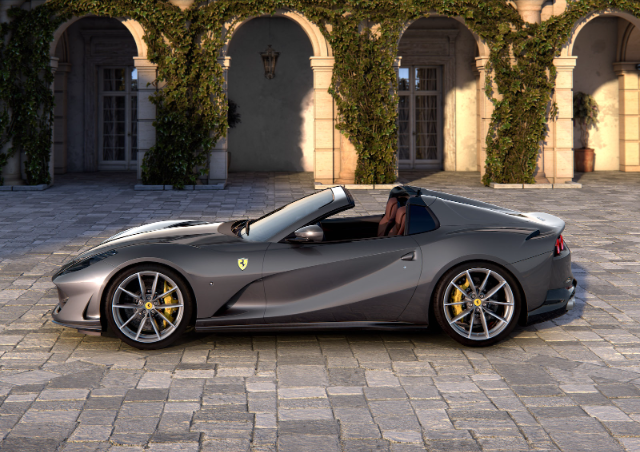
This brings us to the most common term used with Ferrari's to indicate that the roof goes down, Spider. While the term is commonplace on the mid-engined V8 vehicles such as the F8, 488 and 458, it is much more exclusively used on the front-engined V12 models. In fact, prior to the Ferrari 812 GTS, the last time Ferrari created a series-production Spider in this segment was with the 1969 Ferrari 365 GTS4 or more commonly known as the Daytona Spider.
Now that you better understand the significance of the Ferrari 812 GTS (Gran Turismo Spider) within the Italian automaker's history, let us take a closer look at the top three things you need to know about this model.
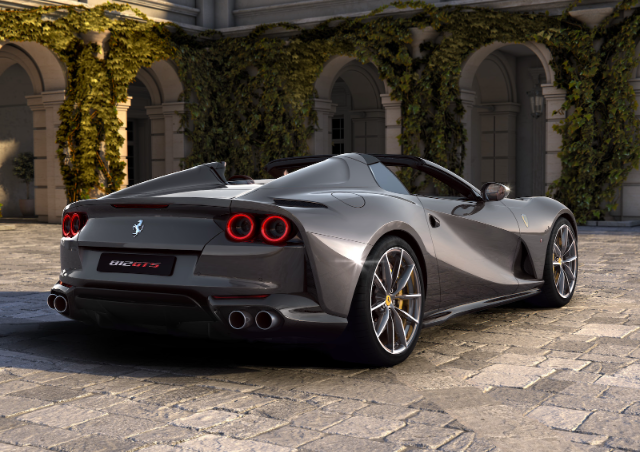
1. Design
It is no secret that the 812 GTS shares the platform and most of its components with the 812 Superfast. The 812 Superfast and GTS models replace the F12 Berlinetta and F12tdf which was the last model to be designed by the Italian design house Pininfarina. The 812 GTS like its Berlinetta sibling is the first front-engined V12 model to come from the Italian marque, designed by the internal Ferrari Styling Centre.
While most of the exterior themes between the 812 GTS and Superfast models remains, it is towards the rear where considerable styling changes happens. Instead of the fastback sloping roof, the 812 GTS features two buttresses behind the cabin under which the roof movement mechanisms are built into. The buttresses create a fastback look when the vehicle is viewed from the side but from behind, whether the roof is up or stowed, adds quite a bit of drama to the rear.
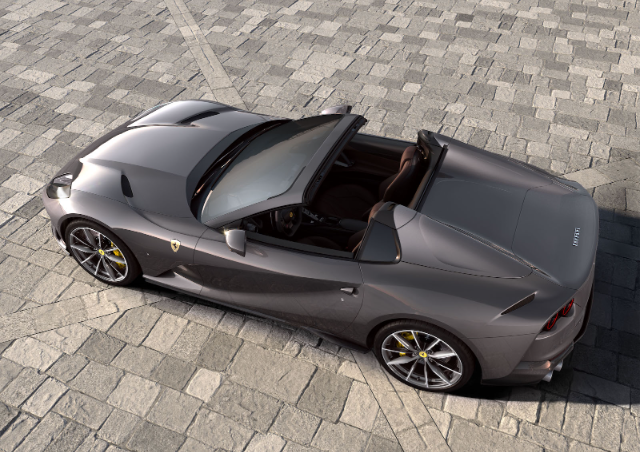
Lowering or raising the retractable hard-top roof takes place in 14 seconds and can be done while driving at speeds up to 45 km/h. The key reasons that Ferrari opted for the retractable hard-top configuration are so that it saves space in the luggage compartment and does not interfere with the cabin space when the roof is up. Other reasons are to add stability to the vehicle when the roof is up and to be able to achieve a higher top speed.
2. Dynamics
It is not uncommon for vehicles with retractable or removable roofs to lose some of the dynamics as found in the coupe variants. It is for this reason that Ferrari made one of the main aims during the development of the 812 GTS to retain the acceleration, response times and agility as in the Berlinetta.
To retain the dynamics, Ferrari integrated its electric power steering with the electronic vehicle dynamics control systems. Furthermore, the 812 GTS comes fitted with the Virtual Short Wheelbase 2.0 system, which turns the rear wheels in a similar direction as that of the front wheels during cornering to allow the vehicle to rotate quicker and as a result sees improvement in the vehicle's dynamics and lap times and mitigates oversteer.
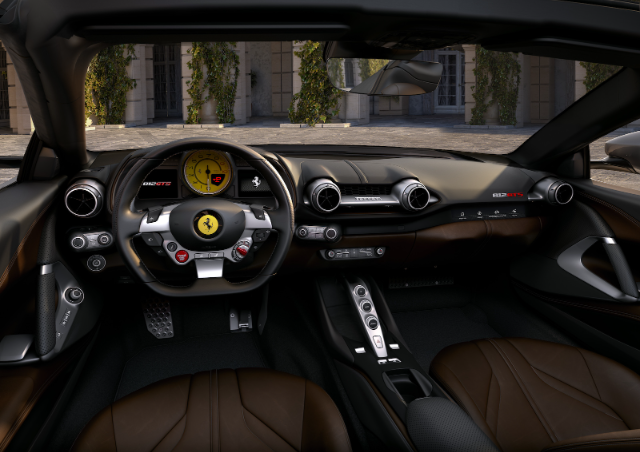
If dramatic powerslides are what you are looking for then you will be glad to know that the fifth version of Ferrari's patented SSC (Side Slip Control) system also features which allows the driver to perform spectacular powerslides while keeping the vehicle stable and giving predictable steering characteristics.
Ferrari has also built-in safety systems that are intuitive to the driver such as the Ferrari Peak Performance feature which through adapting the steering wheel torque during a corner gives the driver an indication of the grip limit. Should oversteer happen, the Ferrari Power Oversteer system, again through steering wheel torque, will provide feedback to the driver for the required wheel inputs to realign the car correctly.
3. Performance
Once again one might expect the additional 120 kg of weight, added because of the retractable roof, would greatly impact the overall performance of the 812 GTS when compared to the Superfast. However, all the improvements that have been made inside and out of the vehicle result in similar acceleration times and an identical top speed.
The 6.5-litre, 12-cylinder, petrol motor which comes in a 65° banked V12 configuration is capable of 588 kW and 718 Nm of torque. It sends its power to the 315/35 R20 rear wheels via a 7-speed automated dual-clutch transmission. This results in an 0-100 km/h acceleration time of 2.9 seconds, while the sprint to 200 km/h will be dealt with in just 8.3 seconds. As mentioned earlier the Ferrari 812 GTS has an identical top speed to the 812 Superfast which is 340 km/h.