
Top 3 things you need to know about the Aston Martin DB11
There’s a strong possibility that only those of us who regularly visit our country’s most affluent areas will ever see an Aston Martin DB11 in the metal. But its exotic status stems from more than just that stratospheric pricetag and high-tech construction: it’s properly luxurious inside, and there’s a mountain of power under that slinky bonnet. We highlight 3 things you probably didn't know about this beautiful British sports car.



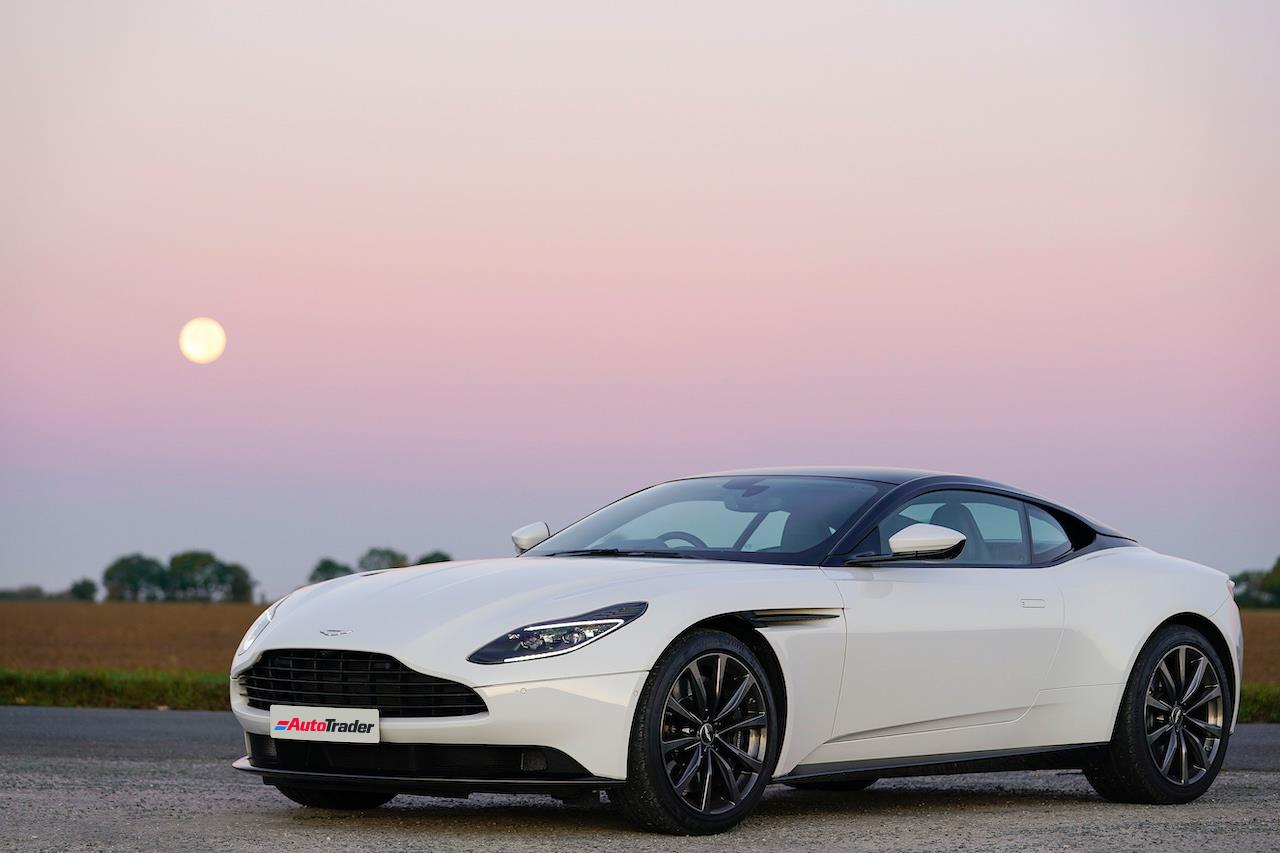
Of course, most people would be content with just staring at the voluptuous styling, and that’s perfectly logical – genuine beauty must be admired, after all. Some onlookers might also wonder about the beast lurking under that provocative curves, however, because such seductive styling likely hides some pretty special mechanical bits as well. In this case, that’s a very accurate assumption, because the DB11 is as lovely underneath as it is to behold.
Related: Get the full story about the Aston Martin DB11 in our launch report.
1. It’s held together by rivets and glue.
Don’t let this fact make you think that a DB11 is basically an upmarket kit car, though, because its construction method is very high-tech indeed. Just as its predecessor (the 2004 DB9) employed aluminium extrusions to create the body’s frame, ushering in an entire generation of Aston Martins using some variant of this “VH” architecture, the DB11 also marked the début of a new platform.
Instead of the old VH design’s extrusions, the new architecture relies more heavily on riveted and bonded aluminium sheet metal stampings. This saves weight and construction cost, and allows for more efficient space utilisation and a more rigid body. So, while the DB appears to be an evolution of the older-generation cars, it’s actually all-new and cutting-edge underneath, and will again sire an entire generation of future Aston Martins.

Related: The DB11 also has a slightly less expensive sibling. Read more about the Vantage here.
2. V8 or V12? That just depends on the size of your overdraft…
Until very recently, Aston Martin developed almost all of their engines in-house. For a niche manufacturer of this kind, this meant massive capital outlay and a constant struggle to achieve economies of scale and remain competitive against rapidly-evolving opponents – which gave rise to even higher prices and lower profit margins. The DB11 changed all of that, because it bears the first fruit of the technology-sharing agreement between Aston Martin and Mercedes-AMG, which became official in 2013.
The range-topping DB11 V12, AMR and DBS variants still employ developments of the company’s own V12 engine, though – before the DB11 arrived, it was treated to a complete make-over which saw its size reduced from 6.0- to 5.2 litres and the addition of a twin-turbo arrangement. These high-end cars have power outputs ranging between 447 kW and 533 kW, giving the V12 cars ample firepower to take on anything their opponents could lob at them.
Mercedes-AMG power is only utilised in the lower-trim V8 derivatives, but they’re not exactly lacking in the go-department, either. The engine of choice here is the 4.0-litre twin-turbo V8 from the AMG GT, which produces a solid 375 kW and saves a massive 115 kg when compared to the V12 engine. As a result, the DB11 V8 is not a huge lot slower than the V12 – a fact which prompted Aston Martin to enhance the outputs of their own V12, giving rise to the 470 kW DB11 AMR and the 533 kW iteration in the DBS Superleggera. Either way, no DB11 derivative can ever be accused of slothful progress.

3. It’s eye-wateringly expensive
A starting price of R3.5-million clearly puts the DB11 range far, far outside the range of the vast majority of new-car buyers. Want a drop-top Volante? That will be an extra R300 000, please. Don’t want to share an engine with a “lowly” Mercedes? The V12 AMR will set you back a cool R4.2-million. And those prices are before you add any options or personalisation goodies…
To be fair, even the “base” DB11 has a loaded spec sheet, although adaptive cruise control, blind-spot monitoring, and automatic emergency braking are strange omissions from the standard equipment lists – especially considering that Aston Martin uses Mercedes-Benz electronics these days. Then again, the chances are that prospective buyers will already have some luxury SUV or top-class sedan with all those gadgets for everyday use, so they likely won’t care too much that their “weekend car” doesn’t have those features. Value for money is all relative, you see…

*Pricing was accurate at the time of writing, but may change without prior notice.
Recommended next:
If your wallet is bulging too much for your liking, have a look at the new and used Aston Martin DB11s listed on AutoTrader.