The Mercedes-AMG G-Class offer customers classic good looks in a modern package as well as staggering performance on and off the road. Under the bonnet feature a 4.0-litre, bi-turbocharged, V8 petrol motor coupled to a 9-speed automatic AMG SPEEDSHIFT transmission. The combination develops 430 kW and 850 Nm of torque capable of propelling the large SUV to 100 km/h in 4.5 seconds.
Related: Which Mercedes-Benz G-Class is better: diesel or petrol?
When compared to the original Geländewagen, the current Mercedes-AMG G-Class differs in the refinement of exterior dimensions and features such as the headlamps, taillamps and grille. It is on the interior where the most changes have been applied evolving from a tough and rugged environment to one finished with stylish leather and Alcantara seats and modern instrument clusters and infotainment systems.
It is not only in the styling and comfort departments in which the G-Class have been improved on over the decades but also in the active and passive safety features department. Here are our top three.

1. Safety systems
Customers can now expect their Mercedes-AMG G-Class to offer ABS brakes with Electronic Brake Assist. Furthermore, hill-start assist, traction control and stability control feature as standard. Occupants are kept safe by no less than seven airbags, driver front, side and knee airbags. The front passenger gets front and side units and curtain airbags feature at both the front and rear of the vehicle. Customer can optionally specify side airbags for the rear occupants bringing the total to nine.

2. Driver assist system
Mercedes-AMG G-Class drivers also benefit from driver-assist systems. One of the newer additions is a lane-keeping alert system that draws the attention of the driver by sending vibrations through the multifunction steering wheel when the vehicle is crossing lanes without the indicator activated. Should the driver fail to react, the active lane-keeping assistant will automatically brake the wheels on one side of the vehicle to prevent the vehicle from unintentionally leaving its lane.
The traffic sign assist system further bolsters the safety systems through recognizing information from the navigation system as well as reading road signs via cameras and automatically applying restrictions to align with the speed limits indicated and warn the driver of hazards such as overtaking restrictions and wet conditions.
3. Bodyshell and chassis
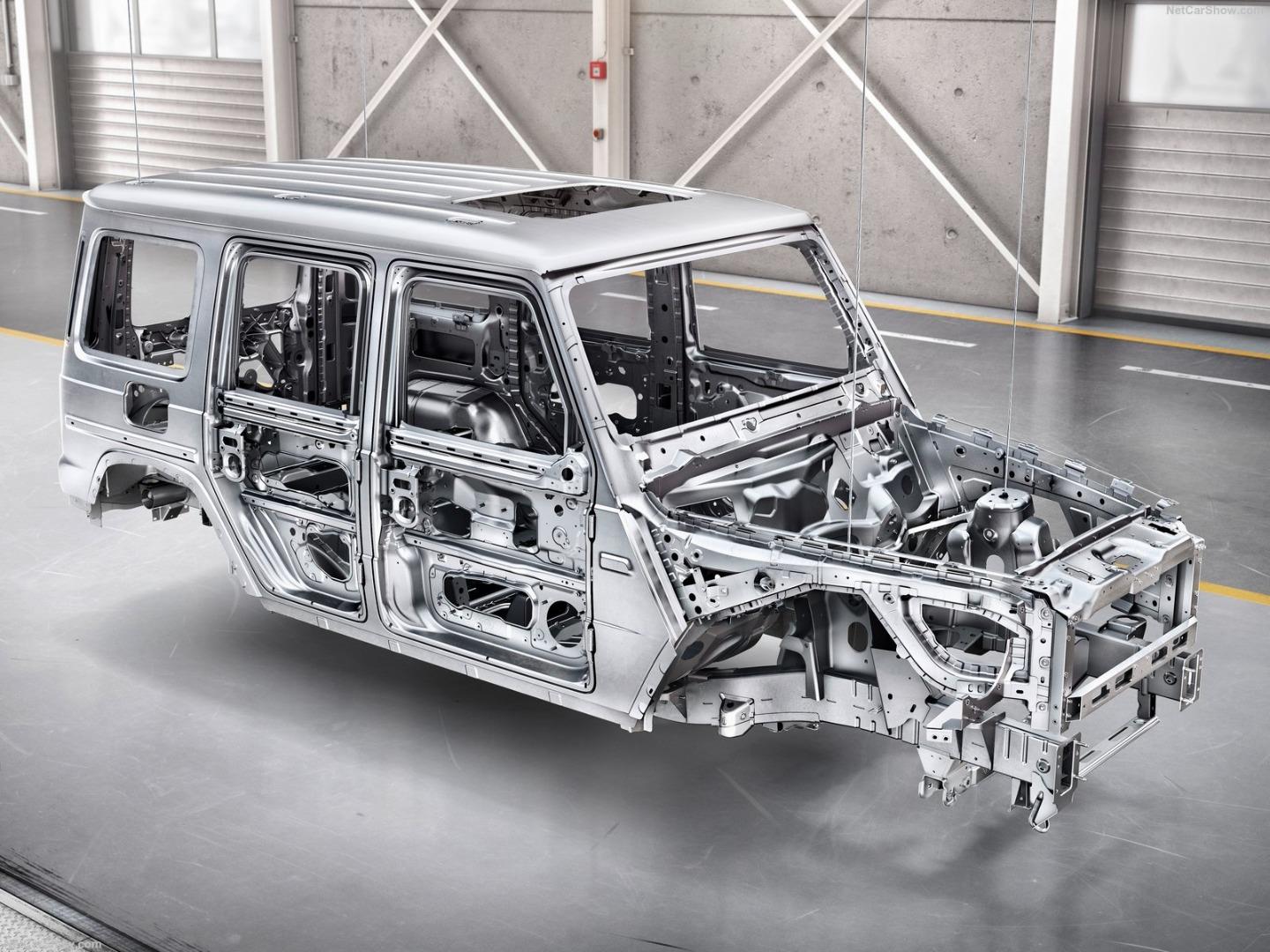
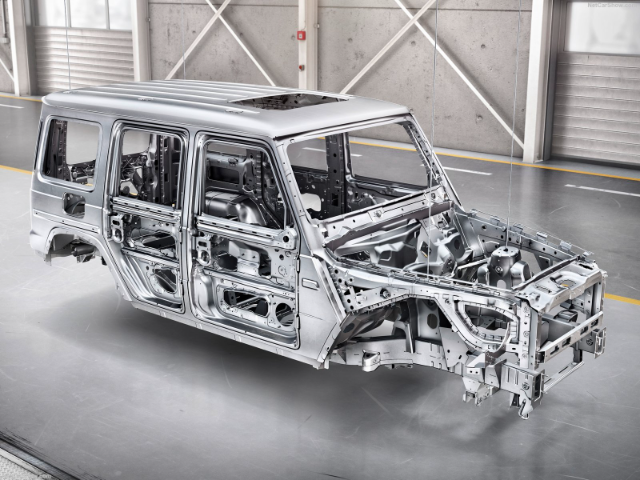
While the current Mercedes-AMG body still resembles the earlier models, the German automaker incorporated different materials in strategic areas of the body to increase strength and keep the centre of gravity low to the ground. The new body also offers a particularly rigid passenger cell that no only provide a safe space during a collision but also reduce deceleration forces on the occupants.
Hidden underneath is a ladder-type chassis which incorporates crumple zones to absorb energy and redirect forces away from the passengers. The redirecting is achieved through a special support system that sends the forces into the floor structure rather than the body.
Recommended next:
Top 3 things you need to know about the Mercedes-Benz G-class
Mercedes-AMG G-Class test drive: make sure to check these features out.