
Top 3 Ferrari FF features that stand out from the competition.
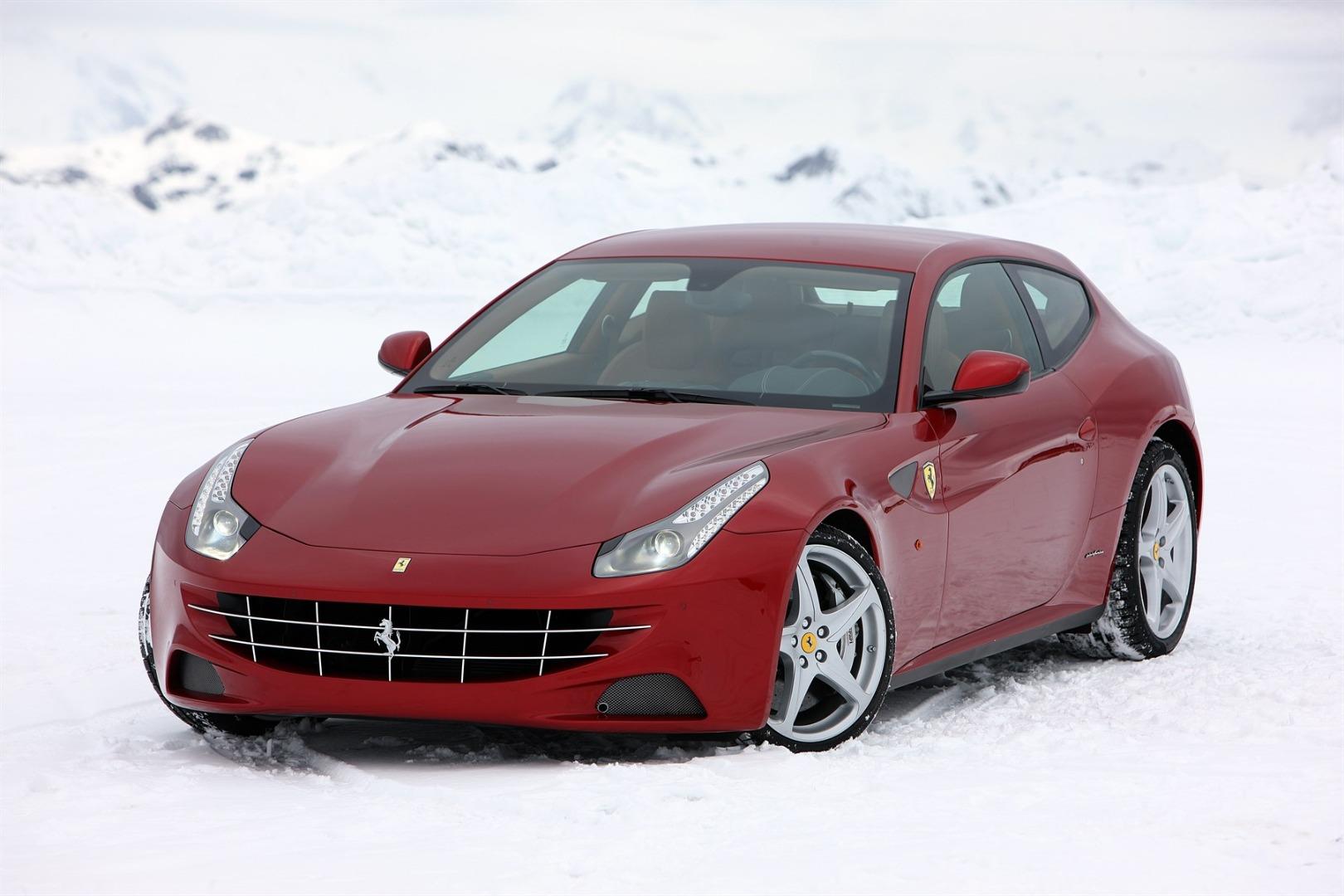
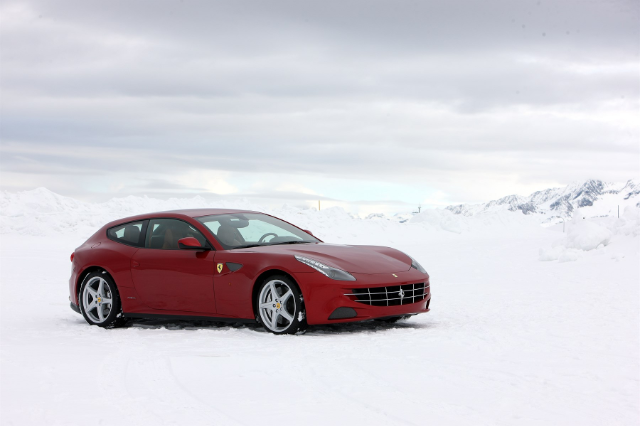
The FF isn't a sports car, it's a grand tourer (GT) and while it's somehow extremely practical, it’s also concurrently unthinkably out-of-reach for most of the population. Aside from the cosmetic beauty that makes the FF stand out, it features some rather clever engineering that grants it true all-weather performance. Let’s dig a bit into its mechanics.



1. The engine
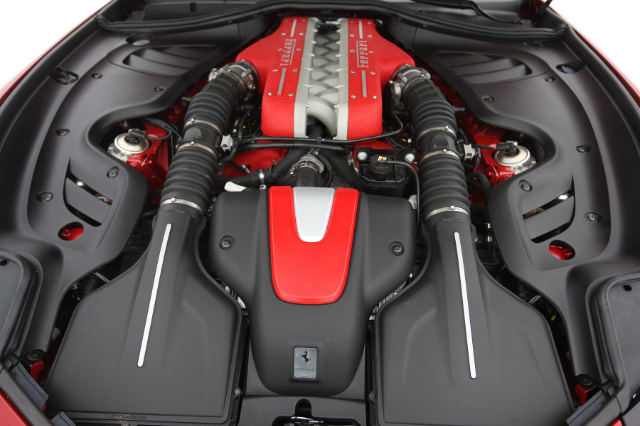
Make no mistake about it: the FF has the DNA of a thoroughbred Ferrari. It is not only sporty in the extreme but also comfortable and easy to handle. It brings a wealth of technology to the mix, starting with a completely new mid-front-mounted 6.3-litre GDI V12 that delivers unprecedented performance and responsiveness at all engine speeds: 485 kW at 8000 rpm, and peak torque of 683 Nm at 6000 rpm, of which 500 Nm is available from 1000 rpm up to 8000 rpm (virtually across the entire range), guaranteeing unparalleled versatility.
The FF has a top speed of 335 km/h and rockets from 0 to 100 km/h in just 3.7 seconds.
Its impressive figures are the result of a host of technical solutions which include high-pressure GDI (200 bar) and Split Injection Control that guarantee perfect fuel pulverization and an optimal air-fuel mix up to 8,000 rpm. The FF also has the highest compression ratio (12.3:1) in its segment and a valve system that counteracts drops in pressure and losses due to windage caused by the pumping action of the pistons. Leading-edge materials have been adopted for the pistons, seals and camshaft to minimize friction.
Additionally, the FF has a combustion control system that uses ionization currents — this boosts the engine’s power output whilst reducing both fuel consumption and CO2 emissions to levels previously unheard-of in a car with these characteristics.
Also, adding to the above is the introduction of the HELE (High Emotions-Low Emissions) and the Stop&Start systems, which cuts out the engine during short stops and then restarts it within 230 ms, optimized braking, intelligent engine fan control, constant fuel pump capacity control, and electronic air-conditioning compressor displacement control. All of these solutions combine to cut fuel consumption to just 15.4 litres per 100 km and CO2 emissions to 360 g/km, a 25% reduction on the previous Ferrari V12s.
Related: Shop through our listings for your very own Ferrari
2. Transmission and vehicle dynamics
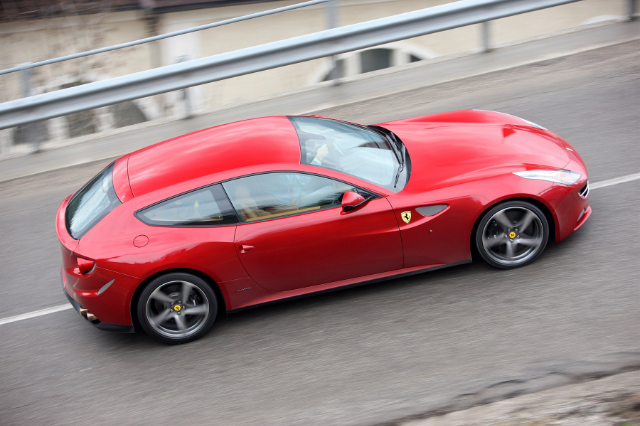
The coupling of its powerful V12 with the Ferrari F1 seven-speed dual-clutch gearbox make it a joy to drive. Owners will be able to experience its power and sophistication on all kinds of terrain and conditions too, courtesy of Ferrari’s patented new lightweight 4RM (four-wheel drive).
The F1 dual-clutch gearbox combines the unadulterated driving pleasure of a sequential gearbox with the comfort of an automatic one. Gear-shifting times have been cut to zero and the acceleration gap typically experienced with manual and electrohydraulic gearboxes has been completely eliminated.
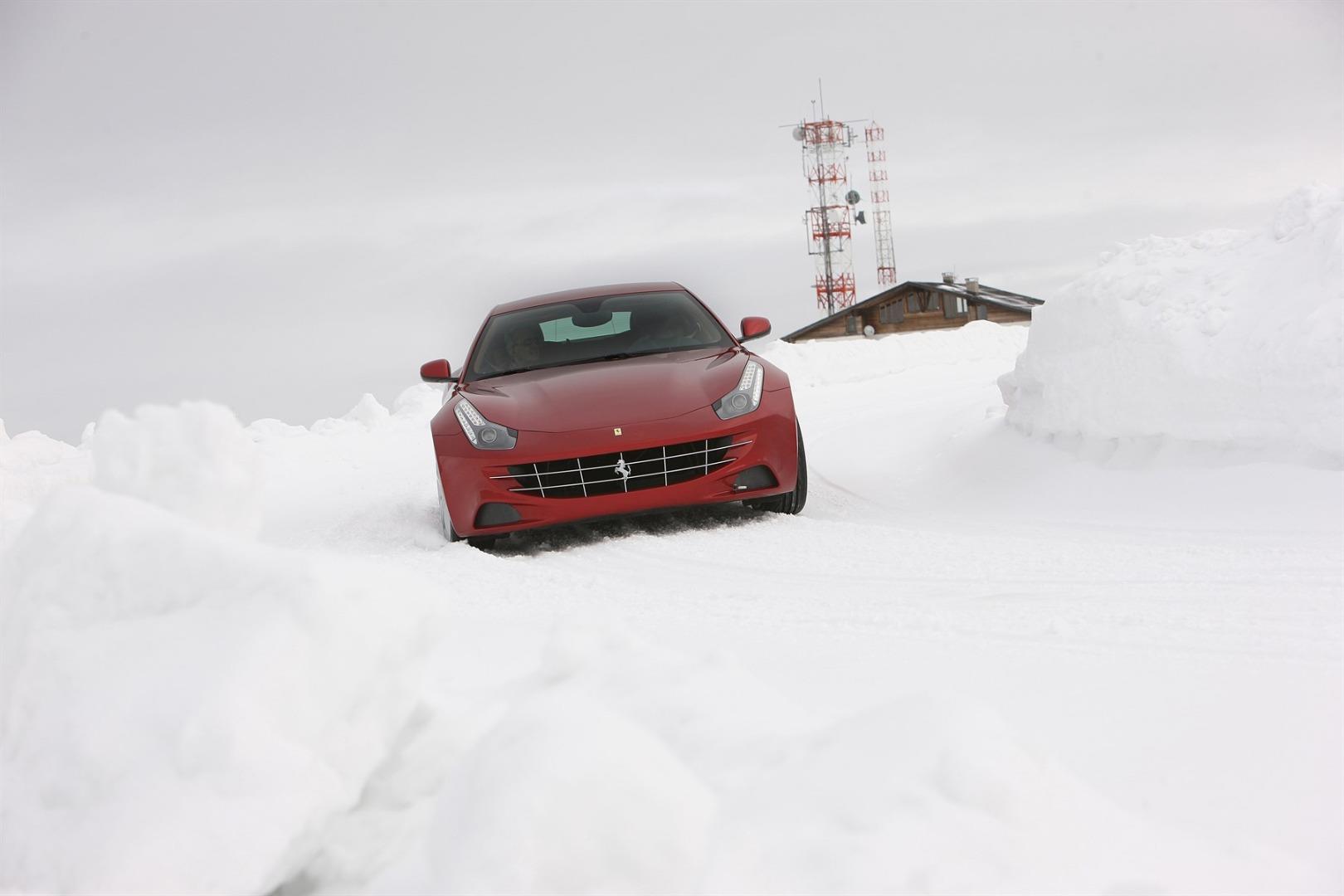
The E-Diff is now integrated into the gearbox casing itself, a solution that has helped reduce the car’s overall weight. Ferrari’s first-ever four-wheel-drive system actually shares a CPU with the E-Diff and F1-Trac. This, combined with instantaneous grip estimation on any kind of surface, guarantees perfect driveability and handling even when conditions are so poor that the rear-wheel-drive can no longer send enough power to the road. This is the kind of situation drivers typically find themselves faced with on extremely slippery icy or snow-covered surfaces.
Related: Shop through our listings for your very own Ferrari FF
3. 4RM System
The 4RM was an entirely new system that transmits torque to all four wheels of the car. A Ferrari patent, it was the main innovation sported by the FF. Unlike a conventional four-wheel drive system fitted to a front-engined car, it allowed the retention of the traditional mid-front engine architecture, with rear transaxle connected to the engine by a single driveshaft. Added to this was a new Power Transfer Unit or PTU for the front wheels, which is connected directly to the engine and located over the front axle.
This layout permits:
- A 50% saving in weight compared to a traditional four-wheel-drive system. This greatly benefits the FF’s weight-to-power ratio and thus its performance;
- A low centre of gravity to be maintained and the retention of Ferrari’s signature weight distribution with more than 50% of weight over the rear axle despite it being a front-engined car.
The PTU is the main mechanical component of the 4RM and manages the difference between the engine and wheel speeds. It also controls the amount of torque sent to the front wheels in general and distributes it between left and right as required. The PTU gets its power and torque directly from the crankshaft through a system of gearbox ratios. Two independent carbon-fibre oil-bath wet multi-plate clutch packs then vector the torque to a half shaft connected to the front wheels. Thus, there is no mechanical connection between the rear and front axles as they are linked to two completely independent traction systems. This means the FF can be rear-wheel drive-only so that none of the exhilarating driving pleasure associated with this kind of car is lost.
Lastly, the multi-disc clutches also deal with the different speeds at which the front and rear wheels rotate, and the front axle, fulfilling the function of the centre and front differentials in a traditional 4WD system.
Furthermore, the front clutches are completely independent and have torque vectoring functions to allow different amounts of torque to be sent to the left and right wheels. The amount of torque transmitted is controlled by closing the disc packs in the individual clutches.
The PTU is also very compact (barely 170 mm long) and extremely light with the result that the 4RM weighs 50% less than a conventional 4WD system.
The hydraulic gear and clutch actuation system is integrated into the PTU, as with the F1 Dual Clutch gearbox, and this delivers absolutely blistering gear-shifting times and thus improved system responsiveness.
Recommended next:
5 things you need to know about the Ferrari California T
Ferrari Portofino — Continuing the California Legacy
Watch footage from the local launch of the Ferrari F8 Tributo