
Ferrari Portofino – Continuing the California Legacy.
Ferrari Portofino – Continuing the California Legacy.


By Chad Lückhoff
In 2008, Italian supercar manufacturer, Ferrari, broke several moulds when they released the California. Touted as the entry point into the Ferrari ownership stable, the Grand Touring Coupe-convertible was the first Ferrari to feature a folding hard-top, the first to have a front mounted V8, the first to feature a multi-link rear suspension setup, the first with direct injection and the first Ferrari to feature a 7-speed dual-clutch transmission. The 2014 update to the model saw the introduction of a turbocharged power plant, along with a revised design, chassis revisions and a vastly improved interior.
Now, 10 years after the introduction of the concept, the California name has been retired and for the 2018 model year, has been replaced by the recently unveiled Ferrari Portofino.
Retaining most of the core concepts of the California, the Portofino improves nearly all aspects of the retiring model. Ferrari claims that the Portofino is even more practical, more engaging and more exhilarating than the California T it replaces, an embodiment of the Ferrari ethos.
Ferrari has endeavoured to make the Portofino more practical and better suited to daily use. With its 2+2 seating format, the Portofino has sufficient space for four adults, admittedly only for short trips, with the rear seats better suited to those with a smaller stature.
The folding hard-top is retracted in a mere 14-seconds and even in its stowed position, the boot offers a respectable amount of space. With the roof raised, boot space measures in at 292-litres, comfortably accepting three carry-on cases. The revised exhaust system, now with electronically-controlled bypass valves, provides a muted soundtrack to ensure that comfort levels are retained, even on long journeys.
This doesn't kill the experience though as, in Sport position, the F12-styled quad-exit exhausts still emit a sporty, purposeful tone, befitting of a Grand Touring Ferrari.
Underneath the hood, the Portofino retains the 3.9-litre twin turbo V8 engine found in the California T, albeit it with several notable revisions to boost the power and improve the efficiency and response. The F154BD engine features high-resistance aluminium alloy pistons and con rods while the intake manifolds have been redesigned to improve the airflow and maximise the air-fuel mixture with tumble technology.
With power bumped by 30kW (40hp) over the earlier version of the engine, the Portofino produces 440kW (591hp) with 760Nm torque on hand to propel the Portofino from a standstill to 100km/h in a brisk 3.5-seconds and onward to a top speed in excess of 320km/h – the magical 200mph mark. Mated to a 7-speed dual-clutch gearbox, the torque is limited in the first three gears with the remaining torque being metered out in the subsequent gears until the full 760 Newtons made available in 7th gear.
Thanks to the revised E-Diff 3, the Portofino is said to handle and turn-in better than its predecessor while stiffer springs and the latest version of Ferrari's magnetorheological damping system (SCM-E) improves the handling prowess of the Portofino while still managing to offer a comfortable ride, supple enough for daily use. The Portofino is now 80kg lighter than the California T, thanks to the use of sand-cast, hollow components and fewer welds. The seat structure was redesigned and crafted from magnesium alloy.
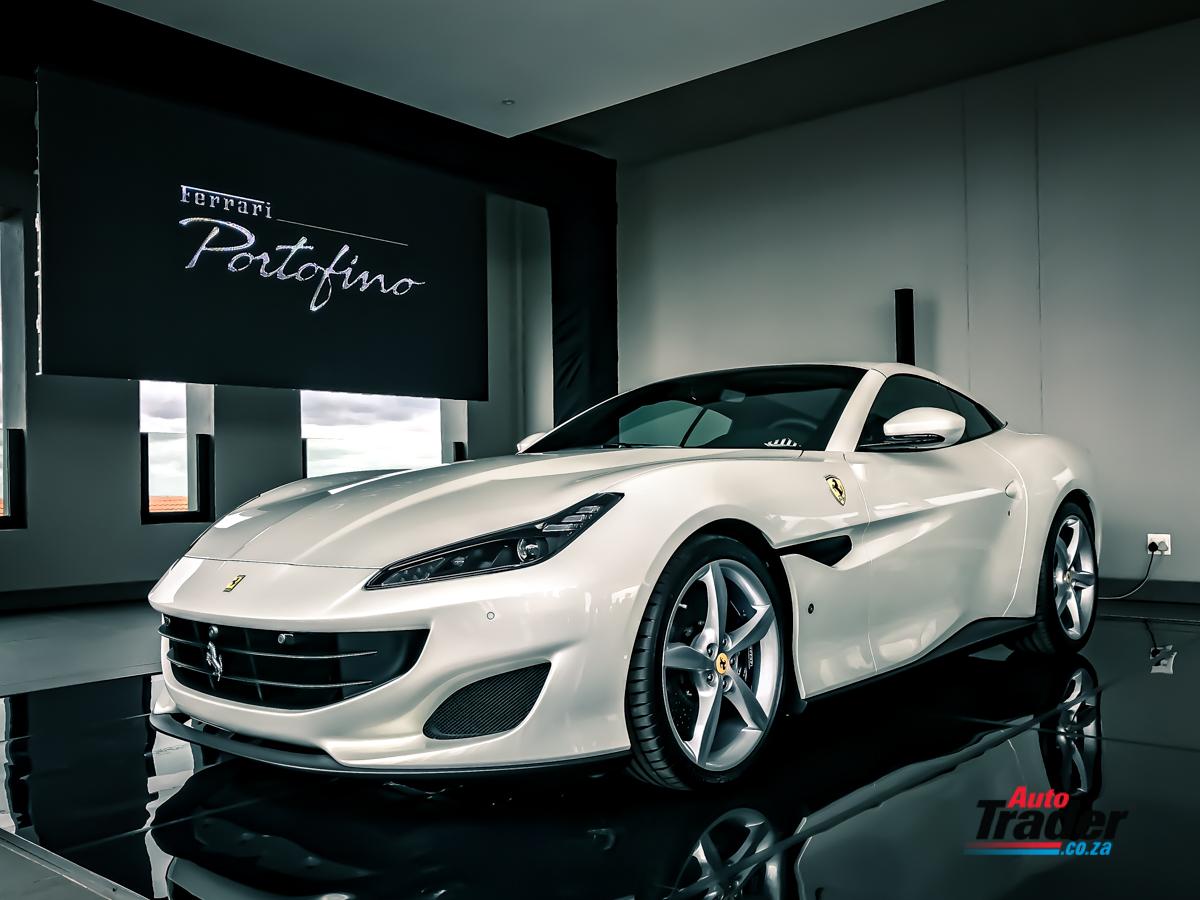
Undoubtedly the weakest part of the California, the styling, was addressed with the design of the Portofino. While the California seemed ungainly at times with awkward proportions (largely improved with the introduction of the California T) the Portofino solves many of the styling issues, the silhouette as attractive with the roof raised as it is with the roof retracted. The inclusion of two speedster-style buttresses on the rear deck with the roof retracted does well to give the impression of purpose to the rear half.
Up front, with many styling cues drawn from larger F12, the Portofino manages to retain unmistakable Ferrari DNA while being muted enough to blend into traffic and not come across as garish and brash. Elegant, classy and refined, all terms you will hear bandied about when describing the new Portofino.
A large central radiator grille is flanked by two aggressively styled air ducts that feed air to the intercoolers while the air-curtain-style intakes at the outer edges of the headlights direct air into the front wheel housings to equalise the pressure created by the wheels.
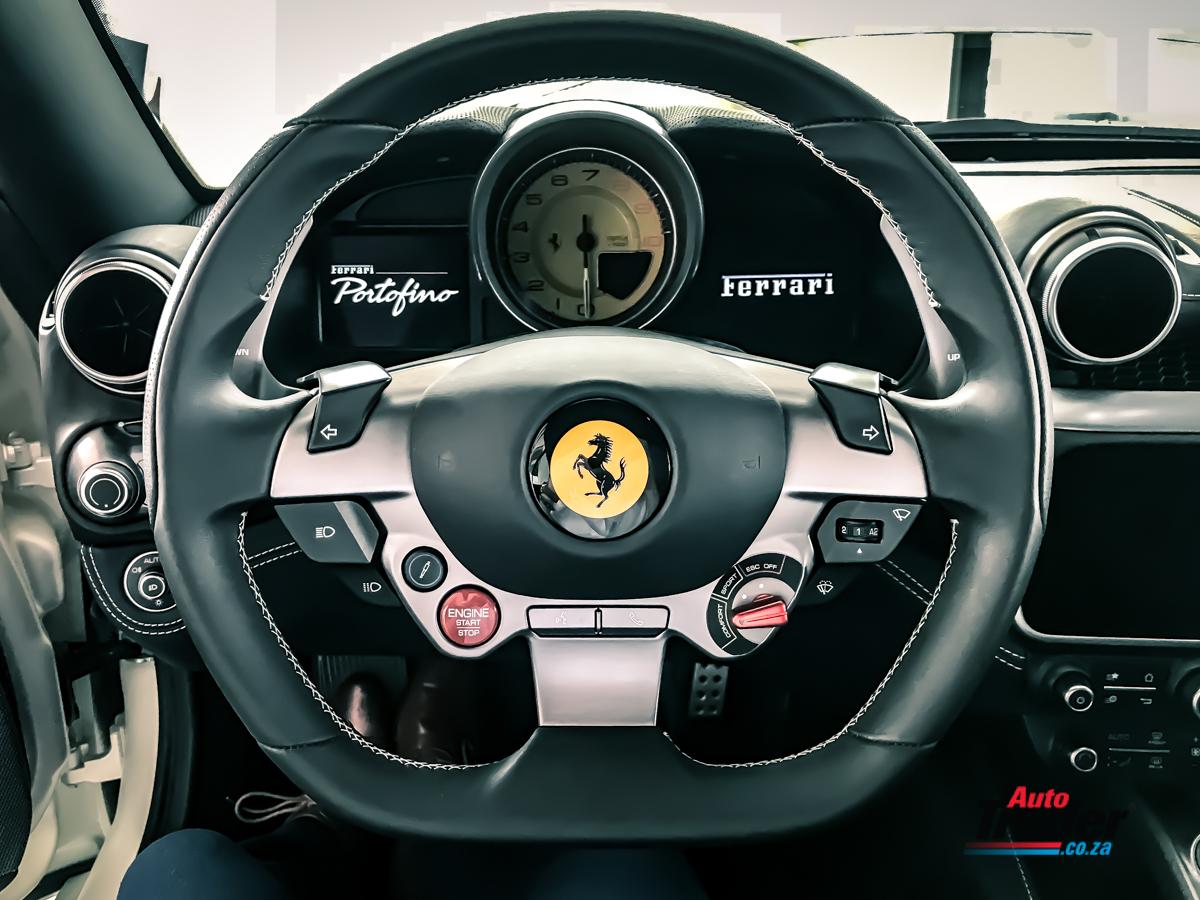
Much time was spent agonising over the interior elements with focus placed on functionality without sacrificing style and having it match the striking exterior. The handcrafted interior manages to marry high-tech components with luxurious materials, raised stitching and contrasting elements.
Ahead of the driver, the centrally mounted tachometer is flanked by two TFT displays for various display outputs, with information shared with the passenger via a dedicated capacitive display on the dashboard. This optional extra feeds the passenger with information pertaining to speed, RPM and gear engaged.
The Ferrari Portofino is expected to retail for R4 543 000 with order books open now for the delivery of right-hand drive models later this year.