
The complete guide to buying, owning and selling your Audi A3
The complete guide to buying, owning and selling your Audi A3


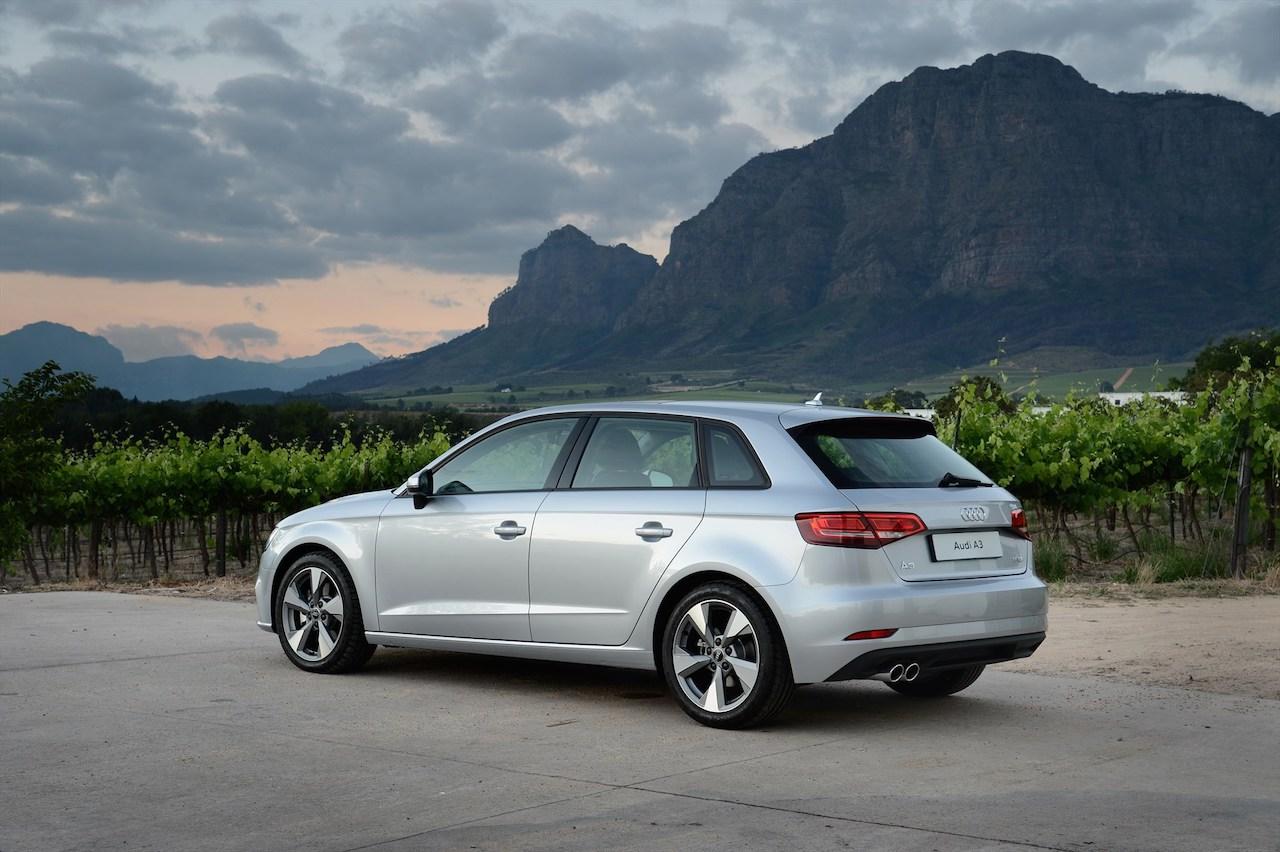


By Martin Pretorius
Having been around for 6 years, it’s possible that you might believe the Audi A3 to be a little outdated by now. However, that assumption is far from the truth. The current-generation A3 was a very advanced car at the time of its launch, and judicious upgrades have kept it fresh and competitive against some very enticing newer opponents. We take a closer look at this model range, to tell you everything you need to know about buying, owning, and selling your Audi A3.
5 key facts you should know about the Audi A3.
With the little Audi A1 slotting in at the bottom end of Audi’s model range, the third-generation A3 was allowed to grow larger and more sophisticated than before. In the intervening years, Audi hasn’t allowed the A3 to wither on the vine either, and applied a series of updates through the years. This kept it competitive in the face of ever more serious opposition from rival luxury brands.
- It’s based on the Volkswagen Group’s MQB component set, which also underpins cars as diverse as the latest-generation Polo, Tiguan, and Arteon.
- Audi’s fully-digital dashboard is a masterful interpretation of this idea, and the A3 was one of the first cars to adopt this technology. Unfortunately, it still remains a pricey option rather than standard kit.
- The cabin is ergonomically excellent and beautifully assembled from top-quality materials.
- Refinement is a common feature of all cars based on the MQB platform, and the Audi A3 is no exception. The car’s character will vary depending on the trim level and optional extras, however, which means it can be either very sporty, very comfy, or anywhere in between (especially with the optional adaptive suspension).
- Fuel efficiency is a key selling point of the A3, with real-world consumption being a particular strong suit. This applies even more to the (now discontinued) diesel variants.
Summary
Demonstrating the Volkswagen Group’s technological might from the moment it appeared, the current (third-generation) Audi A3 was the first car to feature Volkswagen’s advanced MQB component matrix. Refinement is the name of the game here, and the A3 demonstrated that it’s possible to offer traditional luxury-car comfort in a smaller package. With a wide array of engines and body styles available, there’s an A3 to suit almost anyone. Pricing ranges from R 395 000 for the entry-level "30TFSI First Edition" to R 787 500 for the potent S3 Cabriolet quattro.
Pros & cons
Pros
- Comfort and dynamic competence meets in this classy package, even if the A3 isn’t the world’s most engaging driver’s car.
- Fuel efficiency is boosted by lightweight construction, economical engines, and clever dual-clutch gearboxes.
- The cabin is just as nicely designed and well-made as you’d find in any larger Audi, and it's practical as well.
- Some driver aids are available (mostly on the options list), but newer competitors may have more cutting-edge toys on the option sheet.
- In spite of the A3 having been around for years, the styling is still fresh and attractive, if a bit subdued in comparison to newer opponents.
Cons
- Many of the really nice toys are optional, and ticking those boxes on the order sheet soon makes for a very expensive A3.
- Normal A3 variants have decent-to-strong performance, but speed freaks will be better served by the pricier S3/RS3 performance derivatives.
- High-performance variants can be very thirsty when driven with enthusiasm.
- Rear-seat space isn’t great, and the optional panoramic sunroof eats into the available headroom.
- Maintenance can get expensive on older examples, starting from the moment the Audi Freeway Plan (maintenance plan) expires.
Similar cars to the Audi A3
As the oldest car in the A3’s class, the rear-wheel drive 1 Series is due for replacement very soon. Its successor will finally follow its opponents down the front-wheel drive path, which means that the beloved BMW 6-cylinder engines will soon disappear from this model.
The brand-new and award-winning Mercedes A-Class looks great, is fun to drive, and has plenty of high-tech options. Of these three competitors, the A-Class comes closest to dethroning the A3 – but that excellence comes with a very steep pricetag.
Often overlooked but competent in its own right, the ageing V40 is one of the last old-generation Volvos still available. This doesn’t mean that it’s that badly dated, however, and it’s still very pretty, with strong safety credentials. It’s also available in a crossover-ish format (V40 Cross Country) – something none of the others can boast.
Yes, it’s a lot smaller and less practical than the A3, but it also carries a premium pricetag, modern equipment and a desirable image. It’s nowhere near as good-looking as the others in this class, though, and it’s rather expensive for the equipment and space on offer.
New vs used Audi A3
Seeing as a new A3 is essentially the same car as one that dates from 2014 (barring some periodic running changes), older A3s have most of the same appeal as new ones. However, a new A3 has one major advantage over an older one, and that’s extensive maintenance plan coverage. On a new A3, that maintenance plan runs for 5 years or 100 000 km, and having it will ensure substantial peace of mind for the buyer. The maintenance plan can also be extended at extra cost, so enquire at your nearest Audi dealer about this possibility when you buy the car.
If you plan to buy a late-model A3 with an active maintenance plan, it can be transferred to the next owner, provided Audi’s requirements are met. Once again, an Audi dealer will be able to provide details about this process. If the A3 you want has an expired maintenance plan, it cannot be reinstated at all, in which case you will be well advised to invest in mechanical breakdown insurance. This can usually be financed as part of the car’s purchase agreement.
There’s one major upside to buying an older A3, though, and that’s the initial purchase price. These cars don’t suffer from particularly steep depreciation, but their values do drop markedly once they’re a few years old. We have a horde of A3s listed here on AutoTrader, and many of them are surprisingly affordable.
Car finance options explained
Leasing:
The Audi A3 is a premium-priced product, which means that many of them will be available to lease – generally through an Audi-approved financial service provider. This is a pay-to-use deal, where the buyer pays a certain amount every month for the privilege of using the car. Lease agreements generally run for a fixed term, and most of them have an upper yearly mileage limit, so make sure that such an arrangement will fit your usage needs.
At the end of the lease period, the car is simply returned to the dealership, from where it will find its way onto the pre-owned floor. The upside of leasing is that the burden of getting rid of the used car is removed from the buyer, There will also be no further outstanding balance to settle, such as the buyer would find in a hire-purchase deal with a residual value. The downside is that the buyer will end up paying for a number of years, but have no tangible asset to show afterwards.
Hire-purchase and/or residual value:
Some dealerships and finance houses also offer different financing options, with hire-purchase transactions being the most common. In such a deal, the buyer will put down a deposit on the car and then proceed to pay monthly instalments. This will continue until the car, along with interest and finance charges, are fully paid off over a pre-determined period.
So far, so good. But hire-purchase deals have a nastier sibling, which works in mostly the same way, but with an outstanding value at the end of the payment period. Many financing deals are structured in this way, to make the monthly instalments seem more affordable, but in the longer term, these deals end up costing a lot more than they do at first glance.
The outstanding value in this transaction is known as a residual value or a balloon payment, and is usually due along with the final “normal” instalment. Most banks and finance houses will allow the buyer to finance this residual value, provided the car’s value is still higher than the outstanding amount. For this reason, many manufacturers provide a guaranteed future value for a car financed with a balloon payment, making it possible for the buyer to budget for the added cost in advance.
Average costs of running an Audi A3
While it’s impossible to accurately predict how much any car will cost to run in the short- or long term, it’s worth noting a few points:
- All new A3 variants come standard with a warranty for 1 year (with unlimited mileage), along with a maintenance plan for 5 years or 100 000 km. The remainder of both of these can be transferred to the next owner, provided the appropriate paperwork is in order. The maintenance plan can also be extended at the end of its original period, for which the owner will have to pay extra.
- Audi A3s are considered to be medium-risk vehicles by the insurance industry, for various reasons. Some model variants are high performance cars, which may make them expensive to insure, especially for younger or inexperienced drivers. In addition, hijacking and theft risks are increased on these cars, leading to an insurance risk profile being highly dependent on the car’s storage security arrangements, areas in which it travels, and even total mileage accumulated in business- or general use.
- While the diesel-engined A3 derivatives (which are now only available on the pre-owned market) are extremely frugal, the high-performance variants are surprisingly thirsty. Fuel consumption depends on the driver’s usage pattern as much as it depends on the engine’s performance, but as a general rule, high-powered variants will cost a lot more to fuel than low-power ones.
- With the wide variety of tyre sizes available for the A3, it follows that tyre replacement costs will vary accordingly. More-common (generally smaller) tyre sizes will be cheapest to replace, but exotic sizes and high-performance rubber are very expensive.
Where to buy a car
Seeing as the A3 has been around for a while, you’ll be able to find them at Audi dealerships as well as on used-car showroom floors. Cars will be advertised by individual dealerships, which may be part of larger dealership groups, or operate as independent dealers. Either way, each dealer is responsible for their own operations, and it may be a good idea to compare different deals from the various dealerships to find the most beneficial terms for your needs.
How to get the best car deal
You might be surprised to learn that buying a car often has some opportunity for haggling. Don’t imagine that you’ll get 50% off the purchase price, but you might be able to score a few thousand here or there, under some conditions:
- If the car has been standing at a dealership for a few weeks, chances are that the dealer will be willing to drop his asking price, just to get rid of old stock. This is because old (slow-selling) stock costs them money to keep around, and they may be willing to even accept a smaller profit margin, just to get rid of that specific car.
- If it’s close to a manufacturer’s year-end, there’s added pressure on dealers to sell their allocated quotas of vehicles. This means that the manufacturer might incentivise new vehicle transactions, just to meet yearly sales figures. Keep an eye open for such deals, often advertised as “cash back” or “trade assistance”, and you could just score a great deal.
- Close to the end of the calendar year, or when a model update is imminent, new cars can sometimes be bought with remarkable discounts, to clear dealer inventory of older-specification cars, and make room for fresh stock.
- Be aware that “On The Road” fees have been deemed illegal to finance, so insist that the dealer itemise those items on your invoice. Once you have that information, you will be able to negotiate a reduction in those fees.
Maintaining your Audi A3
If you buy a used A3 with an expired warranty and no maintenance plan, you can choose to have it serviced and maintained at either the Audi dealership, or at a private service centre. Audi parts are usually rather expensive from the agents, and Audi workshop labour rates are quite high as well. However, if your A3 has an active maintenance plan, you’ll have no reason to take it anywhere else.
Private workshops:
Private (or non-OEM) service centres have much lower labour rates than the agents, and they will have access to second-tier (non-OEM branded, but still produced according to OEM specifications) parts supplies as well. Fortunately, and due to its parts commonality with various cars in the Volkswagen Group, aftermarket support for mechanical components is quite extensive. Both of these factors will reduce long-term maintenance and servicing costs.
However, going the non-OEM route may adversely affect your A3’s resale value, as this also means that the car won’t have a full dealership service record. To minimise this risk, make sure that the non-OEM workshop still fills out and stamps the appropriate pages in your service records.
Potential hazards:
The A3 has been on the market long enough for most of its flaws and failings to be fairly well-known. Most of these issues relate to the older 7-speed S-Tronic gearbox, which uses a dry-clutch system instead of the 6-speed unit’s wet clutch system. Why is this important? Because the dry-clutch units tend to wear out prematurely when the car is used predominantly in heavy traffic. Repairing this is a labour-intensive exercise with expensive OEM parts, while aftermarket parts for these gearboxes are difficult to find.
It appears as if these hassles aren’t confined to specific model years, so when you test drive an automatic A3, check for proper operation of the gearbox – there should be no slip, shudder or hesitation. If there is, walk away. Apart from this potential issue, the A3 has a good reputation for reliability, provided it’s religiously serviced and maintained according to the manufacturer’s prescriptions.
Selling your car
You most likely won’t be able to get your money back when you sell your A3, even if you’ve only had it only for a short while. This is due to depreciation of movable assets – putting it simply, almost all cars lose value on a continuous basis from the moment they’re first sold. Depreciation does allow you to find beautiful low-mileage, late-model A3s at surprisingly low prices, though, so you could save a neat bundle by going for a lightly-used new car.
There are however some things you could do to get the best price for your car, when you decide to sell it.
- The first is simply trading it in on something newer or different. Taking this route will net you a lower value (trade price or thereabouts), but it simplifies the transaction, and will be a quicker process.
- Any outstanding balance on your finance agreement will have to be settled first, before the proceeds from the sale could go towards a down payment on your next car. For this reason, you should make sure that your trade-in offer (or selling price) is actually more than the amount you still owe on the car, else you’ll just end up deeper in debt than you need to be.
- Because Audi A3s are quite popular in the pre-owned market, you likely won’t struggle too much to sell it privately. This will fetch a higher value than simply trading it in, albeit with some extra effort on your part.
- Do your research: Your expectation of your car’s worth may not necessarily align with the dictates of market forces. Knowing beforehand how much a car like yours is worth in the used market will give you a better idea of the real value of your car, giving you a target for which to aim.
- Presentation is key: If you arrive at a dealership (or want to show your car to a private buyer), but your car looks like it just drove across the Kalahari or through a mud pit, it will appear as though the poor thing has had a hard life. This will make for a lower offer from the buyer. The same applies to minor dings and scratches, where a little bit of pre-sale repair work can give the car’s value a useful boost. Try to make it look as good and clean as possible - inside, underneath and out.
- Keep records: This pertains to service records, as well as any maintenance- or repair work that’s been performed on the car. If you can prove that your car was well-maintained and regularly serviced, the buyer will be less concerned about unknown flaws hiding below the surface. This should lead to a better offer when you want to sell it.