
Suzuki Ignis vs Haval H1 vs Volkswagen up! – Which one has the lowest running costs?
For those who want the appearance of an SUV, but don’t need (or can’t afford) the capabilities of a larger family vehicle, there are plenty of appealing small crossovers from which to choose. Suzuki’s Ignis, the Haval H1 and the Volkswagen cross up! are all relatively affordable, and should be cheap to run – but which one has the lowest running costs?



How can you pre-determine your car’s running costs?
When considering a car’s running costs, it’s important to look at it over the full life-cycle. This allows third- or fourth owners of older cars to get a clearer picture of possible future expenses, and it helps first owners to determine at what age their cars may become too expensive to run.
There are certain key factors which could give an idea of a car’s general upkeep requirements. This includes the length of the service intervals, the cost of replacement tyres, and the prices of service parts. For new-car buyers, the emphasis might perhaps shift more towards resale value, insurance premiums, and fuel consumption.
All three of today’s contenders are known quantities in the local market, so we can reliably extrapolate data about their running costs in both the short- and longer terms. We selected the high-trim Suzuki Ignis GLX as our baseline, and went hunting for real-life alternatives around the same price point, and then cast a critical eye on the factors which will influence their running costs.
Let’s meet the contenders!

1. Suzuki Ignis 1.2 GLX (R 216 900)
This is the higher of two trim levels available in the Ignis range, and is available with a choice of two gearboxes: a 5-speed manual (as seen here) and a 5-speed automated (clutchless and self-shifting) manual transmission. In terms of engine displacement, the Ignis falls about midway among these competitors, with a non-turbo 1.2-litre petrol 4-cylinder mill under the bonnet.
Outputs are fair for its displacement, with 61 kW and 113 Nm on tap in a very light body giving a 0 – 100 km/h sprint in a claimed 11.6 seconds and a top speed of 165 km/h. GLX trim is quite plush for the price, with a colour touchscreen infotainment system (with smartphone mirroring), LED headlights, electric windows all round and keyless entry with pushbutton engine start all featuring on the standard equipment sheet.
Related: We review the Suzuki Ignis. Is it an urban warrior or just another cute ute?

2. Haval H1 1.5 (R 202 900)
This is the oldest model in Haval’s local model range, and can trace its ancestry to the earlier GWM H4 and GWM Florid Cross, with a liberal sprinkling of Toyota genes in its origin story – it’s derived from an older Toyota supermini, and shares mechanical bits with a host of small Toyotas. Turning the old Florid into the H1 happened by way of a substantial facelift, to become first the GWM H4 before moving to the Haval brand as their entry-level H1. It’s a rather larger car than either of these opponents, and also quite well-appointed for the price, although it can’t match the Suzuki’s long list of standard features.
Motive power is provided by a 1.5-litre, non-turbo 4-cylinder engine with a claimed 69 kW and 130 Nm on tap. The power goes to the front wheels through a 5-speed manual gearbox (there is no automatic option), and gives a claimed 0 – 100 km/h sprint in 10 seconds and a top speed of 170 km/h. But, while the Haval H1 looks suitably butch with its fender extensions and faux skid plates, it’s still a city car at its core.
Related: The top 4 Haval H1 features that stand out from the competition.
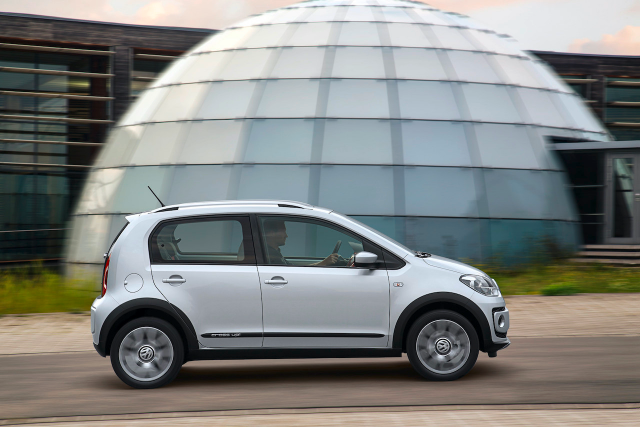
3. Volkswagen cross up! (R 214 900)
This is the smallest car in our trio and it has the smallest engine, but it also carries the most popular badge here. Under that stubby bonnet is the same drivetrain as you’d find in any other up!, with a 1.0-litre non-turbo 3-cylinder sending 55 kW and 95 Nm to the front wheels through a 5-speed manual transmission.
Interestingly, it’s not the lightest car here (that honour belongs to the Suzuki), but its kerb weight of only 886 kg is still light enough to deliver decent enough performance (albeit quite far behind the other two): the 0 – 100 km/h sprint is run in a claimed 13.5 seconds, and it maxes out at 173 km/h. Like the other two contenders, the cross up! is dressed in faux-by-four cladding and has an elevated ride height, and its standard equipment is roughly on par with that of the Haval H1.
Related: Check out our review of the Volkswagen up! here, to find out if it is the ultimate new budget car.
Which one has the lowest running costs?
Purchase price and depreciation

Seeing as the Haval H1 is the least-expensive car in this group, it starts out with an immediate advantage in finance repayments. Up next is the Volkswagen cross up!, with the Suzuki Ignis GLX being marginally the most expensive car here. However, this order is reversed when it comes to resale value, where the Volkswagen will retain more of its value in both the short- and the long term. The Suzuki Ignis isn’t far behind, though, while the Haval still struggles with a lack of brand recognition among second-hand buyers.
Instalment calculator
*Calculated according to the AutoTrader Car Finance Calculator, with a 72-month finance agreement, 10% interest rate, 10% deposit, and no residual value. List prices were accurate at the time of writing, but may change without prior notice.
Haval H1 1.5:
List Price: R 202 900
Instalment: R 3 383/month
Volkswagen cross up!
List Price: R 214 900
Instalment: R 3 583/month
Suzuki Ignis 1.2 GLX:
List Price: R 216 900
Instalment: R 3 616/month
With their list prices so closely stacked, it’s to be expected that the repayments are very similar as well. However, the Haval will cost R 233 less than the Suzuki to repay every month, which may just be enough of a difference to sway a buyer’s decision in the Chinese offering’s favour.
The price difference between the Ignis and the up! is much smaller, and amounts to only R 33 per month – possibly a small enough difference to justify buying the larger and better-equipped Suzuki instead of the Volkswagen. The victory in this department has to go to the Haval, however, because it’s bound to cost less every month, right from the outset.
Related: Which new cars depreciate the fastest?
Fuel efficiency
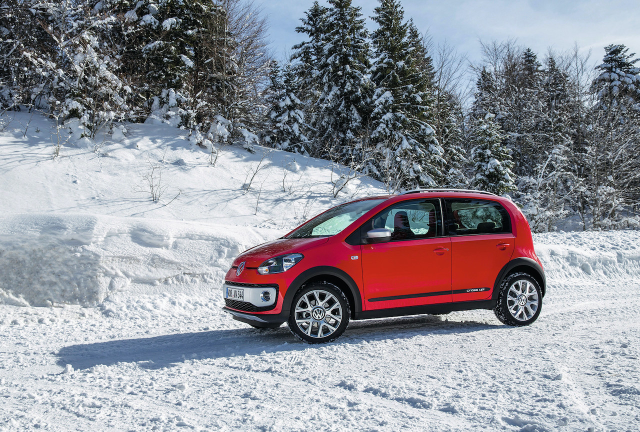
With a claimed average consumption of only 4.7 ℓ/100 km, the Volkswagen cross up! walks away with the overall fuel efficiency crown. The Suzuki Ignis is claimed to use slightly more than the up!, but its claimed consumption figure of 5.1 ℓ/100 km is highly commendable in itself, especially considering its space-, output-, and performance advantages over the cross up!.
Having the largest and heaviest body here, along with the largest and most powerful engine, counts against the Haval H1 in the economy stakes. Its claimed average consumption of 7.2 ℓ/100 km is quite far off from the numbers returned by the other two cars, and this officially-stated consumption disadvantage of around 35% will definitely have a negative impact on ownership costs.
Related: Top 5 tips to improve your car’s fuel efficiency.
Warranties, maintenance plans, and service intervals

Both the Suzuki and the Volkswagen have warranty coverage for 3 years, but the up! extends its warranty coverage to 120 000 km instead of the Ignis’s 100 000 km. This difference is however largely academical, because the chances of such city-focused cars racking up more than 60 000 km in the 3-year warranty period are very slim.
By contrast, the Haval has the strongest warranty of this bunch, with coverage for 5 years or 100 000 km – roughly in line with the industry average of 20 000 km per year. This hands the Haval a victory in the warranty arena, quite far ahead of either of the other two contenders.
The H1 also has the best service plan here, with coverage for 3 years or 45 000 km being half as long again as the Ignis’s 2-year/30 000 km plan. The Volkswagen comes stone last in this category, because it doesn’t offer a service- or maintenance plan of any description as standard. Should the buyer be prepared to pay extra, the cross up! can be specified with either a service plan or a comprehensive maintenance plan, offering coverage for up to 5 years or 210 000 km. However, the absence of a standard plan still counts against the cross up!, and relegates it to third place here.
Related: What is covered under the Haval H1’s manufacturer warranty?

Post-warranty servicing is likely to be relatively painless for all three cars, but for different reasons. Finding service parts for the Haval will be quite easy, because many of its mechanical bits are interchangeable with older Toyota items. The Volkswagen will have the strongest aftermarket support, and with the Ignis’s powertrain and platform being used across a wide swath of the Suzuki range, most mechanical bits should be easy enough to obtain.
Collision repair items will be a different kettle of fish, though. Because all three cars are imported, body parts will be more expensive than for locally-manufactured alternatives. The Haval scores some surprise points here, with a comprehensively stocked parts depot, and many body parts easily obtainable from the far East (from non-OEM suppliers as well as OEM channels).
It then becomes a matter of finding the nearest parts supplier, or ordering components directly from Haval themselves. Meanwhile, the Suzuki’s LED composite headlamps are unique to this model, and cost quite a packet to replace after a fender bender.
That said, the Volkswagen’s aftermarket support hands it a win in this category: there are a plethora of VW specialist workshops scattered all over the country, and because the up! also uses many parts from a larger corporate parts bin, there’s a greater chance of commonality with other VW Group products.
Insurance

None of these cars are considered to be a high theft risk, and thanks to their relatively small pricetags, their replacement values aren’t especially high. In the long term, the Haval’s steeper depreciation will lead to shrinking insurance premiums (provided the insurance terms are regularly updated to correct for dropping replacement values).
Conversely, the up!’s higher value retention may mean that its insurance premiums remain higher for longer, and the same applies to the Suzuki Ignis. Also remember that insurance premiums vary widely, and depends on factors like the driver’s risk profile, when and where the car is driven, security arrangements where the car is stored, and the mileage accrued on the vehicle.
Related: Is it better to buy insurance from a broker or go direct?
Tyre replacement
Standard tyre prices play a significant part in any running cost evaluation, but it’s not always a given that smaller tyres will be less expensive – if they’re less commonly used, they might be harder to find and more expensive to replace than larger tyres which are in wider use.

The Haval H1 comes standard with 16-inch alloy wheels, and uses 205/60R16 tyres. Visiting a local tyre retailer’s website soon revealed that, while this size is quite common (with 13 different replacement options), it’s not exactly cheap. The least-expensive tyres listed in this size costs R 1 295 per tyre, and the most-expensive ones run past R 3 000 per tyre. Ouch. The single upshot is that the H1 has quite modest performance, and doesn’t really need high-performance premium-brand tyres to remain safely driveable.
Next up is the Volkswagen cross up!, which uses 185/50R16 rolling stock. The same tyre retailer gave us a selection of exactly zero options, so we enquired at another countrywide chain, only to get the same result. We eventually tracked down some replacements at the not-inconsiderable price of R 1 700 per tyre. If tyres are this difficult to find, the chances are that they will be expensive when you do encounter replacements. The Ignis GLX’s 175/65R15 tyres are almost as difficult to obtain, but at least shows one replacement option at the second retailer, for around R 900 per tyre.
This reasonable price doesn’t reflect the difficulty of finding replacement tyres for the Suzuki, though, means that it has to slot into second place in this department – behind the Haval, but ahead of the Volkswagen.
Related: How long is a tyre supposed to last?
Verdict
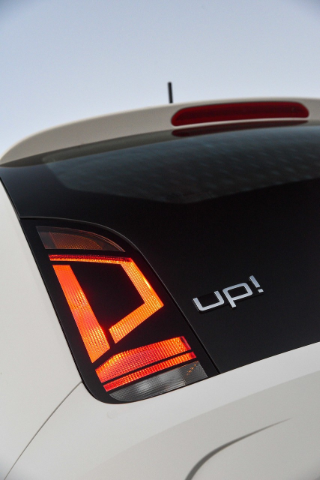
The first casualty is the Volkswagen cross up!, based partly on its projected higher insurance premiums and odd-sized (and expensive) replacement tyres. Adding to its woes is the lack of a standard service plan, meaning that service costs will start mounting from the outset. In mitigation, projected higher resale values, lower fuel consumption, and stronger aftermarket support will make up some of this lost ground, however, likely turning the cross up! into a better longer-term running cost proposition.

The Haval H1 ends up in the second position here, on account of its stronger warranty, lower purchase price, cheaper tyres, and service plan. Sure, it will lose value more quickly and use more fuel along the way, but the base price difference and fixed-cost motoring for the first 3 years means that it starts out with a notable advantage. Projected cheaper long-term insurance should largely compensate for its greater thirst and steeper depreciation, and its mechanical maintenance is likely to be reasonably affordable as well.

The Suzuki Ignis scored middling results all along, but its spread of attributes is wide enough to net it the first place in this running cost comparison – at least in the short term. Longer-term ownership is likely to be similar to that of the Volkswagen, however, where both the cross up! and Ignis will really start reaping the benefits of their more-frugal fuel consumption.
Recommended Next:
Shop for new and used Suzuki Ignis cars for sale here.