
Suzuki Ignis: Urban warrior or just another cute ute?
Suzuki Ignis: Urban warrior or just another cute ute?



By Martin Pretorius
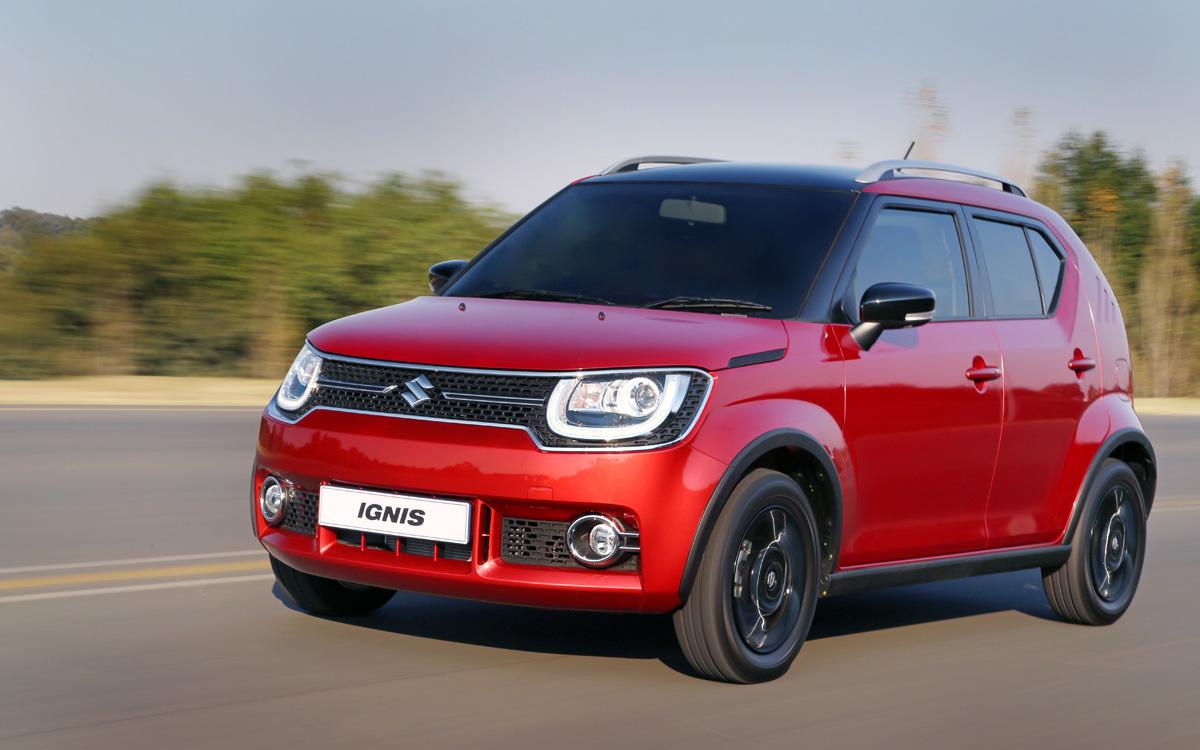
“That's such a cute little car!” If I had a Rand for every time someone said something like that to me over the Ignis's 4-week stay in my driveway, I'd have almost enough money for a Big Mac Meal. It's quite amazing that a humble little city car could draw so much positive comment from strangers, and then impress friends and family to a similar degree once they've had a turn in the passenger seat as well. If first impressions could translate to new-car sales, the Ignis is bound to be a roaring success.
But there's more to the Ignis than meets the eye. At first glance, it's just another boxy little car with faux-4x4 add-ons in the form of aluminium-look roofrails, blacked-out wheels, and borderline comically flared fenders, but there's some really clever thinking going behind that smiley face with its LED daytime running lights.
It's really well-packaged.
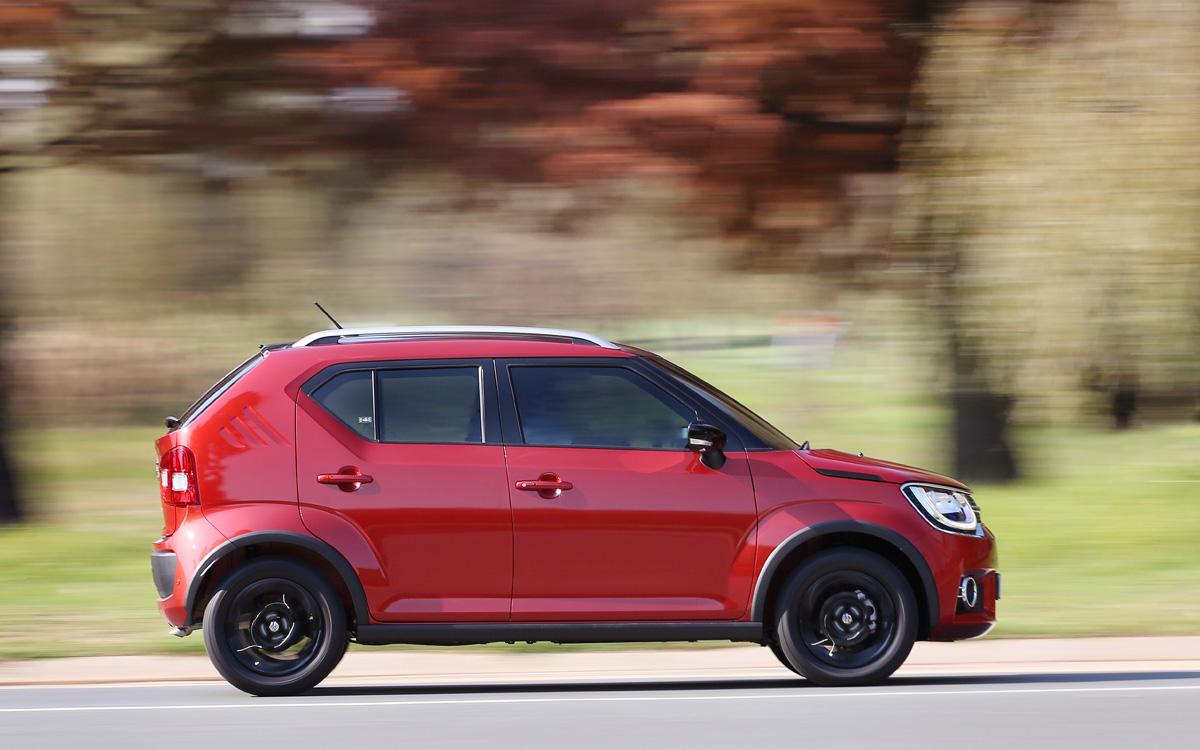
Ignis proportions are unusual among city cars, appearing relatively wide and tall in relation to its length, which should theoretically allow for quite a spacious cabin. Fortunately, theory and reality agrees on this point, for the little Ignis has quite an amazing amount of interior space, and a boot which swallows a surprising amount of stuff.
While the cabin is too narrow to allow comfortable three-abreast seating on the rear bench, the two full-sized adults who will easily fit in the back will have plenty of head- and legroom, even with equally-sized adults occupying the front seats. Four 6-footers? No problem!
And while the luggage compartment isn't very long, it is very deep and quite wide, leading to a rated capacity of 250 litres. Oddment stowage isn't a problem either, as there are plenty of cup holders and a rather large glove compartment to go with a selection of door- and dashboard pockets. It's quite amazing how much chattel you can actually fit into a car this small.
It's cleverly-made, too.
High-strength steel is used extensively in the body shell's construction, leading to a stiff centre section which doesn't weigh very much. In fact, the Ignis tips the scales at a featherweight 850 kg – and that light body weight plays a large part in making the little car's overall performance and efficiency possible.
Overt weight reduction is visible all over – not that it's stripped down to a husk, mind you. It's simply very clear that the engineers paid close attention to keeping the Ignis as trim as possible. The light-feeling doors and thin plastic trim panels are just some of the clues, but it's all very well-assembled and should prove to be quite hardy.
Practicality rates highly.
Looking at the interior with its white lower dashboard and door panels, you'd think that it would show dirt very quickly. You'd probably be correct, but that won't really matter, because the white pieces are made of hard, textured plastic, which will wipe clean with a bit of Handy Andy with no ill effect. The same applies to the black dash top and door caps, except that their colour won't show dirt as readily.
If the black-and-white interior scheme sounds like a bit too much, there's more. The interior door handles and centre console edges are trimmed in smooth, body-coloured plastic, bringing the colours on the dash up to 3. The combination might not be to everyone's taste, but the white trim does lend an airy feel to the cabin, while the body-colour inserts add a splash of youthful appeal.
The kit level is quite impressive.
By now, you will have realised that the Ignis prioritises utility and pragmatism, but that doesn't mean that it has to be primitive or barren as well. Standard equipment on the GLX variant includes keyless entry with push-button start, power steering, automatic air-conditioning (climate control), LED headlights, a Bluetooth- and USB compatible audio system with steering wheel-mounted controls, electric windows all round, folding rear-view mirrors, and two airbags. Not bad for a little budget city car!
An optional touch-screen audio/navigation system is also available, but previous experience with this system in a Baleno calls the need for that into question: we have navigation on our phones already, and the basic audio system is surprisingly potent as it is, so it's probably not worth shelling out the extra money for that upgrade.
The drivetrain is excellent.
While the engine's specifications are nothing spectacular on paper, driving it reveals a peppy little mill with an even torque spread and rev-happy nature. There's no turbo charger or direct injection, and the variable valve timing only operates on the inlet cam, so outputs are quite humble in today's era of turbo torque. It churns out 61 kW at 6000 r/min, and 113 Nm only becomes available when the rev counter shows 4200 r/min, so it's really no powerhouse. Mind you, its outputs are still competitive with other, similarly-sized city car engines.
The gearbox has equally humble specifications, being a 5-speed manual, but its operation is a joy. Gearchanges are slick and positive, with a short throw and smooth action, and the clutch has a nicely progressive take-up. Combined with fairly closely-stacked gear ratios, it encourages the driver to row the gears to keep the little engine singing. And even with such enthusiastic (read: unsympathetic) treatment, the absolute worst fuel consumption anybody is ever likely to see on real roads is around the 5.5 ℓ/ 100 km mark.
The performance and handling are.... not quite what you'd expect
While the engine isn't endowed with masses of power, the Ignis's lightweight build helps it get along quite decently, even at Gauteng altitudes. It won't win any traffic light Grands Prix, but it still steps smartly off the line and picks up speed with an eagerness which recalls the best Italian city cars of years gone by.
Only on the freeway does the little engine start feeling a little breathless, meaning that overtaking needs to be planned well in advance, but again, as long as the driver is prepared to stir up the gearbox, progress will be satisfactory if not particularly enthusiastic.
But where the Ignis is out of its element at high speeds, it comes alive at lower speeds. The handling balance is quite neutral, with no hysterics from either end at the cornering limits. Again, the light weight helps here, with the reduced inertia it brings playing quite nicely with the comparatively skinny 175-section tyres. Not really sporty, but eager enough to give you the occasional smile. The only dynamic quirk is a vagueness around the straight-ahead at freeway speeds, which leads to a slight wandering effect while cruising.
So is it a crossover or an SUV or a city car?
The correct answer is “City Car”. Yes, there's a slightly raised underbelly to increase ground clearance to 180 mm (about 50mm more than other cars of its ilk), but the absence of all-wheel drive or long-travel suspension means that the Ignis won't do any off-roading more intense than a foray to the nursery.
It's also not an SUV, because while its packaging is really clever, it's still not flexible or roomy enough to really deserve that title. And that's all fine, because that extra ground clearance leads to a remarkably smooth ride (for such a small, light car), and adds the ability to deal fearlessly with speed bumps and potholes.
As it stands, the Ignis is one of the finest, most user-friendly and economical city cars on the market, and in such a tough field, that's quite an accomplishment in itself. With all its virtues, that R189 900 pricetag (in GLX trim) actually seems like a bit of a bargain for a thoroughly contemporary, well-made and well-equipped city slicker.