Since its introduction globally in 2010, the Renault Duster has been one of those SUVs that capitalised on the crossover SUV made-for-adventure trend. Since then, the Duster has been a smash hit, particularly in 1.5DCi trim, where many buyers praised its frugality and perkiness. In 2025, the Duster received an update, and while the looks are more muscular, it has an eco side to it, too. With the ever-stewing competition, does the Duster still hold a candle to the other adventure crossovers that have become prominent?
Related: New Renault Duster (2025) launches this week
For this first drive impression, we sampled the Duster in 4x4 1.2T Hybrid Zen trim for the 2 days we spent in the Western Cape.

Styling
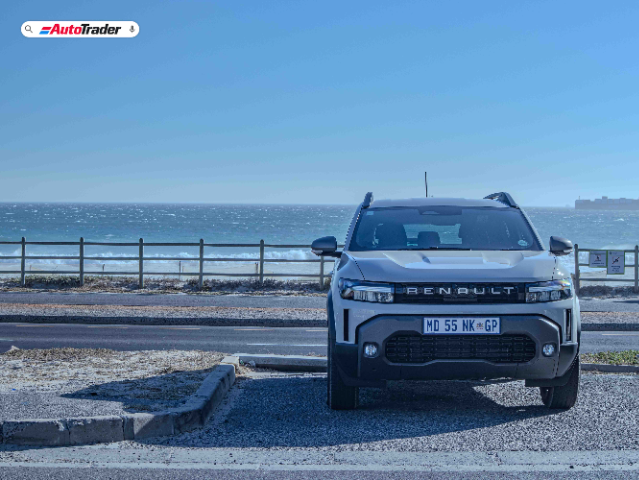
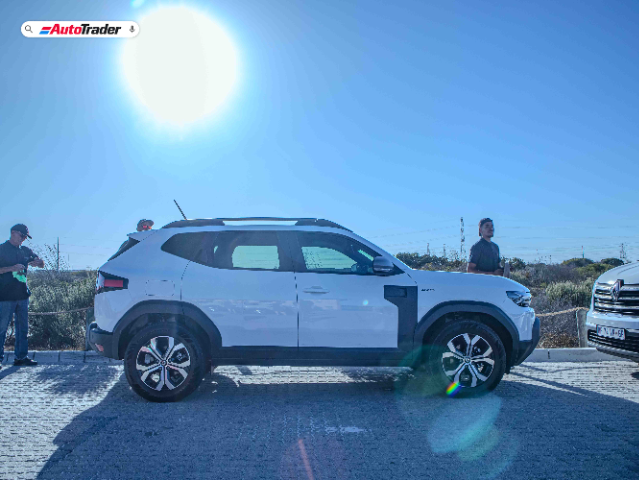
The first thing that hits you about the new Duster is how muscular the vehicle looks compared to the outgoing model, which was a bit softer in its design cues. The bulging body features like broad fenders and a sculpted bonnet will catch your eye. In front, the grille is more prominent, rectangular headlights that house a Y-shape LED pattern flank Renault lettering, something you tend to see in modern offroad orientated vehicles these days instead of Renault's diamond logo, which you'll see on the tailgate. Speaking of, the Duster is one of the first vehicles to use Renault's updated logo. You'll find mass-dyed front and rear skid plates and side underbody protection. Along the side, your standard offroad body cladding is present; the rear door handles are flush with the door and C pillar. In the rear, C-shape taillights and body cladding take their place.
You'll also note the plastic trim piece on the front door with Duster lettering and a recycling logo with '20%' typed in the centre of it. As part of the more ecological approach in the Duster's design, many of the Duster's exterior pieces use Starkle material, which is partly recycled material of up to 20%. Small coloured flakes are seen in those plastic trim pieces, indicating this. Depending on which trim you go for, the 4x4 model has a slightly shaved front chin to improve the approach angle, whilst the 4x2 variant has a more pronounced chin. Also, you have 17 or 18 wheels to choose from, which are wrapped in road-biased tyres.

Interior and Space
Thanks to the CMF-B platform on which the Duster is based, there is improved space all around in the cabin. Ergonomic cloth seating in our sample variant was comfortable for our long drives, and they're pleasant to the touch. In the Intens variant, there's leatherette material in the cabin. The sustainable approach continues by illuminating leather of animal origin; even the steering wheel is leatherette. The cabin has hard plastics, and some touchpoints could be made with soft-touch material padding, like the door cards' armrest, for example.
Despite this, the intention with the Duster is hardiness, and the interior is kitted out with TEP Microcloud material, which means the interior can withstand being washed. On the simpler end, the Duster's cabin isn't busy, and the touchscreen adjusts many functions, which you'll find in some of its competition. There's a nice balance between the 10.1-inch touchscreen infotainment and the buttons to operate the climate controls. Speaking of the screen, the unit is well laid out, with partitions on the screen to hop between vehicle settings, smartphone connectivity and climate control settings. This uses Renault's latest user interface, and it's easy to operate. However, one hindrance is that you can't operate connectivity functions. At the same time, the vehicle is in motion, and that's rather irksome when you need to have a passenger setup navigation and the like unless you pull over to the roadside. Nothing an update can't fix. Other screens include the 7-inch instrument cluster housed in a traditional cowl.

Regarding boot space, the Duster in 4x4 form has 444 litres for you to play with and the 4x2 increases that to 472 litres due to the lack of hybrid tech intruding into the cabin space. Boot space can be increased to 1696 litres if you fold down the 60:40 split rear seats. One nifty feature that we would like to play around with is the YouClip system, which allows some modular versatility with the Duster's storage, with clipping points in the cabin that will enable you to mount cupholders, smartphone holders, tablet holders in the front headrests and even lights for the boot. We reckon the interior quality in the Duster feels solid, as even the NVH, both on and offroad, has minimal cabin intrusion, with the odd stone hitting the chassis on the offroad.

The Drive
The Duster offers two powerplants: the 1.3-litre 3-cylinder petrol turbo lump that makes 113kW and 250Nm, which are found in the 4x2 variants linked with a 7-speed EDC dual-clutch automatic. Then, a newcomer, the 1.2-litre 3-cylinder turbo petrol mild hybrid unit makes 96kW and 230Nm, linked with a 6-speed manual transmission in the 4x4 variant. To address the elephant in the room, ever-tightening European regulations and a more significant move towards eco-friendly vehicles thus spelt the demise of the 1.5DCi diesel engine in favour of downsizing and mild hybrid powertrains. The 4x4 variant we sampled has a growly engine with plenty of peps to manage the open and offroad situations. The 6-speed 'box's ratios are geared well, but the clutch is somewhat grabby, and the action gearshifts can be smoothed out. The shifter, on the other hand, feels nice to throw. The 48V hybrid system works as a performance assistant with regenerative braking, and the fuel consumption claims are rated at 6.5 L /100km.

The controls feel pretty light regarding how the duster handles things, making it easy for anyone to pilot. Ground clearance in the 4x4 variant is measured at 217mm and 209mm for the 4x2 model. On the 4x4 variant, the approach angle is measured at 31 degrees and the departure angle at 36 degrees. On a graded gravel road, the Duster felt at home with neutral handling, even with the 4x4 mode dial set to offroad. You have other modes to mess with and an Auto mode to do the math.
We sampled the car on some dunes as well. Though the vehicle was on road-biased tyres, the Duster managed the dunes with some technique, and other 4x4 specs, such as ground clearance and the like, came in handy here. With some all-terrain tyres, the Duster in this form will fare well. The vehicle is compliant on the road, where the Duster will spend most of its time, with only some road noise permeating the cabin on coarser road surfaces. Aiding in that neutral handling are the tuned anti-roll bars and stiffened chassis. We encountered some heavy Cape winds during the launch, but the Duster didn't seem bothered by them.
Safety
You'll find the following notable safety equipment in the Duster:
- Multiview Camera System
- 6 airbags
- Tyre Pressure Monitor
- Blind Spot Monitoring as part of the ADAS systems
- 360 Sensors
Pricing
| Model | Pricing |
| Renault Duster Zen EDC 4x2 | from R489 999 |
| Renault Duster Intens 4x2 | from R519 999 |
| Renault Duster Zen 6MT 4WD Mild Hybrid | from R549 999 |
The purchase price includes a 3-year /45 000km service plan, a 5-year /150 000km mechanical warranty and a 6-year anti-corrosion warranty.

Verdict
The new Duster is undoubtedly a capable vehicle. Its chassis shines on and off-road, the new hybrid powertrain is pokey, and it has the looks to boot. Many will be sad to see the 1.5DCi engine go, but the new powertrain is worth a test drive at the very least. The sustainable approach to the Duster's materials is done rather well. Time will tell how they fare regarding durability, but the presentation is good. The car does have some quirks that could be ironed out, but they don't take away from what this vehicle can do.