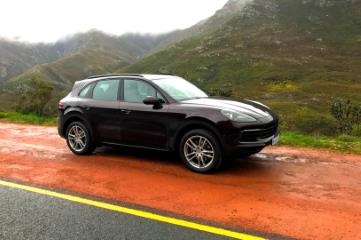
The Porsche Cayenne gets lumped, unfairly, amongst the truly high-end offerings like the Lamborghini Urus, Bentley Bentayga and Aston Martin DBX. The truth is that the pricing and positioning places it alongside the likes of the BMW X5, Mercedes-Benz GLE-Class and Audi Q7, Volkswagen Touareg and the onslaught from Land Rover Range Rover.
Keeping with the German theme, we're comparing the infotainment system in the Cayenne against two of its nearest countrymates, the BMW X5 and the Mercedes-Benz GLE-Class to see which one offers you the most bang for your buck.
Related: The top 3 things you need to know about the Porsche Cayenne
We're looking at the system functionality, interfaces and connectivity to see how they fare. Where applicable we'll list some of the optional equipment you can specify at the time of ordering a new one.

Porsche Cayenne
Porsche employs a system that they've dubbed PCM (Porsche Communications Manager). This system integrates some of the climate control functions and displays as well as vehicles settings and drive mode setup, all in the same system as the infotainment. This unit uses a large 12.3-inch colour touchscreen as its primary interface with selected information displayed in front of the driver in the configurable screen.
This system allows for AM/FM reception and will accept inputs from Bluetooth connections as well as USB connections. The system supports Apple CarPlay and has a proprietary internet connection system called Connect Plus that allows for internet radio and creates a WiFi hotspot for occupants. This augments the navigation system and allows for real-time traffic information.

The large screen is broken up into several sections that allow for access to the most frequently accessed functions for vehicle setup, climate control and media/telephony. A touch-sensitive area below the screen with a centrally-mounted selector knob and scroll wheel just below that for volume control. A bank of several buttons allows for quick access to basic functions. A proximity sensor detects when hand approach and make it easier to locate the respective touch areas of the screen.
In Cayenne and Cayenne S models, the standard audio system is Porsche's inn-house Hi-Fi but allows for an upgrade to a 14-speaker Bose system with 710-Watts output. This system is standard fitment in Turbo models. Turbo models can also specify the Burmester 3D sound system that boosts the speaker quantity to 21 and power output to 1455-Watts.

BMW X5
The BMW X5 range is as comfortable off the road as it is on it. To add to its appeal, the BMW X5 is fitted with a large 12.3-inch colour touchscreen infotainment system that runs BMW OS 7.0. and ties into the BMWVirtual Cockpit screen ahead of the driver. With its tiled layout, the BMW OS is easy to navigate and interact with the system accepting inputs from touch, via the recognised iDrive controller that features a touch-sensitive scroll wheel and shortcut buttons, through the use of gestures in front of the screen, with the multifunction steering wheel or even with voice commands.
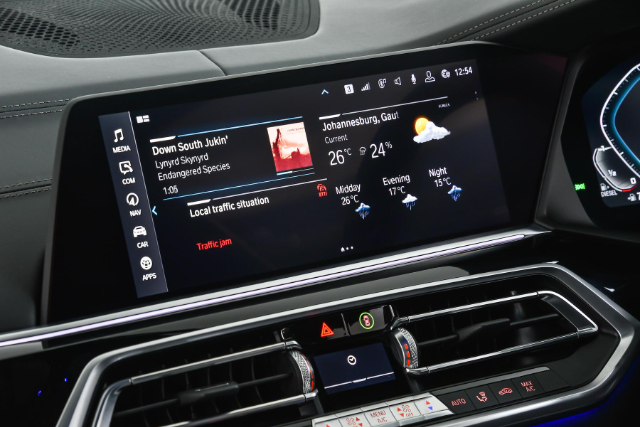
The system allows for AM/FM reception, USB and Bluetooth connectivity and features Apple CarPlay and Android Auto for smartphone tethering. The system also features Microsoft Office 365 which allows for synchronizing of calendars and even includes Skype functionality. When combined with the LTE internet connection and 20 GB HDD, this allows for Skype meetings to be attended while in the vehicle.
The audio system is from the Bowers & Wilkins stable and features 20-speakers and a power output of 1500-Watts.

Mercedes-Benz GLE-Class
The third vehicle in the trio has an infotainment system that closely matches the other two in both size and functionality. The GLE-Class MBUX sees two 12.3-inch screens fitted to the dashboard with one serving as the gauge cluster for the driver and the other the main infotainment screen. Mercedes-Benz has simplified the operating system and the home screen is now separated into several sections that span across two pages of the home screen, allowing for access to each section in very few taps on the screen.

This system also features a proximity sensor to assist with touch control and the centre console houses a touchpad for additional input. A scroll wheel off to the side allows for rapid volume control. Users can also use voice commands to control basic functions including climate controls and ambience settings. The multifunction steering wheel is yet to be changed to the multi-spoke touch design and still features the Blackberry-inspired touchpads with the left control for the infotainment screen and the right one for the driver display.
The Mercedes-Benz unit will accept inputs from USB (USB-C only), Bluetooth and includes Apple CarPlay and Android Auto for use of approved smartphone apps while driving.