
All-new Cayenne: the next step forward for Porsche
All-new Cayenne: the next step forward for Porsche


By Stuart Johnston
The all-new third-generation Porsche Cayenne is an unmistakeable design evolution of the brand’s previous key SUV model. Here's why it remains an excellent choice for lovers of luxury SUVs.
Cosmetic and structural changes to the new Cayenne
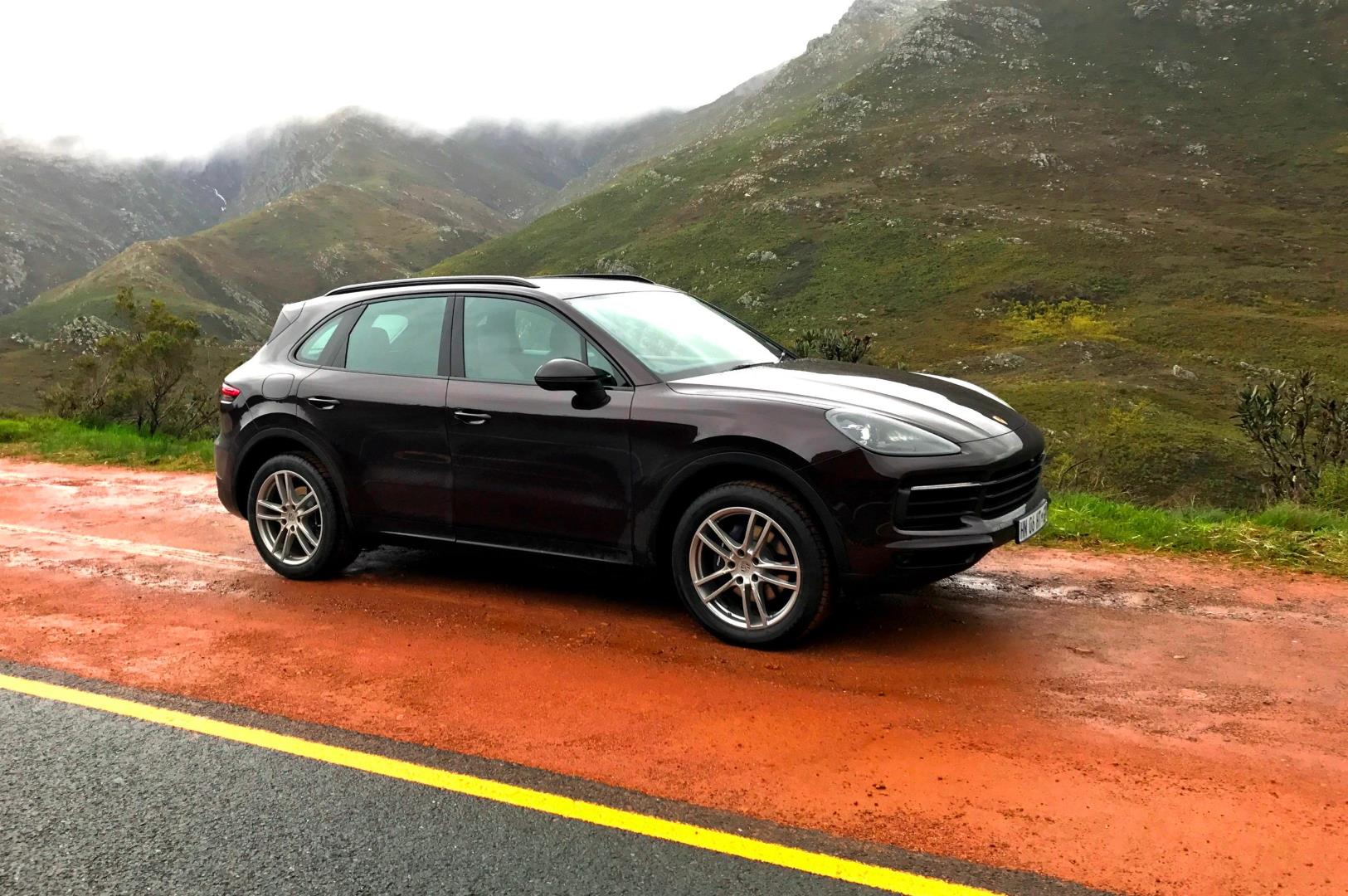
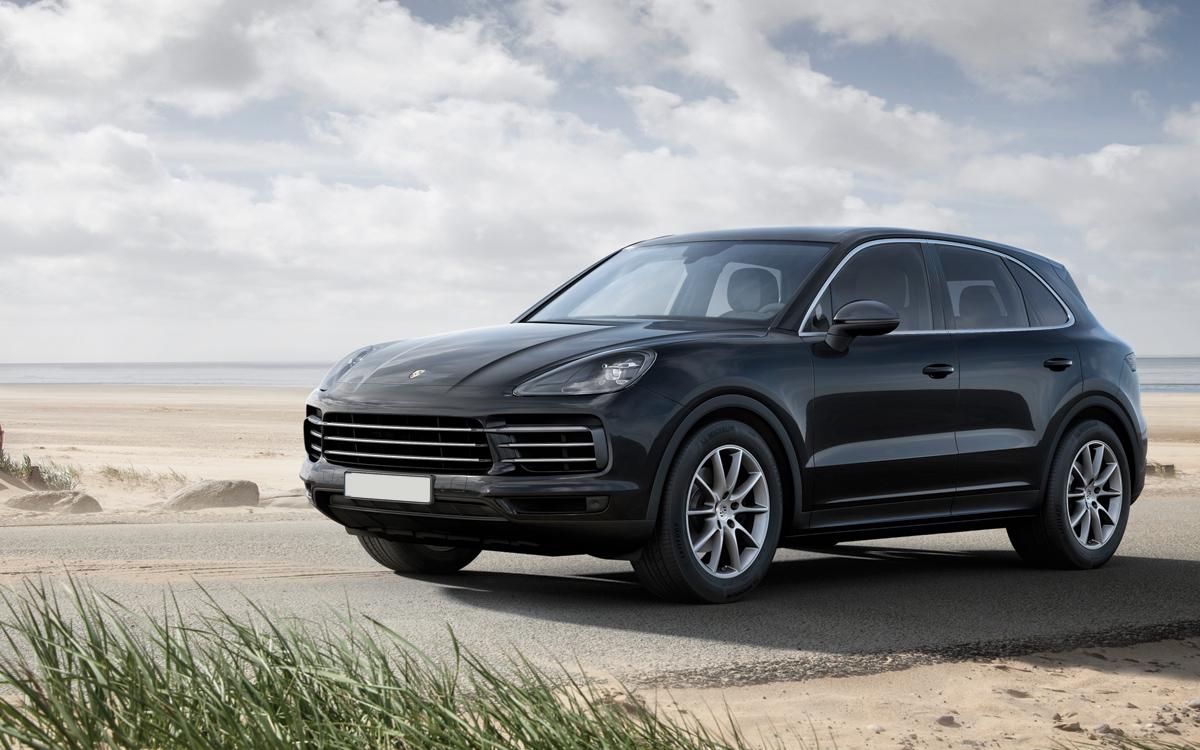
Dimensionally it is very similar, having grown by a mere 63 mm in overall length, while the roof height is actually 9 mm lower. The width is much the same, but the entire car seems lower and sleeker, thanks to a higher waistline and a smaller side glass area than before. Interestingly, the wheelbase remains identical to the previous model.
The body shell is entirely new, and so are many of the mechanicals. Looking at the front, the headlights are now much larger, and the new grille design is much deeper, with prominent horizontal slats. At the rear, the tail light design is completely different, with a horizontal styling line across the tailgate opening linking the two tail light clusters. The new lights are sleek slivers, rather than the bulbous items fitted previously.
Wider wheels at the back
From the three-quarter front view, taking in the flanks, another change is that the new Cayenne also wears rear wheels slightly larger in width than the front wheels. All the afore-going gives the third-gen Cayenne a rather racier look, although in essence it is still a very conservatively-styled car, nowhere nearly as dramatic as, say, a Mercedes-AMG GLE Coupé or a BMW X6.
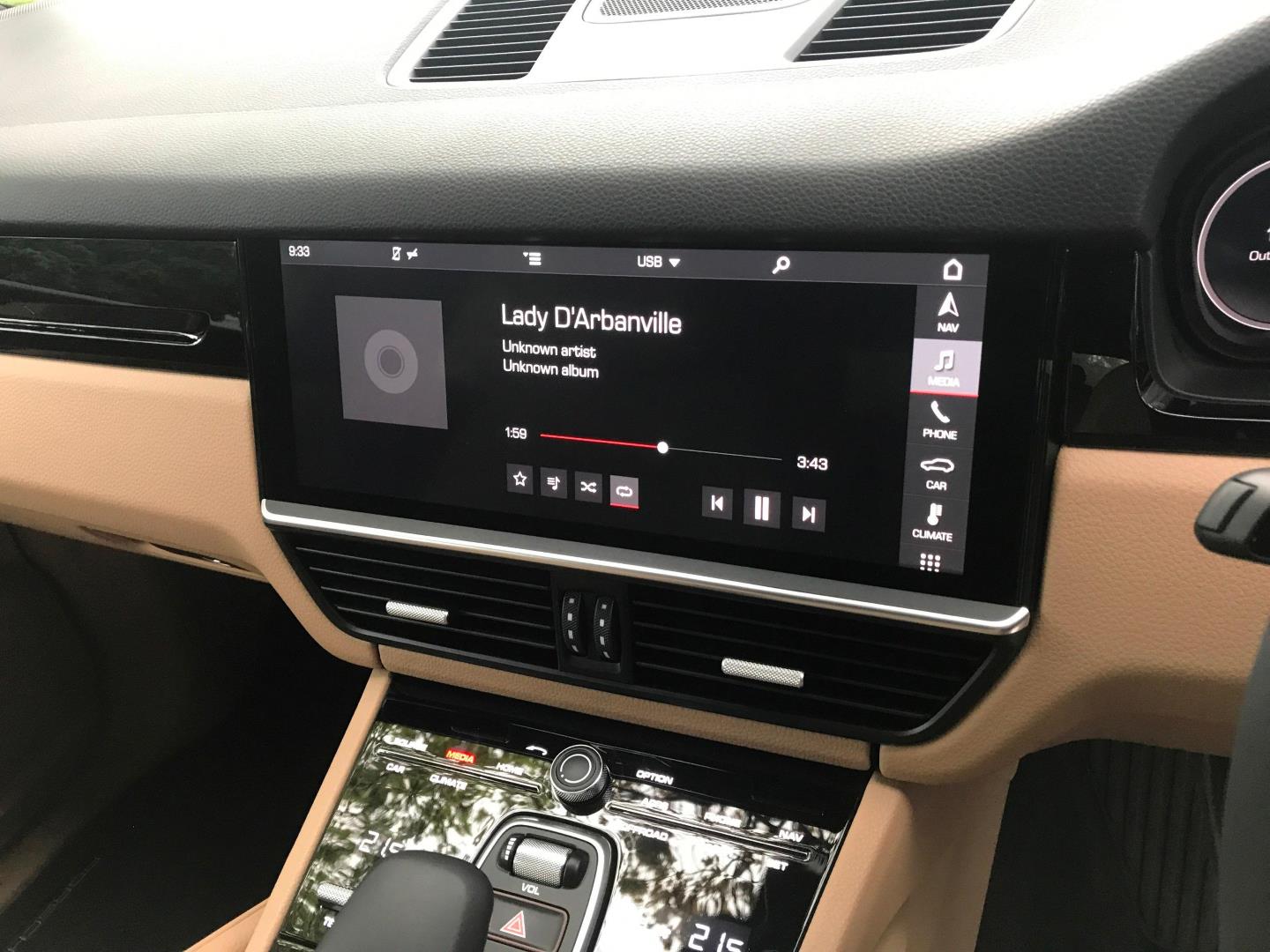
Porsche mentioned at the Cape Town launch this week that you sit “in, rather than on” the new Cayenne, and indeed this is the first impression you have when you climb aboard the new model. The snug, cockpit-like aura of the previous Cayenne, with its multitude of switches on the console, has given way for a very clean digital new look, with prominence given to the 12.3 inch multifunction touch screen in the centre of the dash. Happily, there is still a traditional arrangement of Porsche dials right in front of the driver, with the rev-counter taking centre stage, flanked by lesser dials such as speedo and fuel gauges, and other dynamic data on either side.
If practicality is your bag, as indeed it would be if you are in the market for an SUV, even a Porsche, then you will be keen to note that luggage space has increased to 770 litres with the rear seats backs upright, a considerable jump over the previous model.
The Range
We sampled three models at launch. These were the base Cayenne, the Cayenne S and Cayenne Turbo.
The base model Cayenne (R1 142 000) comes with a 3,0-litre V6 turbo engine that has had its power increased to 250 kW, offering a 0-100 km/h time of just under six seconds (when ordered with the Performance Start option), a top speed of 246 km/h, and a claimed consumption of 9,0 litres/100 km.
The Cayenne S (R1 296 000) has the more sophisticated 2,9-litre bi-turbo V6, pumping out an impressive 324 kW, and offering a 4,9-second zero to 100 km/h time. Top speed rises to 265 km/h on this variant, which Porsche dealers assure us is the most popular model in the new range. Fuel is gulped at a rate of 9,2 litres/100 km in absolutely ideal conditions. In reality, you will use a lot more!
The Cayenne Turbo ( R2 158 000) is the Big Daddy. It rumbles to the start line with a mad 404 kW at its disposal from a 4,0-litre twin turbo V8. The turbocharging is contained within the V banks of the cylinders, in an arrangement similar to that used by other German manufacturers who offer turbo V8s.
The Cayenne Turbo hits 100 km/h in 3,9 seconds, and will romp on to a top speed of 286 km/h. Well, that’s the theory, although if you want to test that, you’d be advised to hire an airfield, or a salt pan in the Northern Cape, or somewhere equally flat and remote. Bear in mind that this top speed is 166 km/h faster than our national speed limit!
How do they feel?
The Porsche Cayenne pulls off the difficult trick of feeling as if it is built from a giant chunk of solid granite, and yet it feels remarkably nimble at the same time. Solidity is a Porsche trademark and the Cayenne has that in spades, from the way the doors and switch gear operate, through to the steering, throttle, brakes and suspension behaviour.
As for the nimbleness, okay , close to two tons of SUV isn’t going to behave like a motorised ballerina, but in terms of braking responses and change of direction, as well as bump absorption, Porsche once again gets it right. The new Cayenne has all sorts of systems in place to ensure it behaves like a Porsche, notably rear axle steering on the Turbo models (optional on the Cayenne and Cayenne S). Electronic roll stabilisation and three-chamber air suspension are also available.
I would not classify the steering feel on these new Cayennes as particular involving, but when you push on hard into a corner and the suspension system loads up, there is reasonable feedback. This is, of course, adjustable via the electronic drive modes that are switchable from the console too, and in Sport mode it is the most communicative.
The first SUV to have an air brake!
Braking remains superlative, and in fact on the Turbo model there is an active roof mounted spoiler that comes into play as an airbrake. At very high speeds it can operate as an airbrake that can significantly reduce stopping distances, although this is a feature that you may not want to brag about too much as it is designed for autobahns with un-restricted speed limits. This is a world first option on SUVs, and a carry-over from motorsport that pays big dividends when travelling at very high speeds, particularly as far as braking stability is concerned.
It should be mentioned that all the Cayennes feature all-wheel-drive as standard, and this too enhances braking from higher speeds, thanks to the presence of torque reduction on each wheel as you lift off the throttle. In addition, each of the new Cayenne models uses the eight-speed Tiptronic automatic gearbox, which provides seamless shifting and appropriate ratio choice in virtually any situation.
Connectivity
The big 12.3 inch touch screen is now at the heart of controlling all the finer functions of the car, as well as offering full Wi-Fi connectivity. Voice control operates a number of these features, and Porsche Connect Plus offers access to online services.
Which is the best?
New construction techniques using lighter alloys have seen the new Cayenne weigh in at some 65kg lighter than the previous model (on average). The car has a dry mass of 1 985 kg, which is impressively light in a league where many SUVs come in at between 2 200 and 2 400 kg.
We tried the lesser-powered V6 petrol, 250 kW Cayenne first, and it is by no means lacking in pace. And even shod with the smaller diameter wheels (19 inches) it imparts plenty of grip, and yes, a good degree of ride comfort.
The Cayenne S model seems to be everyone’s favourite, as it comes in at only R154 000 or so more expensive than the base Cayenne, yet offers an extra 70 kW and extra equipment. I enjoyed the punch of his car, although I am not too convinced about the sound of the engine. To me it is just a little less refined than the base Cayenne model, and definitely doesn’t rate up there as my favourite Porsche engine when compared to the best of them .
It is for this reason that, despite its prohibitive cost of over R2,1-mliion, the Cayenne Turbo is my favourite new Cayenne. It has ground-shaking thrust from its V8, but more than anything, it is the V8’s refinement that I enjoy. It has a typical V8 gargle at lower revs, and then smooths out to a wonderful, velvety rush at higher revs. Absolutely satisfying, and of course this car has all the hardware (including distinctive 21 inch rims with ultra-low profile rubber) to contain all that power (not to mention 770 Nm of torque).
Again, one comes away from a Porsche launch, marvelling that when it comes to building cars, this company from Stuttgart has a unique formula that is extremely hard for any other manufacturer to match.