Petrol vs electric: Does a budget electric car make more sense than petrol in 2026?
The year is 2026, and the South African budget car market has officially changed. For decades, budget meant one thing: a sensible, petrol-sipping hatchback. But the morning light in your garage now reveals a fascinating dilemma. We have two budget-friendly hatchbacks, one petrol, one electric. Which one deserves your attention in 2026?


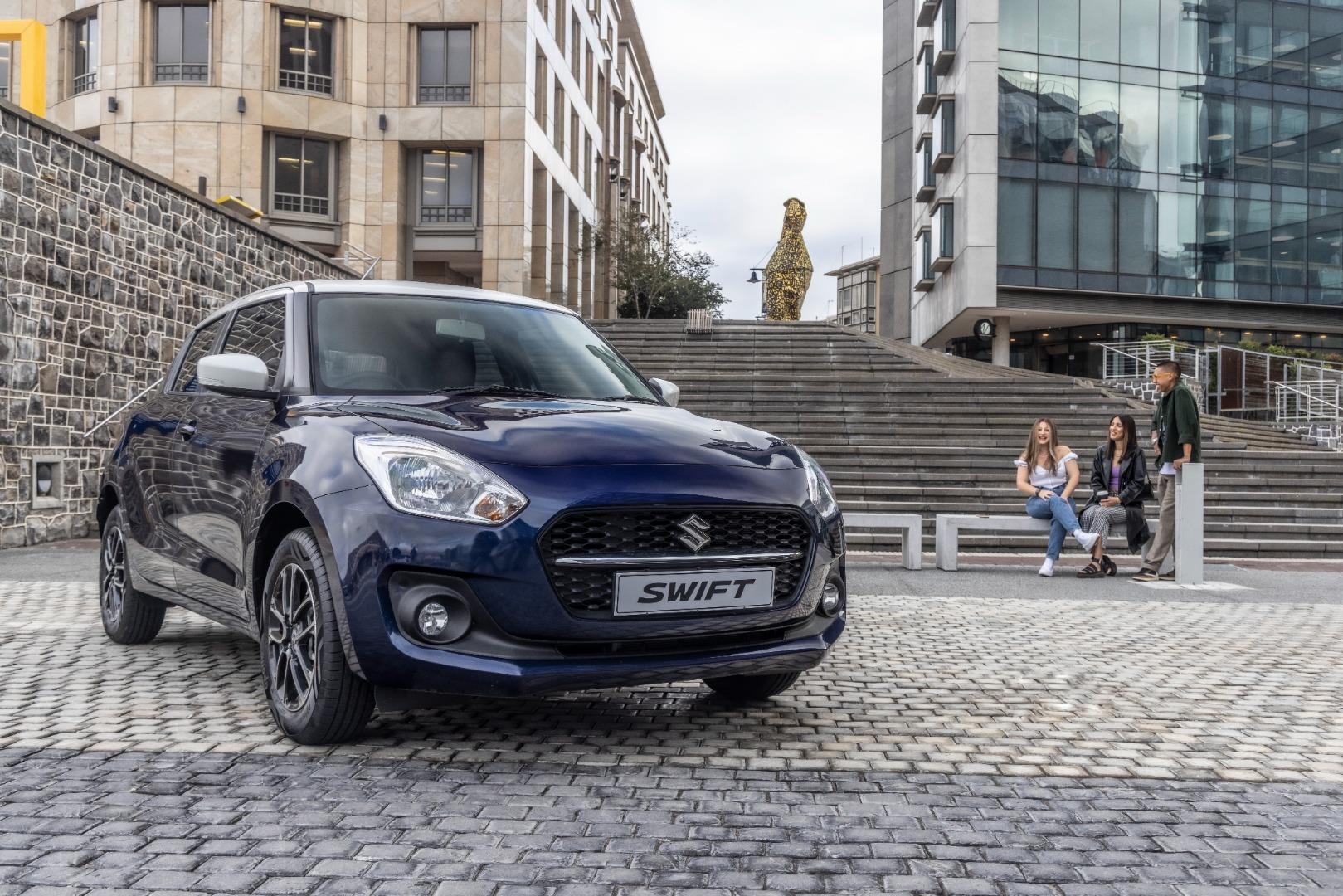
On one side sits the Suzuki Swift 1.2 GLX auto (R296 900), the reigning monarch of sensible South African motoring. On the other hand sits the freshly launched challenger, the Geely E2 Aspire (R339,900), a vehicle making headlines as the cheapest all-electric car in the country.
Both want that single parking spot. Here is how they stack up when the garage door rolls open.
The contenders
| Attribute | Suzuki Swift 1.2 GLX Auto | Geely E2 Aspire |
| Price | R296 900 | R339 900 |
| Powertrain | 1.2-litre 3-cylinder Petrol | 39.4 kWh LFP Battery / EV |
| Power / Torque | 60 kW / 112 Nm | 85 kW / 150 Nm |
| Driven Wheels | Front-Wheel Drive | Rear-Wheel Drive |
| Range | ~804 km (Avg. 4.6L/100km) | ~325 km (Avg. 15.2 kWh/100km) |
| Boot Space | 265 Litres | 375 Litres (+ 70L frunk) |
| Warranty | 5-year / 200 000 km | 4-year (Vehicle) / 8-year (Battery) |
Monday morning
You hit the starter button. In the Swift, the new 3-cylinder engine thrums to life with a familiar, mechanical vibration. In the Geely, there is only a digital chime and a dashboard that reads Ready.
Navigating the stop-start traffic of Johannesburg or Cape Town is where these two split paths entirely. The Swift utilises a CVT. It’s light, it’s agile (with a tiny 9.6-meter turning circle), and it feels incredibly familiar. With 60 kW, you aren't winning drag races, but you can effortlessly squirt into traffic gaps.
Switch to the Geely E2, and things change. It's a dedicated EV platform; its weight sits low in the floorboards. It develops 85 kW and 150 Nm of instant torque—there is no waiting for gears to drop or revs to build. The E2 is rear-wheel drive with a multi-link rear suspension. Around city roundabouts, it feels remarkably planted and premium compared to the standard torsion-beam setups found in traditional budget hatches.
Furthermore, the Geely is physically larger—nearly 100 mm longer in the wheelbase than a standard hatchback—meaning the cabin stretches out with a completely flat floor, giving rear passengers far more breathing room.

The reality check
Living with these cars in South Africa introduces unique, real-world variables.
The spare wheel dilemma
Look under the boot floor of the Suzuki Swift, and you'll find a space-saver spare wheel. It's an absolute necessity when a midnight pothole claims a sidewall.
The Geely E2? No physical spare wheel. It relies entirely on a tyre repair kit and a pressure monitor. If you hit a notorious crater on the road, a can of foam isn't going to save you.
Energy and range
The Swift is very efficient, consuming 4.6L/100km (claimed) from its 37-litre tank, offering around 800 km of driving per fill-up. You can drive from Gauteng to Durban on a single tank of fuel. The Swift is one of SA's best-selling passenger cars for a reason, it's affordable, reasonably safe, cheap to run and holds its value well in the used market.
The Geely E2 offers a highly realistic city range of around 325 km on its 39.4 kWh battery. For daily commuting, it's brilliant—especially since Geely throws in a home wall-box charger and an R7 500 public charging card if financed through them. But the moment you exceed 100 km/h on the highway, aerodynamic drag hammers the battery, rapidly dropping your range. Top speed is also electronically capped at 130 km/h.

To properly understand how these two stack up over a typical month of ownership in South Africa, we need to crunch the numbers using real-world baseline parameters.
The cost assumptions (June 2026 Baseline)
Monthly distance: 1 500 km (an average South African commute of roughly 50km per day).
Petrol cost: R28.06 per litre (Inland 95 Unleaded, June 2026). Some may run 93 Unleaded at R27.95 per litre
Electricity cost: R3.43 per kWh (Average mid-tier municipal prepaid rate / Block 1 Home User).
Suzuki Swift consumption: 4.6 L/100km
Geely E2 consumption: 15.2 kWh/100km
The Monthly Bill Breakdown
Here is what it actually costs to keep both vehicles moving, serviced, and financed for 30 days.
| Cost Element | Suzuki Swift 1.2 GLX Auto | Geely E2 Aspire |
| "Fuel" cost (per 1 500 km) | R1 936.14 | R782.04 |
| Estimated Insurance | ~R1 100.00 | ~R1 500.00 |
| Monthly service plan provision | R0.00 (Included for 4 years) | R0.00 (Included for 5 years) |
| Estimated finance payment | ~R6 350.00 | ~R7 260.00 |
| Total | ~R9 386.14 | ~R9 542.04 |
Note on Finance Calculations: Estimated over 72 months at a 12.5% interest rate with a 10% deposit and no balloon payment. Actual bank offers will vary based on individual credit profiles.
Energy savings vs. Purchase premium
The "fuel" math
Suzuki Swift: To travel 1 500km, the Swift will burn 69 Litres of petrol. At current record-high fuel prices, that totals around R1 936.14.
Geely E2: To travel 1 500 km, the Geely will consume 228 kWh of electricity. Charged at home on a standard municipal grid connection, which costs R782.04.
The Energy Verdict: You save R1 154.10 every single month on running costs by driving the electric Geely. If you have home solar, this bill drops practically to R0.00, pushing your monthly savings closer to R1 900.
The hidden EV costs (insurance & finance)
While the Geely beats the Swift at the pumps, the financial pendulum swings back in the garage:
The purchase premium: The Geely costs R43 000 more to buy upfront. This adds roughly R910 to your vehicle finance instalment per month.
Insurance: Because EVs have high-voltage components and specialised repair ecosystems in South Africa, underwriters price their risk higher. Expect the Geely to cost roughly R400 more per month to insure than the highly common, easily repairable Suzuki Swift.
Analysis
If you are paying off the car via a traditional bank finance lease, the two cars cost virtually identical amounts of money per month to keep on the road (~R9 400 to ~R9 500). Geely's massive electricity savings are almost perfectly offset by its higher monthly finance and insurance payments.
Verdict
The decision comes down to what you need this specific car to do.
The case for the Geely E2 Aspire
If you are looking for a second car for the household—an urban appliance strictly meant for school runs, office commutes, and mall trips—the Geely E2 wins. It is whisper-quiet, faster off the line, boasts a bigger 375-litre boot plus a clever 70-litre frunk for dirty charging cables, and costs pennies to fuel if you have solar at home. It makes the traditional budget interior feel vastly outdated, thanks to its 14.6-inch HD touchscreen. With the right home setup and primarily city driving habits, these small electric cars can be phenomenal additions to your family's garage.
The case for the Suzuki Swift 1.2 GLX
If this is the only car in your garage, the Suzuki Swift remains undefeated. It is R43 000 cheaper up front, features a 5-year/200 000 km warranty, comes with a physical spare wheel, and lets you drive across the country at a moment's notice without consulting a charging network map. It doesn't ask you to adapt your life to its limitations. If you're like many South Africans living in an estate or complex, particularly in sectional title, charging becomes a problem, particularly if you're on an elevated floor with no access to a garage or parking bay with a charging cable.